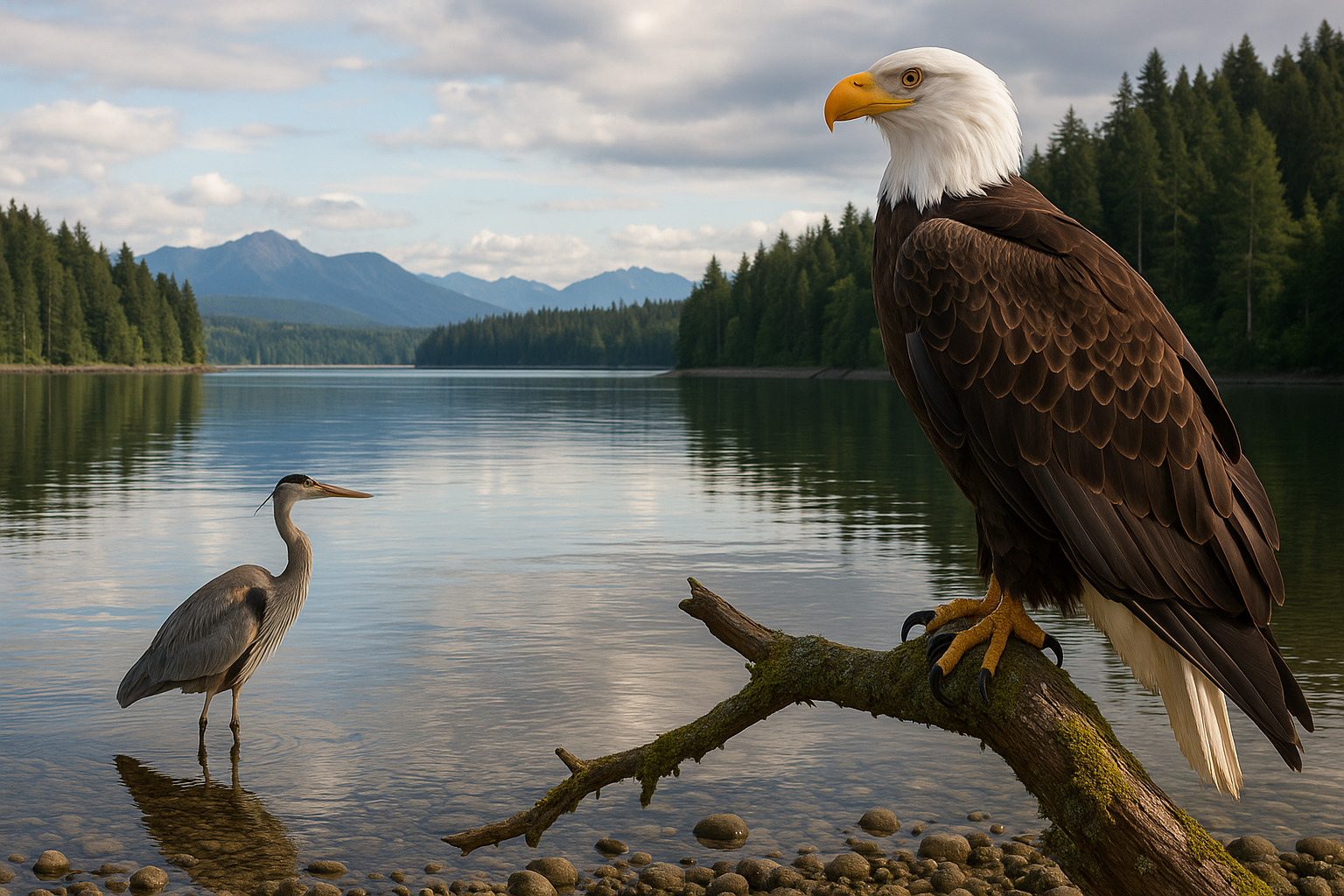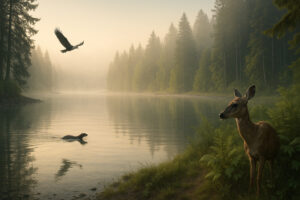
If you spend a few mornings wandering Port Ludlow’s coves and trails, you realize quickly that nature here never needs an introduction. It greets you — with the whistle of an eagle slicing through mist, the ripple of an otter slipping across dawn water, and the rustle of deer among ferns. I’ve visited many coastal towns, but the wildlife near Port Ludlow feels unusually intimate, as if the entire landscape still remembers how to speak softly to those who listen.
Where Land Meets Life in Port Ludlow
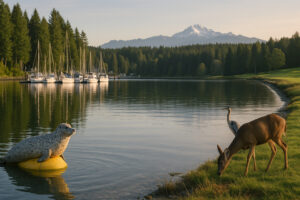
Port Ludlow rests at the rare meeting point of three natural worlds: saltwater shoreline, evergreen forest, and mountain corridor. This unique convergence makes the area one of Washington’s quietest yet richest wildlife sanctuaries. On any given day, harbor seals lounge on marina buoys, black-tailed deer wander across golf fairways, and great blue herons stand motionless along the tide line. The people here move with the same gentle rhythm as the animals. Life slows naturally, guided by observation rather than urgency. You do not chase wildlife here. You simply learn to make space for it.
Forest Trails and Living Woodlands
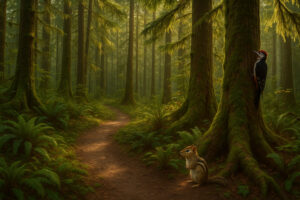
The forests surrounding Port Ludlow feel alive in every sense. Ludlow Falls Trail leads through fern-covered ground and moss-draped firs where chipmunks scatter at sunrise and pileated woodpeckers drum in the distance. Slightly farther inland, Anderson Lake State Park offers quiet wetlands where owls, foxes, and songbirds pass through undisturbed. The larger Olympic National Forest, reachable within an hour, reveals deeper wilderness with elk herds, black bears, and river corridors alive with salmon in season. These forests teach patience. The more slowly you walk, the more the forest reveals.
Marine Encounters Along Hood Canal
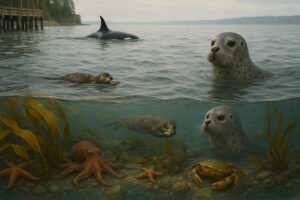
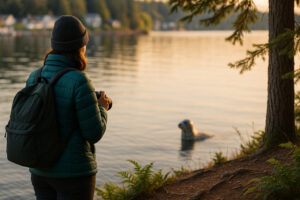
The waters of Hood Canal form one of the region’s most active wildlife corridors. Harbor seals surface beside docks daily, often watching back with calm curiosity. River otters tumble through kelp beds near Shine Tidelands, cracking shells on their chests. During spring and summer, transient orcas and gray whales move through the canal following salmon runs. Even from shore, patient watchers occasionally witness dorsal fins slicing across silver water. Beneath the surface, kelp forests shelter starfish, crabs, and even the giant Pacific octopus. The sea here carries both gentleness and power in perfect balance.
Birdwatching and Seasonal Migration Routes
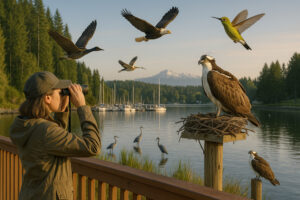
Port Ludlow lies directly along the Pacific Flyway, making it a prime stage for migrating birds. Spring brings hummingbirds, warblers, and swallows. Summer belongs to herons, ospreys, and nesting eagles. Autumn fills the sky with brant geese and raptors riding thermals. Winter welcomes sea ducks, loons, and silent owls. Prime observation points include the marina boardwalk, Oak Bay County Park, Anderson Lake, and Mount Walker Viewpoint. Birdwatching here does not feel like a hobby. It feels like learning the language of the sky.
Shine Tidelands and Coastal Wildlife
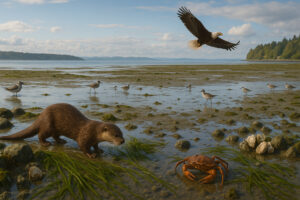
Shine Tidelands State Park offers one of the most immersive shoreline wildlife experiences near Port Ludlow. At low tide, vast mudflats reveal eelgrass beds, oyster shells, tide pools, and feeding grounds for shorebirds. Otters, crabs, and seabirds move constantly through this shifting landscape. Bald eagles often circle overhead, waiting for movement below. Every visit sounds different: waves, wingbeats, wind, and distant calls blending into a living coastal orchestra.
Guided Wildlife Experiences and Eco Tours
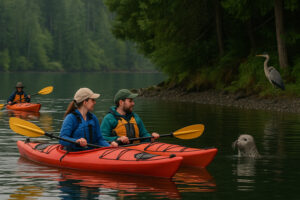
For travelers who prefer insight alongside exploration, Port Ludlow offers a range of guided wildlife experiences. Kayak tours from the marina let visitors glide quietly alongside seals and seabirds. Whale-watching tours from nearby Port Townsend follow strict distance ethics while tracking orcas and migrating whales. Forest walks led by naturalists reveal plant life, bird calls, and animal movement patterns invisible to the untrained eye. Guided experiences here do not push wildlife into spectacle. They turn observation into understanding.
Eco Tourism Ethics and Responsible Travel
Wildlife near Port Ludlow thrives because observation here is built on respect. Visitors are encouraged to keep distance, remain quiet, stay on trails, and never feed animals. Boat operators follow strict whale-safe guidelines. Photographers use natural light and silent shutters. Travelers support conservation simply by choosing local lodgings, dining at farm-to-table restaurants, and participating in citizen science through bird and whale reporting apps. Every choice reinforces the quiet agreement between people and place.
Where to Stay and Eat for Wildlife Travelers
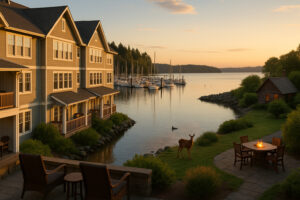
Lodging and dining in Port Ludlow blend seamlessly with the landscape. The Inn at Port Ludlow sits directly on the marina with balconies overlooking seals and shorebirds. Forest cabins and eco lodges offer privacy among deer trails and owl calls. B and Bs in Chimacum Valley connect guests with orchards, gardens, and hummingbirds at breakfast. Dining follows the same seasonal rhythm: salmon, oysters, cider, farm vegetables, and coastal chowders served beside water and firelight. Comfort never competes with the wild here. It exists within it.
Location, Map View and Travel Planning
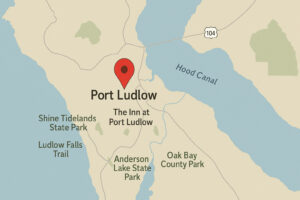
Port Ludlow is located on the northeastern edge of Washington’s Olympic Peninsula along Hood Canal.
Map View
Search Port Ludlow, Washington on Google Maps to explore:
Port Ludlow Marina
Shine Tidelands State Park
Ludlow Falls Trail
Anderson Lake State Park
Oak Bay County Park
The Inn at Port Ludlow
Getting There
From Seattle, travel by ferry to Bainbridge Island, then drive Highway 104 across the Hood Canal Bridge. The nearest major airport is Seattle Tacoma International. A car is recommended for reaching tidal flats, forest parks, and day-trip wildlife valleys.
Final Thoughts, Why Port Ludlow Changes You
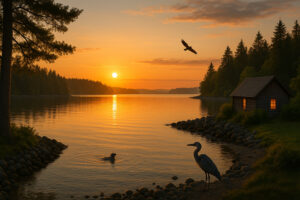
Port Ludlow never asks for attention. It offers stillness instead. Wildlife here does not perform for crowds. It exists on its own quiet terms. A seal watching from the water, an owl calling from the dark, an eagle crossing sunset skies all arrive without spectacle. This is their home first, and your visit becomes meaningful only when you accept that truth. When you leave, you do not remember noise or attractions. You remember calm breathing water, slow wings, and the feeling that nature still trusts those who move gently within it.