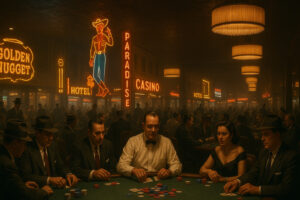
Las Vegas has always been a city of transformation. Beneath the neon lights and high-rise towers lies another world — a place of smoky backrooms, tuxedoed crooners, and hotels that defined the golden age of American travel. This story isn’t about the modern Strip’s spectacle but about its roots — the vintage casinos of Las Vegas, where dreams were smaller, sharper, and somehow more real. If you’ve ever been curious about vintage casinos and their role in Las Vegas history, read on.
Every time I walk through old Fremont Street or the quiet side streets behind Paradise Road, I can still feel the pulse of that earlier era. The carpets may have changed, the chips redesigned, but the air — that electric mix of hope and risk — remains the same.
This journey through Paradise Hotel and Vintage Casinos of Las Vegas traces the city’s evolution from a desert railroad stop to a stage where the world came to play.
For more statewide heritage—from Comstock architecture to railroad towns—tap Historic & Cultural Experiences in Nevada.
The Origins of Paradise – Where Las Vegas Took Shape
Before the Lights: The Railroad Town Years
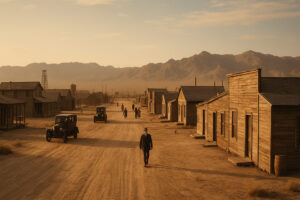
Long before there was a Strip or slot machines, Las Vegas began as a dusty watering hole along the Old Spanish Trail. When the San Pedro, Los Angeles & Salt Lake Railroad arrived in 1905, a small settlement formed — a grid of wooden shacks clustered around Fremont Street.
Early visitors came for rail connections, not roulette. The first hotels were simple — boarding houses with creaky floors and desert winds slipping through cracked windows. But the climate, the promise of water from the nearby artesian wells, and the open land made dreamers pause.
When Nevada legalized gambling in 1931, Las Vegas changed overnight. Tiny downtown casinos like the Northern Club and Las Vegas Club became pioneers of the gaming industry. With the construction of Hoover Dam, thousands of workers poured into the region, and their paychecks fueled a new kind of nightlife.
Birth of Paradise
By the late 1940s, Las Vegas had outgrown its downtown grid. Developers looked south along Highway 91 — open desert land with nothing but dust and cactus. This unincorporated area was soon named Paradise Township, after one of the early ranches that supplied produce and dairy to the dam workers.
Paradise would become the true home of the modern Las Vegas Strip. The city of Las Vegas annexed northward, but the biggest hotels were built just outside city limits — a clever move to avoid high taxes.
Standing today at the corner of Tropicana Avenue, you’re standing on what was once farmland, now the heart of global entertainment.
The Rise of the First Great Hotels
El Rancho Vegas – Where It All Began
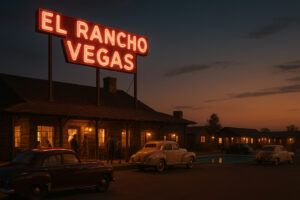
The first resort on what would become the Strip was El Rancho Vegas, opened in 1941 by Thomas Hull. Built in a Western ranch style, it offered 63 rooms, a swimming pool, and a steakhouse called the Chuckwagon. Compared to downtown saloons, El Rancho was a revelation — a place for travelers, not locals.
The neon sign that read El Rancho Vegas shone like a promise in the darkness of the Mojave. Guests could drive straight from the highway, park next to their rooms, and gamble in comfort.
TripAdvisor reviewers who visit the small historical marker near its former site (now part of the Hilton Grand Vacations complex) often say the story gives them “a thrill of discovery,” even though the original building burned down in 1960.
Last Frontier – The Western Fantasy
Following El Rancho’s success, The Last Frontier Hotel opened in 1942, designed to look like an Old West town complete with wagon wheels and wooden storefronts. It offered Las Vegas’s first themed casino — decades before theme resorts became the norm.
The Last Frontier hosted big-band performances and cowboy shows, attracting soldiers stationed nearby during World War II. For many Americans traveling west, it was their first taste of what they called “glitter in the desert.”
The 1940s Boom – From Mob Money to Music Legends
The Flamingo: The Turning Point
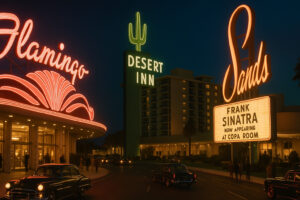
If one place marks the moment Las Vegas became legend, it’s the Flamingo Hotel and Casino. Opened in 1946 by mobster Benjamin “Bugsy” Siegel, it blended Hollywood glamour with underworld ambition. Marble floors, pink neon, and celebrity guests set a new standard for elegance in the desert.
Despite its rocky start — and Siegel’s infamous murder months later — the Flamingo’s success proved that Las Vegas could rival the sophistication of Los Angeles or New York. Soon, every investor wanted a piece of the Strip.
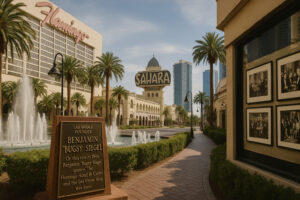
The original Flamingo no longer stands, but its name and spirit live on in the modern resort that occupies the same footprint. Behind the pools and gardens, small plaques quietly honor the original site.
According to TripAdvisor, guests love walking through the Flamingo’s Garden Walk, calling it “a rare piece of old Vegas still breathing — you can almost feel Bugsy’s dream in the air.”
The Desert Inn – Luxury Arrives
Next came the Desert Inn, opened in 1950 by Wilbur Clark and backed by mob financier Moe Dalitz. This was no cowboy saloon — it was the epitome of class. With golf courses, fine dining, and a showroom featuring Frank Sinatra, it drew Hollywood’s elite to Nevada’s sand dunes.
The Desert Inn established the formula for decades of resort design: elegance, exclusivity, and entertainment. Even Howard Hughes moved into its penthouse in the 1960s, buying the hotel outright and beginning his reclusive empire in Las Vegas.
TripAdvisor reviewers call the Wynn “luxury reborn where the Desert Inn once stood — refined, serene, and steeped in the Strip’s most elegant history.”
The Sands – Where the Rat Pack Reigned
By 1952, The Sands Hotel emerged as the stage for mid-century cool. The Copa Room, its famous lounge, hosted nightly performances by Frank Sinatra, Dean Martin, and Sammy Davis Jr. — the legendary Rat Pack.
Their shows were part comedy, part concert, and all charisma. Visitors still talk about the electricity that filled the air, the laughter that rolled through cigarette smoke, the clink of glasses at every punchline.
Today, The Venetian Resort stands where The Sands once did, but many travelers claim that if you close your eyes in its marble corridors, you can still hear Sinatra’s echo.
Explore The Venetian Resort on Google maps
Paradise Hotel – The Forgotten Landmark
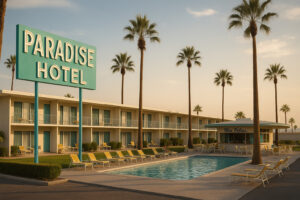
While the Flamingo and Desert Inn claimed the headlines, smaller hotels gave the Strip its charm. Among them was the Paradise Hotel, a boutique property opened in the mid-1950s just south of Tropicana Avenue.
Built in low-rise modernist style, Paradise Hotel attracted artists, performers, and travelers who wanted something quieter than the big casinos. Its poolside bar, the Blue Palms Lounge, became a meeting place for songwriters and showgirls after hours.
Though it never became a mega-resort, Paradise Hotel played a quiet role in shaping the Strip’s identity — personal, artistic, and human. By the late 1960s, when developers began constructing massive towers, Paradise faded into history, eventually replaced by the larger Tropicana complex.
Still, old-timers in Las Vegas remember it fondly as “the hotel where the dreamers stayed.”
Preserving the Memory
Today, there’s little physical trace of the Paradise Hotel. But in archives at the Nevada State Museum, you can find matchbooks, postcards, and black-and-white photos showing its simple yet elegant design — a turquoise sign against endless sky.
A few locals have even formed a small restoration campaign, gathering stories and artifacts to one day create a small exhibit. As one former bellhop said in an interview, “Everyone talks about the big casinos, but Paradise was where people fell in love with Las Vegas.”
The Golden Age of Glamour (1950s – 1970s)
Las Vegas Becomes America’s Showroom
By the 1950s, Las Vegas had evolved from a desert curiosity into the crown jewel of postwar America. Jet travel made weekend trips possible, and for the first time, ordinary Americans could walk the same hallways as movie stars and mobsters.
Every new resort on the Strip tried to outshine the last. The air buzzed with optimism, ambition, and the rhythm of jazz echoing through the neon glow. Las Vegas became a showroom for America — a stage where glitz and risk defined modern entertainment.
Driving into the city at night, I remember seeing the skyline erupt from the desert — a ribbon of light twisting through endless blackness. Even today, that first sight feels timeless.
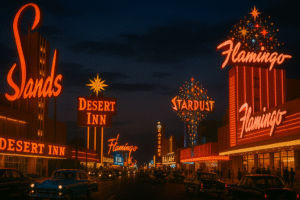
Downtown’s Fremont Street thrived with vintage casinos like Binion’s Horseshoe and the Golden Nugget, while Paradise Township bloomed with luxury: the Sahara, Tropicana, Stardust, and the grand Caesars Palace.
The Sahara – Gateway to the Stars
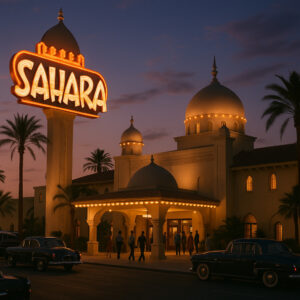
When the Sahara Hotel and Casino opened in 1952, it set the standard for entertainment and architecture. Its Moroccan-inspired design, domed ceilings, and desert motifs brought a cinematic flair to Nevada’s frontier.
It wasn’t just the look — it was the vibe. The Sahara was where the biggest stars stayed. Elvis Presley filmed scenes for Viva Las Vegas there, and comedians like Johnny Carson refined their acts before national fame.
Walking through its lobby in later years, I met a longtime doorman who had worked there since the early 1960s. He told me, “Every night, the Sahara felt like New Year’s Eve. Even when nothing special was happening, the air said something might.”
That’s the kind of energy few places ever capture again.
Explore SAHARA Las Vegas on Google Maps
The Tropicana – The Jewel of the Desert
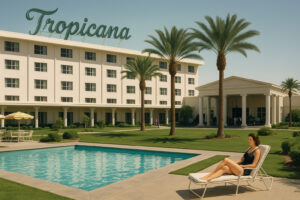
In 1957, the Tropicana emerged, known at the time as The Tiffany of the Strip. With its white columns, manicured lawns, and glamorous swimming pool, it offered luxury previously reserved for Hollywood elites.
The hotel attracted celebrities like Marilyn Monroe, Frank Sinatra, and even future presidents. Its casino had chandeliers imported from Italy and a lush showroom where dancers performed the legendary Folies Bergère, a Parisian revue that ran for nearly 50 years.
TripAdvisor reviews today still highlight the nostalgia of visiting the Tropicana before its 2015 redesign — describing it as “the last place on the Strip where you could still feel 1950s Las Vegas.”
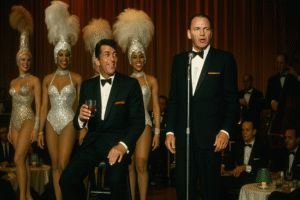
Showgirls, Headliners, and the Rat Pack Era
If you ask any Las Vegas native about the city’s true golden age, they’ll point to the 1950s through the early 1970s — when Sinatra ruled the stage, and the Rat Pack turned every night into a story.
At The Sands, the Rat Pack’s performances were part concert, part conversation. Dean Martin sipped from his glass, Sammy Davis Jr. cracked jokes, and Sinatra crooned like the desert wind itself. Celebrities filled the front rows, and ordinary guests felt like insiders.
The Copa Room at The Sands became legendary not just for music but for energy. “You never knew who’d show up,” a retired cocktail waitress once told me. “Sometimes Elvis, sometimes Kennedy, sometimes a movie star trying not to be noticed.”
Every casino had its own signature act — Liberace at the Riviera, Wayne Newton at the Flamingo, Elvis Presley at the International Hotel (later the Las Vegas Hilton).
These performers didn’t just entertain; they built the mythology that still defines Las Vegas today.
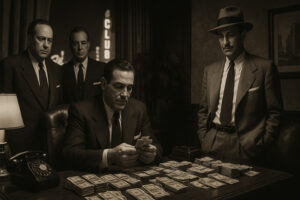
Behind the lights and laughter, another power shaped the city — the mob financiers who turned gambling profits into an empire. Turn this city story into a regional loop with the Southern Nevada Crossroads road trip.
Figures like Bugsy Siegel, Moe Dalitz, Meyer Lansky, and later Tony Cornero invested in casinos that became cultural landmarks. Their money flowed through laundromats, film studios, and legitimate businesses — all finding their way to Paradise Road. Extend north along historic drives between Reno and Las Vegas.
But this mix of danger and allure only deepened the city’s mystique. Las Vegas was a place where fortunes could change overnight, both in the casino and behind closed doors.
By the 1960s, federal investigations began to expose these underground ties. In time, corporations replaced mob families, ushering in the era of organized management and publicly traded casino companies.
Yet the legends remain. Walk through The Mob Museum in downtown Las Vegas, and you’ll see it laid bare — the glamour, the greed, the grit. Visitors describe it as “the most honest museum in Nevada.” For milder-weather travel ideas, check best off-season destinations in the USA.
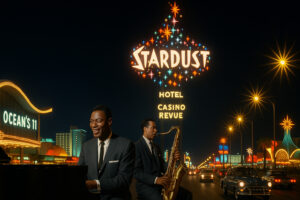
Cultural Impact – Movies, Music, and Mid-Century Design
As the Strip glittered, Hollywood took notice. Films like Ocean’s Eleven (1960) turned Las Vegas into a cinematic fantasy. The city’s skyline became shorthand for ambition and freedom.
Musicians from Nat King Cole to Louis Prima found new audiences here. Designers introduced Googie architecture — sweeping rooflines, atomic shapes, and starburst lights — symbols of America’s futuristic optimism.
Vintage casinos like The Stardust embodied that look perfectly. Its 216-foot neon sign was one of the largest ever built, and its theme — “space meets showtime” — defined Las Vegas’s atomic age.
Architectural historians still call Stardust “the best example of optimism built from light.”
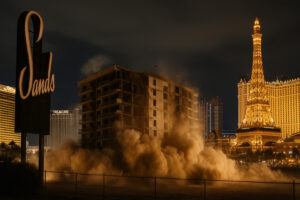
Transition to Modern Mega-Resorts (1980s – 1990s)
The End of the Vintage Era
By the 1980s, time caught up with Las Vegas’s golden age. Many vintage casinos that had once defined the Strip were demolished to make way for mega-resorts.
The Sands came down in 1996. The Dunes, the Desert Inn, and Stardust followed. Each implosion drew crowds of locals who had worked there, cried there, or fallen in love under its chandeliers.
Watching those buildings fall was like watching chapters of a book vanish from memory. The skyline grew taller, but something softer disappeared.
Still, the spirit of those places — their design, their music, their people — shaped the DNA of the modern Strip.
Corporate Control and Changing Culture
By the late 1990s, corporations like MGM Resorts, Caesars Entertainment, and Mirage Resorts dominated the Strip. The city that once celebrated individuality turned toward efficiency and spectacle.
Hotels became themed kingdoms — pyramids, castles, and replicas of world monuments. Yet for many travelers, the heart of Las Vegas still beats in its vintage core — in the faded postcards, retro bars, and small exhibits that preserve its earlier elegance.
Preserving What Remains – Neon Museum and Historic District
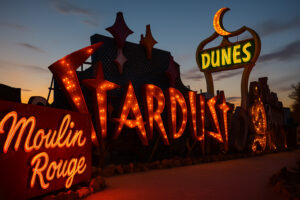
If you ever crave a glimpse of old Las Vegas, visit the Neon Museum, often called The Boneyard. It’s a resting place for historic signs — the Stardust, Sahara, Moulin Rouge, and Desert Inn — all glowing softly against the night sky.
Walking through it feels like moving through a memory. You can almost hear the swing of Sinatra’s orchestra or the hush before a dice roll. Each sign tells a story — not just of a casino, but of a time when craftsmanship, art, and showmanship ruled the Strip.
Nearby, the Las Vegas Historic District preserves buildings from the city’s early years. The El Cortez Hotel, opened in 1941, still operates with vintage charm — original neon, wood interiors, and old-fashioned coin slots.
TripAdvisor visitors often call it “a portal to classic Vegas,” and many locals agree it’s the best place to feel history instead of just reading about it.
The Legacy Lives On – Vintage Vegas Today
Rediscovering the Soul of the Strip
Every time I return to Las Vegas, I make a point to step off the main boulevard — away from the LED billboards and into the older corners where time lingers. Hidden between modern towers and corporate casinos are places that still whisper the city’s past.
At Flamingo’s Garden Walk, bronze plaques mark the site of Bugsy Siegel’s original casino. Locals say if you walk there at night, when the fountains quiet down, you can almost sense the presence of that first daring dreamer who bet everything on a desert.
Over at The Sahara, now remodeled yet proudly keeping its name, you’ll still find vintage photographs lining the walls — stars laughing under chandeliers, dealers in bow ties, the early elegance of an age when glamour wasn’t mass-produced.
These fragments of history give the city its texture. Without them, the Strip would just be noise and light.

Vintage Hotspots You Can Still Visit
El Cortez Hotel – Downtown’s Timeless Heart
In the historic Fremont Street district, the El Cortez Hotel, built in 1941, continues to welcome guests with the same warmth and style that defined classic Vegas.
The moment you step inside, the scent of polished wood and old carpet hits like a memory. There’s a small bar where regulars talk about how they used to sneak into the casino when they were teenagers.
The El Cortez remains one of the last family-owned casinos in Las Vegas, lovingly restored without losing its mid-century charm. Its neon sign, still glowing over Sixth Street, has become an official landmark of Nevada history.
According to TripAdvisor, travelers call it “a living museum that serves cocktails — vintage neon, wooden counters, and a pulse that never left the 1940s.”
Explore El Cortez Hotel on Google maps
The Golden Gate Hotel – Where It All Began
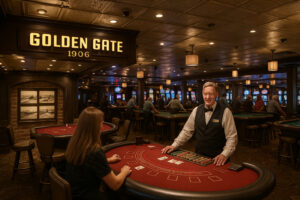
Opened in 1906, the Golden Gate Hotel & Casino is the oldest operating hotel in Las Vegas. It was here that visitors first experienced the thrill of gaming long before the Strip was even a dream.
Walking through its compact gaming floor feels like stepping into a time capsule. The ceiling is low, the tables close together, the dealers friendly in that old-Vegas way — part host, part historian.
In the back, a small display of photographs shows Fremont Street in its infancy: dirt roads, Ford cars, and the first neon sign flickering against the desert sky.
Guests on TripAdvisor write that Golden Gate “feels like a time capsule — friendly dealers, jazz in the background, and Fremont Street stories in every corner.”
Explore Golden Gate Hotel on Google Maps
Atomic Liquors – The City’s Oldest Bar
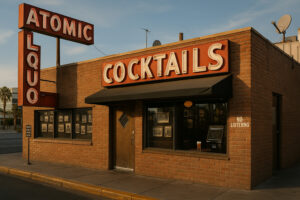
For a different slice of history, head to Atomic Liquors, the oldest freestanding bar in Las Vegas. In the 1950s, patrons would gather on its rooftop to watch atomic test explosions from the nearby Nevada desert.
The owners sold beer and cocktails as mushroom clouds rose in the distance — a surreal image that somehow captures the wild duality of mid-century Las Vegas.
Today, the bar keeps that heritage alive with classic cocktails and vintage photos. Order a whiskey sour, take a seat by the window, and listen to the jukebox hum with Sinatra and Presley. It’s nostalgia you can taste.
Preserving the Past – The Neon and Mob Museums
The Neon Museum – Light That Never Dies
If there’s a single place where vintage Las Vegas truly lives, it’s The Neon Museum, often called The Boneyard.
Here, more than two hundred signs from the city’s past have been rescued — glowing monuments to imagination. You’ll see the Stardust’s galaxy of bulbs, the Moulin Rouge’s red script, and the Dunes’ crescent moon. Each one once stood as a promise, now softly reborn in curated twilight.
I visited during golden hour, and as the lights came on, the desert breeze made the metal creak. It felt like walking among ghosts — friendly ones, proud of the joy they gave the world.
TripAdvisor travelers consistently rate the museum five stars, calling it “essential for understanding what made Las Vegas Las Vegas.”
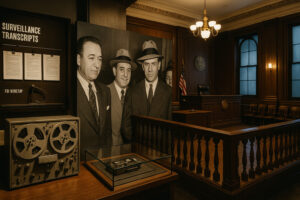
The Mob Museum – The Truth Behind the Glitter
Located in a historic post office downtown, The Mob Museum tells the other half of the story — the deals, the power, the danger.
Exhibits include original FBI wiretaps, photographs of 1940s casino moguls, and even the courtroom where mob hearings once took place. It’s immersive, dramatic, and humbling — a reminder that the glamour of old Vegas was built on risk far greater than a roll of dice.
I spent an afternoon there, then walked outside into the sunlight of Fremont Street. For a moment, I could feel both sides of history overlapping — the dream and the cost.
TripAdvisor reviewers describe it as “riveting and fearless — the real story of the city’s rise, told inside its own history.”
Explore The Mob Museum on Google Maps
Vintage Las Vegas Experiences for Travelers
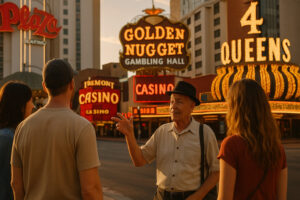
Take a Guided Vintage Vegas Tour
Several local operators now offer Vintage Vegas Tours, guiding travelers through the city’s most historic sites — from early Strip landmarks to downtown classics. Many include the Mob Museum, Fremont Street, and stops at preserved casino facades.
I joined one led by a retired casino dealer named Frank. As we passed the old Moulin Rouge site, he said, “Vegas isn’t about forgetting — it’s about remembering how bold we used to be.”
His words stayed with me.
Stay in a Retro Hotel
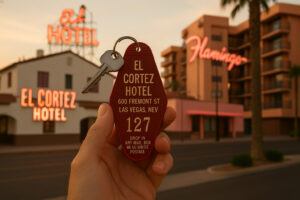
If you want to feel vintage Vegas, stay at a place that still carries its old charm:
El Cortez Hotel – For authentic downtown nostalgia.
Golden Nugget – A perfect blend of modern luxury and mid-century roots.
The Flamingo – For history that lives in every pink-tinted reflection.
Even newer hotels like The Cromwell intentionally mimic vintage design — small, personal, and stylishly understated.

Collecting Vintage Vegas Souvenirs
Antique shops around the Arts District and Charleston Boulevard sell original matchbooks, postcards, and casino chips from long-gone resorts. I picked up a 1960s Paradise Hotel ashtray there once — its turquoise logo still clear, its glass edges smooth with time.
Holding it, I realized that every little relic tells a bigger story — of travelers who came chasing luck and left carrying memories instead.
Reflections – Why Vintage Las Vegas Still Matters
The Las Vegas of today owes everything to its past. Every new tower, every dazzling show, is built upon the courage and creativity of those early dreamers.
They turned a barren stretch of desert into a global symbol of escape and excitement. Even as the skyline changes, the soul of Paradise — that bold mix of beauty, risk, and rebellion — remains.
When I walk through the Strip at dawn, just before sunrise, I often think about the people who built it all — the waitresses, dealers, and performers who made Las Vegas not just a place, but a feeling.
That’s what vintage Vegas truly is — not nostalgia, but memory alive in motion.
Frequently Asked Questions About Vintage Casinos in Las Vegas
The Golden Gate Hotel & Casino, founded in 1906, holds the title of the oldest continuously operating casino in the city.
Yes! Many historic markers and plaques identify locations like the original Flamingo, Sands, and Desert Inn sites.
The Neon Museum and Mob Museum are both must-visits for understanding the evolution of Las Vegas’s culture and architecture.
Yes — the El Cortez Hotel and Golden Nugget still operate with vintage charm, offering a classic Vegas atmosphere.
The Paradise Hotel, though long demolished, symbolized the early boutique side of Las Vegas — smaller, artistic, and deeply personal in style.
Absolutely. Several operators offer walking and bus tours that highlight classic casinos, architecture, and film locations.
By the 1990s, newer mega-resorts replaced smaller properties, driven by tourism growth and corporate investment.
Visit the Neon Museum’s Boneyard, where restored signs from the Stardust, Sahara, and Desert Inn are displayed beautifully at night.
Vintage Vegas emphasized intimacy, live entertainment, and human connection — a contrast to today’s digital spectacle.
Spring and fall offer pleasant weather, ideal for walking tours around Fremont Street and museum visits.