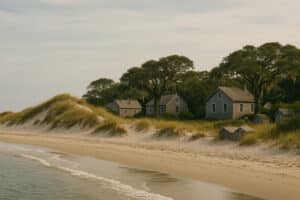
When you think of the Outer Banks, long sandy beaches and windswept dunes probably come to mind. For a comprehensive exploration of this unique locale, an Ocracoke Island guide can be invaluable. But Ocracoke Island has something different—something harder to put into words. It’s not just the beauty of the shoreline, though that’s undeniable. It’s the way the island feels alive with history, folklore, and tradition.
The moment you step off the ferry, you’ll notice life here moves at a slower rhythm. Streets are lined with live oaks draped in moss, wooden cottages lean gently with age, and small shops feel like they belong to another era. Ocracoke doesn’t shout for your attention—it whispers, and if you listen, you’ll discover stories that stretch back centuries.
This guide is my attempt to capture that whisper, to put into words what makes Ocracoke so magnetic. Over the years, I’ve walked its sandy lanes, stood at the water’s edge where Blackbeard met his fate, wandered quiet cemeteries, and listened to locals share tales that seem too wild to be true. Each visit has only deepened my love for the island.
So whether you’re planning your first trip or returning for the tenth time, this Ocracoke Island guide will take you through everything: its pirate past, its hidden gems, its fishing and boating traditions, and the modern experiences that make it one of the most memorable destinations in the Outer Banks.
👉 Why read this guide? Because it blends both practical travel advice and personal stories. You’ll not only know what to see but also why it matters. And by the end, you’ll have a list of the best things to do in Ocracoke—from ferry rides to fig cake tastings—that will shape your own unforgettable journey.
Explore Ocracoke Island on google maps
Getting to Ocracoke – Ferries, Routes, and Travel Tips
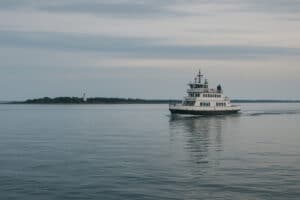
One of the most defining features of Ocracoke is its isolation. There are no bridges connecting it to the mainland. That means every traveler—whether arriving with a car, a bike, or just a backpack—comes by water. And honestly, that’s part of the charm.
Ferry Routes to Ocracoke
There are four main ferry options, each offering a unique experience: For route details, schedules, and tips, see our complete Ocracoke ferry guide.
Hatteras–Ocracoke Ferry (Free)
Duration: About 60 minutes.
Frequency: Runs hourly in winter; every 30 minutes or less in peak summer.
Best For: Budget-conscious travelers or those staying on Hatteras Island.
Insider Tip: Arrive early during July and August—the line builds fast.
Cedar Island–Ocracoke Ferry (Paid)
Duration: ~2 hours, 15 minutes.
Reservations: Strongly recommended.
Best For: Visitors from the Crystal Coast or mainland NC.
Bonus: The longer ride gives you more time to relax, read, or spot dolphins.
Swan Quarter–Ocracoke Ferry (Paid)
Duration: ~2 hours, 40 minutes.
Reservations: Required for vehicles.
Best For: Visitors from inland NC who want a direct route without driving up to Hatteras.
Experience: Quiet, scenic, and less crowded than Cedar Island.
Passenger-Only Ferry (Ocracoke Express)
Duration: ~70 minutes.
Route: Hatteras to Silver Lake Harbor.
Best For: Day-trippers without cars.
Highlight: Drops you right in the heart of the village.
👉 Traveler’s Note: The first time I took the Hatteras ferry at sunrise, I stood at the bow with a coffee in hand. The sound was glassy calm, and dolphins surfaced near the wake. By the time we pulled into Silver Lake Harbor, I felt like my trip had already begun—before I even set foot on the island.
Reservations, Schedules & Costs
Hatteras–Ocracoke: Free, no reservations.
Cedar Island & Swan Quarter: Fees vary by vehicle size; check the North Carolina Ferry System for up-to-date prices.
Passenger-Only Express: Tickets usually around $5–$15, depending on age and season.
👉 Tip: Always arrive at least 30 minutes before departure, even with a reservation. Ferries don’t wait, and spots are reallocated quickly.
What to Expect Onboard
Seating: Mix of indoor benches and open decks.
Restrooms: Available on paid ferries.
Food: Some longer routes have vending machines, but bring your own snacks.
Views: Sunsets are spectacular—especially if you’re heading west in the evening.
Ocracoke History – From Native Roots to Pirate Legends
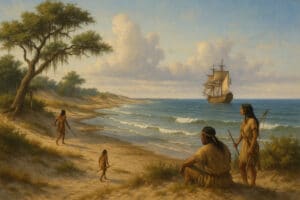
Before pirates and ferries, before tourists and lighthouses, Ocracoke was already a place of deep history. To walk its shores today is to trace the steps of Indigenous peoples, colonial explorers, mariners, and generations of island families who shaped life by the sea.
Indigenous Roots
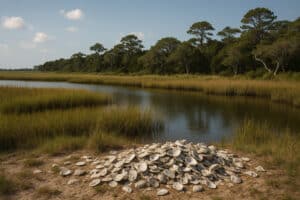
Long before Europeans arrived, Algonquian-speaking peoples lived along coastal North Carolina. Archaeological evidence shows they used the barrier islands seasonally, hunting, fishing, and gathering shellfish. Ocracoke’s inlets were rich feeding grounds, and shell middens—ancient heaps of discarded oyster and clam shells—still mark places where they camped.
Though their permanent villages were inland, the Outer Banks served as essential seasonal territories. For Native peoples, Ocracoke wasn’t a vacation—it was survival.
Early European Exploration
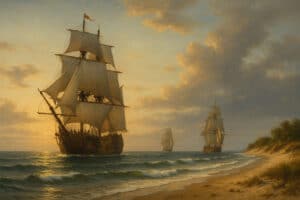
By the late 1500s, Spanish and English ships were mapping the Carolina coast. Ocracoke Inlet appeared on some of the earliest maps because of its depth and reliability. For sailors navigating the treacherous Outer Banks, it became one of the most important gateways into Pamlico Sound.
That inlet would later make Ocracoke both a hub for trade and a haven for less welcome visitors—pirates.
The Graveyard of the Atlantic
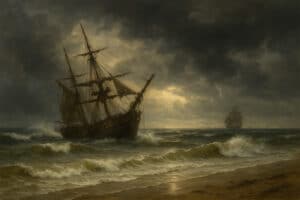
The Outer Banks quickly gained a dark reputation. Shifting sandbars, violent storms, and strong currents made these waters perilous. Mariners began calling the region the “Graveyard of the Atlantic.”
Hundreds of ships wrecked offshore.
Entire cargoes were lost in sudden storms.
Survivors sometimes washed ashore on Ocracoke, where islanders offered shelter.
Even today, wrecks remain buried beneath sandbars, attracting divers and fueling legends.
The Rise of Ocracoke Village
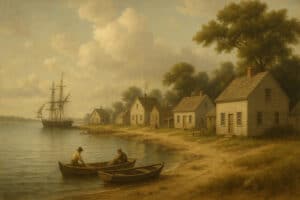
By the 1700s, a small settlement grew around Silver Lake Harbor (then Cockle Creek). Islanders built modest homes, fished for survival, and traded with passing ships. The inlet made the village valuable—and vulnerable. That vulnerability would soon attract one of the most notorious figures in history: Blackbeard.
Blackbeard and the Golden Age of Piracy
Few names in world history carry the weight of Blackbeard. To Ocracoke, he is more than a legend—he is part of the island’s identity.
Who Was Blackbeard?
Born Edward Teach (or Thatch), Blackbeard was active in the early 1700s, during what historians call the Golden Age of Piracy. He wasn’t just feared for his raids—he cultivated a terrifying image.
He tied slow-burning fuses into his beard, letting smoke and sparks surround his face during battles.
He carried multiple pistols and cutlasses, intimidating even seasoned sailors.
His flagship, Queen Anne’s Revenge, terrorized shipping routes from the Caribbean to the American colonies. Read the full Blackbeard story on Ocracoke.
Why Ocracoke?
Blackbeard needed safe harbors, and Ocracoke was perfect:
Deep but Hidden Harbor: Silver Lake allowed his ships to anchor unseen from the open sea.
Strategic Location: From Ocracoke Inlet, he could strike ships bound for mainland ports.
Community Ties: Some islanders reportedly traded with him, exchanging food for stolen goods.
Here, he rested, repaired ships, and planned raids. For a time, Ocracoke was his stronghold.
The Final Battle at Teach’s Hole
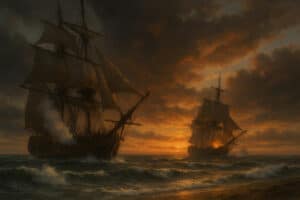
On November 22, 1718, Blackbeard’s life ended in Ocracoke Inlet. Virginia’s governor sent Lieutenant Robert Maynard to eliminate him. The clash was brutal.
Maynard lured Blackbeard close, hiding men below deck.
When Blackbeard boarded, Maynard’s men swarmed him.
He fought ferociously, sustaining over twenty wounds before finally falling.
His head was cut off and hung from Maynard’s ship as proof of victory.
This dramatic death cemented Ocracoke’s place in pirate history forever.
Blackbeard’s Legacy Today
Teach’s Hole: The cove where he fell still bears his name.
Festivals: Ocracoke hosts pirate reenactments and storytelling each year.
Ghost Stories: Locals say his spirit still wanders the waters at night.
👉 Traveler’s Note: Standing at Springer’s Point, looking over Teach’s Hole, I couldn’t help but imagine cannon smoke and battle cries echoing over the sound. The water was calm, but the story gave it an eerie weight.
5. Haunted Ocracoke – Ghost Stories and Local Legends
If history made Ocracoke famous, folklore gave it personality. The island’s isolation and turbulent past have bred ghost stories that still shape its cultural identity. Explore more tales in Ocracoke ghost stories & legends.
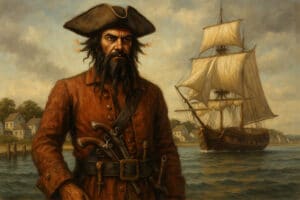
Blackbeard’s Restless Spirit
The most famous tale says Blackbeard’s ghost haunts Teach’s Hole.
Fishermen claim to see strange lights moving across the water.
Some hear whispers carried by the wind.
Others tell of a headless figure rising from the sound before vanishing.
Whether you believe or not, the legend is woven into island life.
The Ghost Ship
For centuries, sailors spoke of a phantom ship glowing on the horizon before storms. Called the “Ghost Ship of the Outer Banks,” it was said to be an omen of disaster. Today, the story continues as part of Ocracoke’s rich maritime folklore.
The Crying Woman of the Inlet
Some say that on moonlit nights, a woman’s cries can be heard across Ocracoke Inlet. Theories vary:
A shipwreck survivor searching for her family.
A lover calling for a sailor who never returned.
A cautionary tale to remind sailors of the sea’s dangers.
Haunted Homes & Cemeteries
Historic cottages in the village are rumored to have lingering spirits.
Guests at inns report footsteps when no one is there.
Weathered family cemeteries line Howard Street, adding atmosphere to ghostly stories.
Modern Storytelling Traditions
Ghost Walks: Guided tours through Ocracoke Village bring these legends to life.
Festivals: Events like the Pirate Jamboree include ghost storytelling.
Oral Tradition: Locals pass tales down through generations, keeping folklore alive.
👉 Traveler’s Note: I once joined a ghost walk through the village. As we stopped by a cemetery under the live oaks, the guide whispered a story about shadowy figures seen moving between the headstones. The street was quiet, lanterns flickered, and for a moment, I felt the past pressing close.
Springer’s Point Preserve – Nature, History & Pirate Lore
Springer’s Point is one of the most atmospheric places on Ocracoke. Use our detailed Springer’s Point guide to plan your walk. Tucked at the edge of the village, this preserve feels like stepping into a world where nature, history, and legend blend seamlessly.
Good views of the Sound, lots of benches for sitting, beautiful and interesting woods to walk through.
Explore Springer’s Point Preserve on google maps
Walking Through Maritime Forest
The trail begins under a canopy of ancient live oaks, their branches twisting and draped with Spanish moss. Palmettos and yaupon holly line sandy paths, while birdcalls echo through the quiet. It feels worlds away from the bustle of the harbor, even though it’s only a short walk from the village.
The air here is heavy with salt and damp earth. In summer, butterflies dance through patches of sunlight. In fall, the forest takes on a golden hue. The preserve offers a rare glimpse of what the Outer Banks looked like centuries ago, before development.
A Pirate’s Last Stand
Springer’s Point overlooks Teach’s Hole, the site of Blackbeard’s final battle in 1718. Standing at the shore, it’s easy to picture cannons firing and men shouting as Maynard’s ships closed in. Today, the sound is calm, but the story lingers like a shadow.
Many visitors pause here not just for the view, but to feel that eerie connection to history. Local legends even say Blackbeard’s ghost still roams these waters at night.
Why It Matters Today
Conservation: The preserve protects fragile maritime forest and shoreline habitat.
Cultural Heritage: It connects visitors to Ocracoke’s pirate past.
Peaceful Escape: Locals often come here for quiet walks, meditation, or watching the sunset.
👉 Traveler’s Note: I recommend visiting Springer’s Point late in the afternoon. Walk slowly, listen to the forest, and when you reach the shore, watch the light change over the water. It’s hauntingly beautiful.
The British Cemetery – Honoring WWII Heroes
Ocracoke’s history isn’t just pirates and fishermen—it also carries global significance. Tucked into the village is the British Cemetery, a small but powerful reminder of World War II. Here’s everything you need for visiting the British Cemetery.
I always visit the British Cemetery on every trip to Ocracoke. This trip I was able to bike to it early on a Sunday morning. The flags were at half mast to pay respects to Queen Elizabeth’s passing.
Explore British Cemetery on google maps
The Battle of the Atlantic
In 1942, German U-boats prowled the U.S. East Coast, sinking merchant and military vessels. The waters off North Carolina became so dangerous they earned the name “Torpedo Junction.”
One of those ships was HMT Bedfordshire, a British trawler assigned to patrol U.S. waters. In May 1942, it was torpedoed by a German submarine. All crew members were lost.
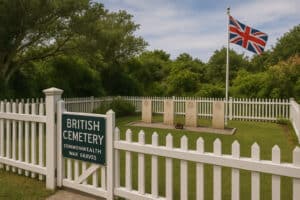
The Cemetery’s Story
Four bodies from the Bedfordshire washed ashore on Ocracoke. Islanders buried them with honor in a small plot of land provided by the U.S. Coast Guard. That site became the British Cemetery.
It remains British soil to this day, maintained by both locals and the Commonwealth War Graves Commission. The Union Jack flies there, and headstones mark the sailors’ names.
Annual Memorial Ceremony
Every spring, a memorial service honors the men buried here:
Representatives from the British Royal Navy, U.S. Coast Guard, and local community attend.
Wreaths are laid at the graves.
Speeches remind all present that even remote Ocracoke played a role in world events.
Visiting Today
The cemetery is small, quiet, and moving. Standing there, surrounded by live oaks, you realize the global reach of war—and the humanity of an island community that gave strangers a respectful resting place.
👉 Traveler’s Note: I found this to be one of the most emotional stops on Ocracoke. It’s humbling to think that this tiny island holds ground that is forever British, in honor of men who died protecting freedom.
Ocracoke Fishing & Boating Traditions – Life on the Water
If the land gives Ocracoke its charm, the water gives it its soul. Fishing and boating traditions shaped island life for centuries and continue to define its identity today. Get the full story in Ocracoke fishing & boating traditions.
Explore Silver Lake Harbor on google maps
Early Survival and Community Fishing
For the first settlers, fishing wasn’t a hobby—it was survival. Families hauled nets from the surf, caught mullet and drum, and salted fish to last through lean months. Fishing camps popped up along the beaches, where entire families worked together.
These camps became part of the island’s culture, blending hard work with social gatherings. Stories of those “mullet camps” are still told by older islanders.
The Art of Boatbuilding
Fishing traditions thrived because of skilled boatbuilders. Using local cedar and oak, island craftsmen created vessels designed for both shallow sound waters and the rough Atlantic.
Boatbuilding wasn’t just craft—it was legacy. Fathers taught sons, who then passed skills to their children. Some of those boats still exist, restored and displayed as part of Ocracoke’s maritime heritage.
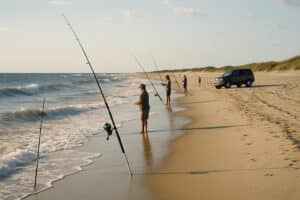
Surf Fishing and Modern Angling
Ocracoke’s 16 miles of undeveloped beach make it one of the best surf fishing destinations on the East Coast. Today, anglers cast for drum, bluefish, pompano, and flounder. Families drive out in four-wheel-drive vehicles, plant rods in the sand, and wait for the thrill of a strike.
For visitors, it’s both recreation and immersion into tradition. Local bait shops rent gear, and charter captains share generations of knowledge.
Sportfishing Charters
Beyond the surf, offshore sportfishing thrives. Charter boats leave Silver Lake Harbor at dawn, chasing tuna, mahi-mahi, and marlin. Many captains come from families with fishing roots, blending old skills with modern tourism.
Booking a charter isn’t just an adventure—it’s a way to step into a living maritime culture.
Festivals and Community Events
Fishing traditions are celebrated in community events like the Ocracoke Working Watermen’s Festival. Locals showcase old nets, share stories, and fry fish for all to enjoy.
👉 Traveler’s Note: I joined a fall surf fishing trip at South Point, and though I didn’t catch much, I left with something more valuable—stories shared by locals who’ve fished those waters their entire lives.
Ocracoke Lighthouse – A Timeless Beacon
The Ocracoke Lighthouse is one of the island’s most iconic landmarks. Plan your stop with our Ocracoke Lighthouse visitor guide. Standing quietly at the edge of the village, it is the second-oldest operating lighthouse in the United States and a symbol of the island’s enduring relationship with the sea.
Great example of a small lighthouse. Very well preserved with volunteer guides to explain the lighthouse. Good parking just 90 feet down the street.
Explore Ocracoke Lighthouse on google maps
A Brief History
Built in 1823, the lighthouse was designed to help ships navigate the treacherous waters of Ocracoke Inlet, one of the few channels connecting the Atlantic Ocean to Pamlico Sound. At the time, the inlet was a major shipping route, and countless vessels depended on the beacon to guide them safely.
Constructed with solid brick and covered in whitewashed mortar, the lighthouse stands 75 feet tall—not as towering as some lighthouses, but perfectly suited for the flat landscape of Ocracoke.
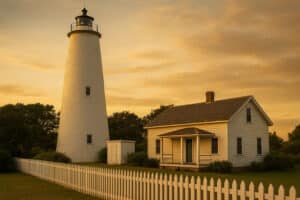
Life of the Lighthouse Keepers
Before electricity, lighthouse keepers lived demanding lives. They climbed the narrow staircase daily, carrying oil to fuel the lamp. Families lived in modest quarters nearby, their lives tied to the rhythm of the light and the dangers of the sea.
Though the keeper’s quarters no longer exist, the stories of those who tended the light remain part of the island’s heritage.
Visiting Today
Unlike some lighthouses, you can’t climb Ocracoke Lighthouse—it remains closed to the public due to its fragile interior. But visitors can walk up to its base, admire its simplicity, and imagine the countless ships it once guided.
Best Time to Visit: Early morning or sunset, when the white tower glows against the changing light.
Photography Tip: The lighthouse framed by live oaks makes for one of Ocracoke’s most iconic photos.
👉 Traveler’s Note: I found that visiting the lighthouse wasn’t just about the building itself—it was about standing in a spot that has quietly watched over Ocracoke for more than two centuries.
Ocracoke Beaches – Wild, Remote, and Beautiful
While history and culture define the village, Ocracoke’s beaches are the island’s wild heart. Stretching for 16 miles, they remain some of the most unspoiled on the East Coast.
Explore Ocracoke Lifeguarded Beach and South Point on google maps
Cape Hatteras National Seashore
Most of Ocracoke’s beaches fall within Cape Hatteras National Seashore, which protects the shoreline from development. That means no boardwalks, no neon lights, no high-rise hotels—just sand, dunes, and ocean. See the best access points in our Ocracoke beaches guide.
When you step onto the beach, you feel a sense of raw beauty that’s increasingly rare.
Best Beaches on Ocracoke
Lifeguarded Beach – The safest choice for families, with seasonal lifeguards and restrooms.
South Point – Known for surf fishing, wide sands, and dramatic sunsets.
Ocracoke Inlet – Remote and ever-changing, shaped by shifting sands and currents.
Airport Road Beach Access – A quieter spot perfect for evening strolls.
Each beach feels slightly different, but they all share the same sense of vastness and solitude.
Activities Beyond Swimming
Surf Fishing: Anglers line the shore, rods planted in the sand.
Shelling: After storms, you can find rare shells scattered along the tide line.
Beach Driving: With a permit, four-wheel-drive vehicles can explore miles of open beach.
Stargazing: With little light pollution, Ocracoke’s beaches offer incredible night skies.
👉 Traveler’s Note: One evening I walked the beach near South Point as the sun dipped below the horizon. The sky turned shades of pink and purple, and the only sound was the surf. In that moment, Ocracoke felt endless and eternal.
Beyond the beaches and history, Ocracoke holds treasures in its small shops, artisan studios, and quiet corners. These hidden gems reveal the island’s creative soul.
Independent Shops
Books to Be Red: A cozy bookstore on School Road where rainy days turn into discoveries. Local authors and Ocracoke history are highlights.
Village Craftsmen: Tucked away on Howard Street, this gallery showcases pottery, woodwork, and jewelry by local artisans.
Down Creek Gallery: Fine art inspired by coastal landscapes, from paintings to sculpture. Go deeper with our Ocracoke hidden gems—shops, artisans & secret spots guide.
Shopping here feels less like retail and more like connecting with the island’s identity.
Artisan Community
Ocracoke’s isolation has long inspired creativity. You’ll find:
Handmade glass and jewelry at Pamlico Gifts.
Quirky treasures at Village Thrift.
Seasonal fig-inspired crafts tied to the Fig Festival.
Each studio carries the personal touch of its maker, reflecting the island’s relationship with sea and sand.
Secret Spots in the Village
Howard Street: A shaded lane lined with clapboard houses and family cemeteries. Walking here feels like stepping back to the 1800s.
Springer’s Point: A secluded preserve blending nature and pirate history.
Hidden Docks: Quiet harborsides where locals gather to talk at sunset.
Local Businesses Worth Supporting
Ocracoke Coffee Company: Morning lattes under the oaks.
Go! We came here for breakfast every morning. The lines were always long but was well worth the 30+ minute wait every time.
Native Seafood Markets: Fresh catches brought in by island fishermen.
Ride the Wind Surf Shop: A hub for both surf gear and eco-tours.
Fig Cake Makers: Offering Ocracoke’s signature sweet treat.
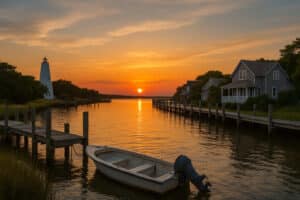
👉 Traveler’s Note: On my last visit, I wandered into a small dock where fishermen were swapping stories at sunset. I wasn’t sure if I belonged there, but a local waved me over. That simple moment—listening to tales as the sky turned orange—felt more memorable than any guidebook stop.
Ghost Stories & Legends
Ocracoke’s beauty by day shifts into mystery by night. With its pirate past, shipwrecks, and centuries of seafaring life, it’s no surprise the island is steeped in ghost stories and legends. These tales blend history with imagination, shaping Ocracoke’s cultural identity.
Equal amounts of fun and interesting information about the island’s history and ghosts. Nice walk. Mosquito spray and small flashlight is recommended.
Blackbeard’s Ghost at Teach’s Hole
The most famous legend is that of Blackbeard the Pirate, who met his end off Ocracoke in 1718. After a brutal battle with British naval forces, his headless body was said to rise from the water, wandering the shore in search of his missing head.
Even today, locals whisper about strange lights and shadows in the area known as Teach’s Hole. Some fishermen claim to have heard voices carried on the wind. Whether or not you believe, standing there at dusk gives you chills.
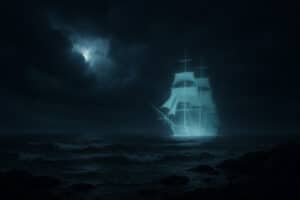
The Ghost Ship of the Outer Banks
For centuries, sailors have told of a glowing phantom ship appearing offshore, often before storms. Known as an omen of danger, the tale reminded mariners of the countless wrecks along the Graveyard of the Atlantic.
Though sightings are rare today, the legend remains alive in island lore and ghost walks.
Hauntings in Ocracoke Village
The village itself is filled with ghostly whispers:
Old Homes & Inns: Some claim historic cottages hold spirits of past residents.
Village Cemetery: With headstones dating back centuries, it feels both peaceful and haunting.
Footsteps in Inns: Guests have reported the sound of footsteps when no one else was inside.
👉 Traveler’s Note: I joined a ghost walk one evening, lanterns glowing along the village lanes. The storyteller’s voice mixed with the sound of crickets and distant surf. Even if you don’t believe in ghosts, the atmosphere made the history come alive.
Ocracoke Festivals & Events
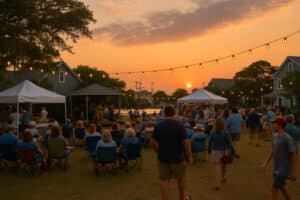
For a small island, Ocracoke has a lively calendar of festivals that celebrate music, food, history, and tradition. These events bring locals and visitors together in ways that feel both festive and deeply rooted.
Ocrafolk Festival
Held every June, the Ocrafolk Festival is the island’s most beloved event. Featuring local musicians, storytellers, and artisans, it turns the village into a celebration of creativity. Here’s where to find artisan shops and galleries year-round. Families spread blankets on the grass, children dance, and the air fills with fiddle tunes and sea shanties.
Ocracoke Fig Festival
Ocracoke has a sweet side, too—its famous fig cakes. Every August, the Fig Festival highlights this unique local tradition with bake-offs, cooking demos, and craft vendors. Visitors get to taste fig preserves and cakes passed down through generations.
Blackbeard’s Pirate Jamboree
Every October, the island honors its pirate past with reenactments, sea shanties, and storytelling. The Pirate Jamboree is lively and theatrical, complete with cannon fire echoing across Silver Lake Harbor.
Seasonal Community Events
From summer fish fries hosted by churches to storytelling nights and holiday parades, Ocracoke’s community calendar reflects the island’s heart.
👉 Traveler’s Note: I stumbled upon a community fish fry one summer evening. The hush puppies were crisp, the mullet was fresh, and strangers welcomed me like family. It was one of those experiences that reminded me why Ocracoke feels more like a home than a destination.
Practical Travel Guide – How to Visit Ocracoke
Visiting Ocracoke requires planning, but that’s part of its charm. You can’t just drive onto the island—you arrive by ferry or boat, leaving the rush of the mainland behind.
Getting There by Ferry
Hatteras–Ocracoke Ferry: Free and frequent, about 60 minutes, but can be crowded in summer.
Cedar Island–Ocracoke Ferry: Reservation recommended, about 2 hours 15 minutes.
Swan Quarter–Ocracoke Ferry: Longest crossing at 2 hours 40 minutes, also requires a reservation.
Passenger-Only Ferry (Ocracoke Express): Seasonal, high-speed, and drops you right at Silver Lake Harbor. See our complete Ocracoke ferry guide for reservations and routes.
👉 Tip: Arrive early—especially for free or reservation-based ferries. Summer lines can be long.
Where to Stay
Small Inns & B&Bs: Cozy, family-run options in the village.
Vacation Rentals: Cottages and houses that let you live like a local.
Campgrounds: Cape Hatteras National Seashore campgrounds put you steps from the beach.
- Castle on Silver Lake: Ocracoke’s most iconic waterfront hotel, combining historic charm with modern comfort.
Where to Eat
Howard’s Pub: A local favorite with seafood and casual fare.
We went to Howard’s the first night for supper. Every restaurant was disappointing after that! The fresh caught fish of the day is so worth it.
Eduardo’s Taco Stand: Known for mahi-mahi tacos and laid-back charm. Dive deeper into the timeline and lore in our Ocracoke history & pirate legends guide.
Great food!! Went to Ocracoke for the day and someone had recommended eating here, so glad we did! The food was very fresh and delish!!
Ocracoke Oyster Company: Fresh oysters and clams straight from nearby waters.
Amazing food! 10 out of 10! Fresh ingredients and excellent service. Definitely the best restaurant on the island. Would highly recommend.
Sweet Treats: Don’t leave without trying fig cake or fig preserves.
Getting Around
Most visitors explore by bike, golf cart, or on foot. The village is compact, and parking is limited. Biking along shaded lanes is one of the best ways to feel Ocracoke’s rhythm.
Final Thoughts – Why Ocracoke Captures the Imagination
Ocracoke isn’t just a place—it’s a feeling. It’s the hush of waves on an empty beach, the creak of a dock at sunset, the laughter of locals at a fish fry, and the echo of pirate legends in the night air.
What makes Ocracoke special is its balance of past and present. You can step into history at the lighthouse or cemetery, shop for handmade crafts, join a modern festival, or simply wander into a secret spot known only to locals. Every experience feels layered—history, culture, and nature woven together.
For travelers, Ocracoke is a reminder to slow down. It teaches you that the journey matters as much as the destination—whether it’s a ferry ride across Pamlico Sound or a walk down Howard Street.
👉 Traveler’s Note: Each time I leave Ocracoke, I feel like I’ve left a piece of myself there. And that’s how I know I’ll return.

