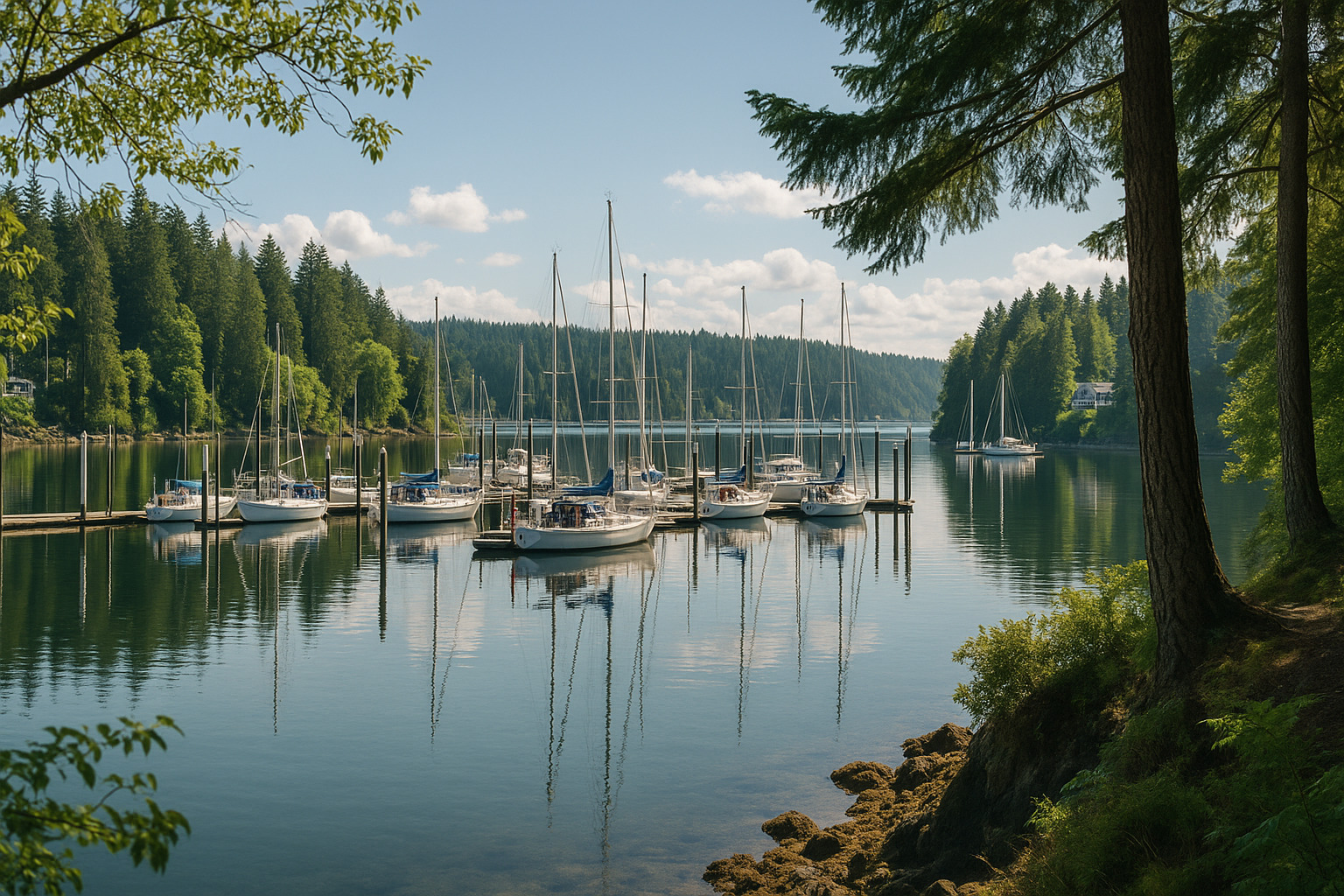
There are places you visit to see, and places you visit to frame. Port Ludlow is both, offering some of the most stunning photography spots. Tucked between the quiet arms of Hood Canal and the evergreen rise of the Olympic Peninsula, this harbor town is a dream for photographers chasing stillness, reflection, and light. Every dock, trail, and tideline here feels composed—as if nature has been waiting for your lens.
I’ve traveled across Washington photographing waterfalls and shorelines, but few places have the layered beauty of photography spots Port Ludlow. The combination of mist, cedar forest, and mirror-calm marina turns even ordinary mornings into cinematic scenes.
Explore Photography Spots on Google Maps

Where Water Meets Light – First Impressions of Port Ludlow
Port Ludlow reveals itself slowly, especially at sunrise on the marina boardwalk where salt air mingles with the scent of fir trees and fog threads around sailboat masts. The light does not explode but arrives in a soft, honey-silver glow that stretches the golden hour far longer than expected. For a photographer, the lesson comes quickly: patience matters more than expensive gear. Here, light slides gently across water, hulls, and forested hills, giving you time to breathe, adjust, and truly see before you press the shutter.
Marina & Harbor – Reflections, Blue Hour, and Working Boats
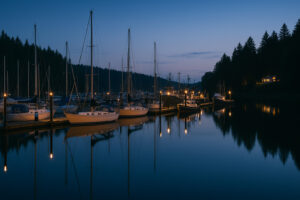
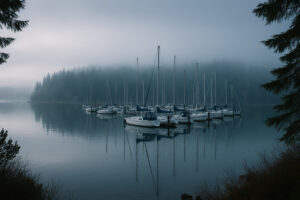
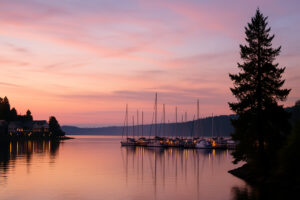
The Port Ludlow Marina and Harbor Vista Deck form the most accessible and rewarding starting point for photographers. From sunrise to mid-morning, you can frame herons on pilings, geometric rows of masts, and glassy reflections that double the sky. Later, blue hour turns dock lights into a constellation on the water. Tripods on the outer deck, polarizing filters to tame glare, and occasional long exposures on windless days turn everyday marina scenes into images where boats seem to float above liquid glass, especially when revisited again at dusk.

Waterfalls, Forest Light, and Quiet Trails
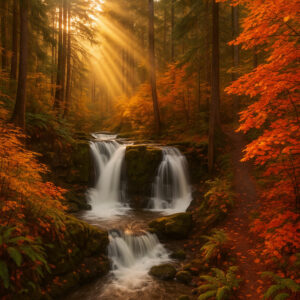
Just beyond the shoreline, Port Ludlow’s forest trails offer a completely different mood built around shadow, texture, and the sound of falling water. Ludlow Falls, reached by a short loop near the Inn, is a modest but highly photogenic cascade framed by mossy cedar and maple. A tripod and neutral-density filter transform the flow into soft ribbons while ferns and trunks fill the edges of the frame. Nearby spots like Teal Lake, Shine Creek bridge, and segments of the Olympic Discovery Trail add still reflections, leading lines, and abundant wildlife for those who enjoy intimate woodland compositions rather than grand vistas.
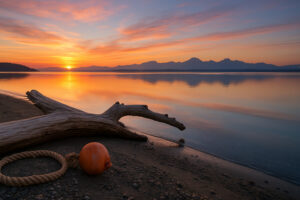
Along the coast, small coves and beaches become an open-air studio for minimalism and reflection. Ludlow Bay Beach behind the Inn is ideal for sunset and post-sunset color on calm water, where driftwood, ropes, and buoys provide foreground interest. Shine Tidelands State Park reveals mirror-like sand flats at low tide, perfect for cloud and mountain reflections or macro studies of tidepools and shell textures. Oak Bay County Park offers pastel horizons and long exposure opportunities as waves turn to mist, while pullouts along Hood Canal deliver elevated views of wave patterns, shore curves, and evolving color bands.
Wider Vistas – Mountains, Valleys, and Fields of Light
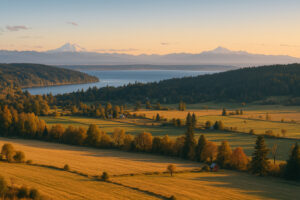
Beyond town, a wider landscape opens up for photographers who want height and breadth. Mount Walker Viewpoint looks out over Puget Sound, Hood Canal, and distant peaks such as Rainier and Baker, with raptors often riding the updrafts for telephoto shots. Chimacum Valley provides golden farm fields, classic barns, and hunting hawks at dusk, especially near Finnriver Farm’s cider garden. Together with Teal Lake and other inland locations, these spots show how Port Ludlow sits inside a larger story of the Olympic Peninsula, where rural life, waterways, and mountains intersect in a compact radius.
Seasonal and Golden-Hour Strategy
Port Ludlow’s character changes with the calendar, and the best photography follows that rhythm. Winter brings fog, monochrome moods, and soft morning mist at the marina, falls, and lakes. Spring introduces fresh greens, rain-washed skies, and “God-ray” light after storms over Chimacum and Hood Canal. Summer delivers long, golden evenings at Oak Bay and the hidden beaches, with glowing grasses and sparkling water. Autumn ignites the forests and trails with fiery foliage around Ludlow Falls and Teal Lake. Understanding how light behaves in each season allows you to build a portfolio that feels like a year-long conversation with the same landscape.
Night and Astrophotography on Hood Canal
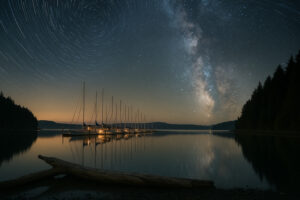
When darkness falls, Port Ludlow becomes one of the more accessible night-shooting bases in the region. The marina, Oak Bay, Teal Lake, and high points like Mount Walker offer relatively low light pollution, stable coastal air, and reflective water that doubles star fields. Long exposures capture harbor lights as smooth ribbons and star trails as circles above forest silhouettes, while Milky Way season from spring through late summer turns Oak Bay into an ideal foreground for galactic arcs. With a wide, fast lens, tripod, and careful attention to safety and etiquette, night work here feels both cinematic and surprisingly peaceful.
Gear, Settings, and Photographer Mindset
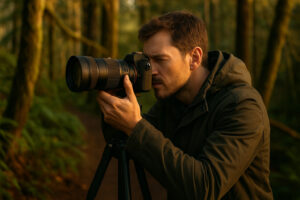
The article’s advice on equipment favors a lean but capable kit: a weather-sealed camera, wide and telephoto lenses, tripod, polarizer, and a couple of neutral-density filters handle most situations from waterfalls to star fields. Suggested settings cover silky forest water, sharp wildlife, glowing sunsets, and clear night skies, but the deeper lesson is mental rather than technical. Local photographers emphasize moving slowly, reading the light before touching the camera, and letting conditions dictate style. Even smartphone users are encouraged to shoot RAW, lock exposure, and focus on composition, proving that awareness outperforms gear in most scenes.
Eco-Photography and Map View – Shooting With Respect and Orientation
Ethics are woven through every location: stay on trails to protect moss and ferns, avoid disturbing tidepools and wildlife, fly drones only within legal and respectful limits, and keep soundscapes as quiet as the images look. A simple mental map links everything together: the marina and Ludlow Bay as the central hub, forests and falls just inland, Teal Lake and trail segments to the west, beaches like Shine Tidelands and Oak Bay along the Canal, and higher viewpoints such as Mount Walker further afield. Plotting these on a Google Map or custom itinerary helps photographers move efficiently while keeping impact low and awareness high.
Final Thoughts – Port Ludlow as a Conversation With Light
In the end, Port Ludlow is less a checklist of photography spots and more an ongoing dialogue between land, water, and light. Mornings belong to misty marinas and quiet lakes, afternoons to forests and valleys, and evenings to beaches and pastel skies. Nights open to stars, harbor reflections, and moonlit water. The article’s closing insight is simple: here, the finest images happen when you stop trying to conquer the scene and instead slow down enough to witness it. If you arrive with patience, respect, and curiosity, Port Ludlow will not just fill your memory card, it will reshape how you see every landscape afterward.