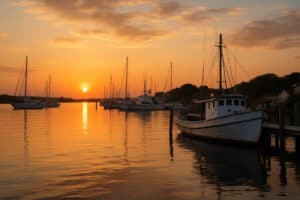
Life on Ocracoke Island has always been defined by the water. Tucked away on the southern end of North Carolina’s Outer Banks, this small barrier island has no bridges connecting it to the mainland—only ferries and boats. That isolation shaped the character of the islanders, known as “O’cockers,” who built their world around the sea. Fishing, boatbuilding, and maritime trade weren’t just occupations here—they were survival, identity, and culture all tied into one.
When you walk along Silver Lake Harbor at sunset today, you’ll see yachts, charter boats, and a few working vessels rocking gently in the water. It feels peaceful, almost timeless. Yet behind that calm horizon lies a history filled with storm-battered fishermen, skillful boatbuilders, and generations of families who lived by the tides. Ocracoke’s fishing traditions and boating heritage are some of the strongest in the Outer Banks, and they continue to influence daily life, even as tourism has become the island’s main industry.
This article dives into that story—from the early maritime heritage of Ocracoke to the surf fishing traditions that brought families together, from legendary boatbuilding skills to the rise of sportfishing. Along the way, I’ll share how these practices shaped the island’s culture and why they still matter for locals and visitors alike.
The Roots of Ocracoke’s Fishing Traditions
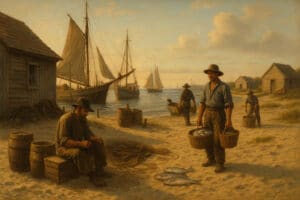
Fishing on Ocracoke didn’t begin with recreational trips or sport charters—it started as a matter of survival. Long before ferries carried visitors across Pamlico Sound, the island’s first residents depended on the ocean for food. The Hatteras people are believed to have harvested fish and shellfish from these waters long before European settlement. You can taste this history in today’s Ocracoke restaurants.
By the 1700s, when the first permanent communities formed, Ocracoke men took to the water daily in small skiffs or sailing vessels. They hauled in mullet, drum, oysters, and clams. Nets were mended on sandy beaches, while families smoked or salted fish to preserve them for leaner months. The work was grueling, but the bounty of the sea sustained entire generations.
Fishing also meant trade. Ocracoke’s location made it a natural harbor, and fishermen often bartered their catch with passing ships or used seafood as currency in nearby coastal towns. Over time, those rhythms of catching, preserving, and trading fish became a cultural anchor. Even today, you’ll hear locals talk with pride about their fathers or grandfathers who were “mullet fishermen,” carrying on a line of seafaring men that stretches back centuries.
Ocracoke Boating Traditions and the Art of Boatbuilding
Fishing alone wouldn’t have been possible without the boats that carried men into Pamlico Sound and out into the Atlantic. Ocracoke boatbuilding has always been a craft rooted in necessity and ingenuity. Islanders didn’t have access to big shipyards, so they developed their own methods of creating durable vessels with limited resources.
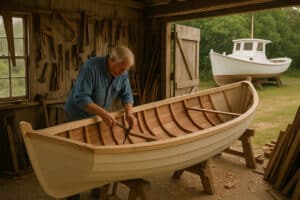
The earliest boats were dugout canoes and simple skiffs, later evolving into sharpies and spritsail rigs designed to handle both shallow sound waters and rough ocean swells. Local builders crafted boats from native woods such as live oak, cedar, and pine. These vessels weren’t just tools—they were lifelines. A well-built skiff could mean the difference between coming home with a day’s catch or not coming home at all.
Boatbuilding was also an art form passed down within families. Sons watched fathers plane wood, bend ribs, and fit planks together, learning every detail of how to balance speed, strength, and seaworthiness. Many of the traditional methods are still remembered today, and a handful of local craftsmen continue to build and restore boats using techniques that go back generations.
These Ocracoke boating traditions gave the island its reputation as a place of hardy mariners. When outsiders arrived, they often marveled at how island-built boats seemed perfectly adapted to the shifting sands and unpredictable tides of the Outer Banks. Many of these shops are near Ocracoke’s best restaurants and cafés.
Ocracoke’s Maritime Heritage: A Community Shaped by the Sea
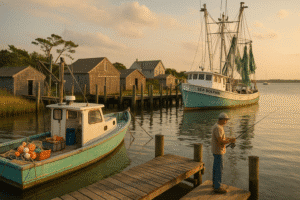
The story of Ocracoke’s fishing and boating traditions can’t be separated from its larger maritime heritage. For centuries, island life was tied directly to the water in every possible way. Fishermen supplied food. Boatbuilders ensured safe passage. Traders carried goods across the sound. And lifesavers—those stationed at the famed Ocracoke Lifesaving Station—braved storms to rescue shipwrecked sailors.
Every part of daily life was marked by the ocean. Church schedules shifted to accommodate fishing runs. Children learned to swim almost as soon as they could walk. Even the dialect of Ocracoke—once called the “Hoi Toider” brogue—was laced with nautical terms and rhythms.
Maritime heritage also meant hardship. Storms routinely destroyed boats, ruined nets, and flooded homes. Hurricanes could wipe out an entire season’s income in a single night. Yet resilience defined the Ocracoke spirit. Islanders rebuilt, repaired, and went back to the water, because they had no other choice.
That resilience is part of what makes Ocracoke’s fishing traditions so unique. They aren’t just about catching fish—they’re about the survival and perseverance of a small community living on the edge of the Atlantic.
Ocracoke Fishing History: From Nets to Modern Rods
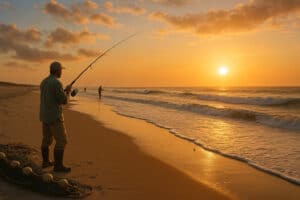
Over the years, fishing methods on Ocracoke evolved, blending old practices with new techniques. In the 1800s, families worked together in large netting operations. Men waded into the surf with heavy seine nets, while women and children helped drag the lines to shore. These “haul seine” operations brought in huge catches of mullet or bluefish, which were then salted, packed, and sold.
By the early 20th century, the introduction of gasoline engines and better gear changed everything. Fishermen could go farther into the sound or offshore, chasing larger fish like tuna and billfish. At the same time, surf fishing along Ocracoke’s long beaches became a local pastime as well as a necessity. You’d often find families casting lines at sunset, not for sport, but to put dinner on the table.
Today, fishing has taken on a dual identity. It’s still a source of food and income for some locals, but it’s also a recreational draw for thousands of visitors each year. Anglers come from across the country to try their hand at Ocracoke surf fishing or to book sportfishing charters offshore. What was once survival is now a tradition of leisure, but the roots remain the same: a deep respect for the water and the life it provides.
Ocracoke Surf Fishing: Life Along the Beaches
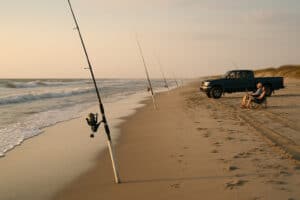
When most people think of Ocracoke fishing traditions, surf fishing comes to mind almost immediately. The island’s 16 miles of undeveloped shoreline make it one of the best surf fishing spots on the East Coast. Wide sandy beaches, shifting inlets, and the mixing of Atlantic currents create a rich feeding ground for fish. Some locals prefer the soundside rather than the busy Ocracoke beaches.
A full-service family shop where we rented bikes, took a sunrise kayak tour and bought clothes that we needed for our trip. Everyone was super friendly and so very helpful. Thank you!!!
The Culture of Surf Fishing
Surf fishing on Ocracoke is more than casting a rod—it’s a ritual. Families often load up four-wheel-drive trucks with rods, coolers, and beach chairs, then drive out along the sand until they find the perfect spot. You’ll see rods planted in sand spikes, lines arcing against the wind, and people sitting back to watch both the surf and the sunset.
For locals, this tradition stretches back generations. Long before tourists ever arrived, Ocracoke families fished from the beach out of necessity. Children grew up learning how to read the tides, spot schools of drum in the surf, and bait hooks with fresh mullet. What started as survival slowly became culture, and today it’s one of the most beloved ways islanders connect with their heritage.

What You’ll Catch in the Surf
The waters off Ocracoke teem with fish, especially in the fall when the drum run brings anglers from across the country. Red drum, bluefish, pompano, sea mullet, and flounder are among the most common catches. On some days, schools move so close to shore that you can see the water churning with activity.
Fall is legendary, but summer and spring also offer excellent opportunities. Spanish mackerel and speckled trout are common in warmer months, while cooler waters bring striped bass. Many anglers will tell you that the real thrill isn’t just the catch—it’s standing knee-deep in the surf, feeling the pull of the ocean while you wait for that first strike.
Surf Fishing as a Visitor Experience
Visitors who want to join this Ocracoke tradition don’t need to be lifelong anglers. Local bait and tackle shops rent equipment, and many offer tips on where to fish depending on tides and season. Driving permits allow vehicles on the beach, but you’ll also find great fishing spots near walk-in access points.
TripAdvisor reviews often highlight the excitement of surf fishing on Ocracoke, even for beginners. One visitor wrote, “I never thought I’d catch a fish bigger than my arm, but standing there in the surf at sunset—it happened. The locals gave me advice, and suddenly I felt like part of their tradition.” That sense of belonging is exactly what makes the experience so memorable.
The Rise of Ocracoke Sportfishing
While surf fishing has its charm, Ocracoke’s waters also attract those chasing bigger game—marlin, tuna, mahi-mahi, and wahoo. Sportfishing has become one of the most visible extensions of Ocracoke boating traditions, drawing anglers from around the world.
Charter Boats and Offshore Adventures
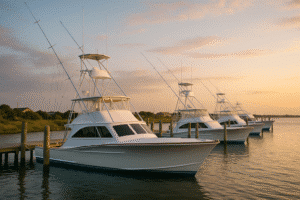
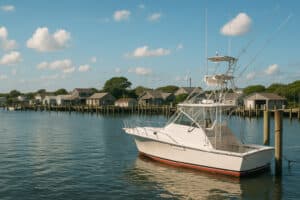
Walking along Silver Lake Harbor, you’ll notice charter boats lined up, their crews preparing for offshore trips. These boats, often 30 to 50 feet long, head out before dawn, passing through Ocracoke Inlet into the open Atlantic. For many visitors, a day on a sportfishing charter is the highlight of their trip.
Sportfishing here carries its own history. In the mid-20th century, as recreational fishing gained popularity along the Outer Banks, Ocracoke captains began offering guided trips. Their knowledge of the waters, combined with well-built boats, gave Ocracoke a reputation as a premier destination for offshore fishing. Today, it remains one of the best places on the East Coast to chase trophy-sized fish.
Why Sportfishing Matters to Tradition
Ocracoke sportfishing isn’t just about tourism—it’s another way the island maintains its maritime identity. Captains often come from families with deep fishing roots, blending modern charter operations with generations of seafaring skills. Many of these fishermen grew up surf fishing or working in netting operations before turning to offshore charters.
We rented kayaks to explore the Ocracoke waters and we were not disappointed. The rental was quick and easy, they gave us the option of figuring out how much time we needed.
By booking a trip, visitors aren’t just buying a day on the water—they’re stepping into a living tradition where island knowledge, boatbuilding, and fishing heritage come together.
Festivals and Community Traditions Tied to Fishing & Boating
Ocracoke isn’t just a place where fishing happens; it’s a community where traditions are celebrated and remembered. Over the decades, islanders have found ways to honor their maritime past while inviting visitors to join the story. Some traditions live on in hidden shops and community spots.
The Annual Ocracoke Working Watermen’s Festival
Perhaps the clearest example of this is the Ocracoke Working Watermen’s Festival, held each fall at the Ocracoke Community Center. This event celebrates the fishing families, boatbuilders, and mariners who’ve defined the island for centuries. You’ll find exhibits of traditional nets, demonstrations of boatbuilding techniques, and photo displays showing generations of fishermen at work.
Local seafood is, of course, the centerpiece. Visitors can sample freshly caught shrimp, clams, and fish while listening to islanders share stories about “hauling seine” or braving storms to keep boats afloat. The festival is both educational and deeply emotional—it reminds everyone, locals and visitors alike, that Ocracoke’s fishing traditions are about people as much as the sea.
Community Fish Fries
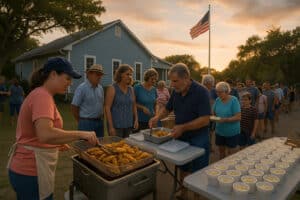
Fish fries are another beloved tradition. In summer, church groups and civic organizations host weekly or seasonal fish fries, where mullet or flounder are fried golden and served with hush puppies, slaw, and sweet tea. These gatherings aren’t tourist attractions in the typical sense—they’re community events where everyone, visitor or local, eats side by side.
For island families, these meals carry memories of their grandparents or great-grandparents cooking the same recipes after long days of fishing. For visitors, it’s an authentic way to taste Ocracoke’s fishing heritage and to feel part of the island for an evening.
Storytelling and Oral Histories
Equally important are the stories. Ocracoke has a long oral tradition, with tales of fishing hauls, dangerous storms, and humorous misadventures passed down over porch railings and dockside benches. These stories are a kind of cultural glue—they keep the community connected and allow new generations to understand what life on the water really meant.
For example, older islanders still tell tales of “mullet camps,” where families set up temporary fishing communities along the beach in fall. These camps were part work, part social gathering, and part survival strategy. Children played in the sand while men hauled nets and women prepared fish for salting. Though the camps no longer exist, the stories keep them alive.
Ocracoke Boatbuilding: Preserving a Maritime Craft
Fishing traditions couldn’t survive without the boats, and Ocracoke has always been known for its craftsmanship. In fact, Ocracoke boatbuilding is often considered as important as the fishing itself.
The Skill of Local Boatwrights
Boatbuilding on the island combined artistry with pragmatism. Islanders had to create vessels strong enough for the Atlantic, shallow enough for the sound, and versatile enough to carry both fish and people. That meant adapting traditional Carolina sharpies and spritsail rigs into designs that suited Ocracoke’s waters perfectly.
Every rib and plank was measured by hand, every joint shaped to withstand salt and storm. Locals often say that a good boatbuilder wasn’t just making a vessel—he was shaping the future of a family. A strong boat meant safe fishing trips, reliable food, and steady income.
Preservation Efforts Today
Today, only a handful of traditional boatbuilders remain, but there’s a growing movement to preserve this maritime heritage. The Ocracoke Preservation Society Museum displays models of island-built boats and tools used in boat construction. Some local craftsmen still take commissions, keeping alive the cedar-scented art of shaping hulls by hand.
Workshops and heritage programs also aim to pass knowledge on to younger generations. Visitors can sometimes see demonstrations, watching how ribs are steamed and bent into place—a skill that requires patience and instinct as much as technical know-how.
Boatbuilding is not just nostalgia—it’s identity. Without it, Ocracoke’s fishing traditions wouldn’t exist in the same form.
Traveler Recommendations: Experiencing Ocracoke’s Fishing Traditions Today
For modern visitors, Ocracoke isn’t just a place to read about maritime heritage—it’s a living community where you can step into these traditions yourself. Whether you’re curious about surf fishing, boatbuilding, or just tasting the freshest seafood, there are countless ways to connect with the island’s past while enjoying its present.
Best Surf Fishing Spots
South Point – This windswept stretch of beach is legendary for fall drum runs. Locals will tell you it’s where the “big ones” are often caught.
Near Ocracoke Inlet – The shifting channels near the inlet create feeding grounds for bluefish, drum, and mackerel. The surf can be rough, but the rewards are big.
Ramp 70 Access Area – A convenient spot for families or those new to surf fishing. Easy access and steady action make it perfect for beginners.
Explore Best surf fishing spots on google maps
Charter Fishing Adventures
If you’re ready to head offshore, booking a sportfishing charter is a must. A few respected local options include:
Drum Stick Sportfishing – Known for family-friendly trips and skilled captains who grew up on the island.
Dream Girl Sportfishing – A long-time charter that has built its reputation on chasing mahi-mahi and tuna in Ocracoke’s deep waters.
Cap’n B Sportfishing – A favorite among repeat visitors for its knowledgeable crew and exciting offshore adventures.
Tip: Charters often book out quickly during peak summer and fall seasons, so reserve early.
Explore Silver Lake Harbor and the Charter Boat Docking Area on google maps
Where to Taste Ocracoke’s Fishing Traditions
You don’t have to cast a line to enjoy the island’s seafood. Restaurants and fish markets carry on the culinary side of Ocracoke’s heritage.
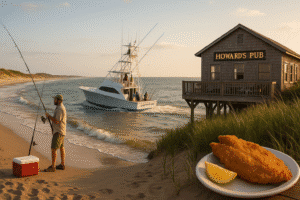
Howard’s Pub – A local institution where fried fish sandwiches and oysters are always on the menu.
Howard’s Pub was recommended as a place to eat during our vacation. Our experience today was excellent! We experienced great service and absolutely delicious food!
Ocracoke Oyster Company – Fresh oysters, clams, and shrimp harvested from nearby waters.
Eduardo’s Taco Stand – A quirky favorite where local fish often find their way into specials, like mahi-mahi tacos.
Traveler Note: Many visitors recommend trying mullet roe in season—it’s a true taste of Ocracoke’s fishing past.
What Travelers Say: TripAdvisor Insights
TripAdvisor reviews reveal just how memorable Ocracoke’s fishing traditions are for visitors:
One reviewer wrote, “We came for the beach, but surf fishing at South Point turned into the highlight of our trip. Locals even shared bait with us—it felt like being part of the community.”
Another visitor shared, “Our offshore charter was unforgettable. We caught tuna, and the captain told us stories about his grandfather fishing the same waters. It felt like history coming alive.”
At Howard’s Pub, a traveler raved, “The fried flounder tasted like it came straight off the boat—and it probably did. Simple, fresh, and perfect.”
These reviews do more than highlight experiences—they show how the island’s fishing and boating traditions are still woven into everyday life for locals and guests alike.
Ocracoke Maritime Heritage in Daily Life
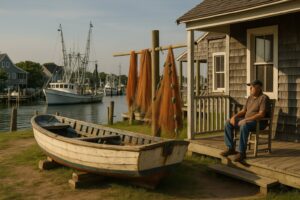
Fishing and boating traditions aren’t tucked away in museums here—they’re visible in daily rhythms. You’ll see nets drying in yards, boats being repaired along the harbor, and older men on porches swapping fishing tales. Even as tourism grows, maritime culture remains the island’s foundation.
Locals take pride in keeping these traditions alive, not just as tourist attractions but as family legacies. For many, teaching a child to fish or helping mend a boat isn’t just pastime—it’s identity. That’s why every trip to Ocracoke feels less like visiting a vacation spot and more like stepping into a living heritage.
Preserving Ocracoke’s Maritime Heritage
While modern tourism has reshaped Ocracoke’s economy, fishing and boating traditions are still carefully preserved. Islanders recognize that these practices are more than memories—they’re a cultural lifeline.
Museums and Education
The Ocracoke Preservation Society Museum plays a central role in this effort. Exhibits feature photographs of old fishing crews, models of island-built boats, and oral histories recorded from elder watermen. Visitors can see tools once used for net mending, hear recordings of the unique “Hoi Toider” brogue, and understand how deeply life was tied to the water.
Schools and community programs also introduce younger islanders to this heritage. Children learn about traditional boatbuilding and the importance of sustainable fishing. Field trips often include visits to the harbor, where they can see firsthand how fishing remains a way of life.
Sustainable Fishing Practices
Preservation today isn’t only about honoring the past—it’s also about ensuring Ocracoke fishing traditions continue into the future. Local fishermen increasingly emphasize sustainable practices, working with conservation groups to protect fish populations and maintain healthy waters.
Catch-and-release rules, seasonal limits, and education campaigns help balance the island’s heritage with environmental responsibility. These efforts ensure that Ocracoke’s waters remain abundant, not just for tourists chasing trophy fish, but for the families who’ve relied on them for centuries.
Ocracoke’s Maritime Heritage in a Modern World
For islanders, maritime heritage is not locked in history—it’s alive, adapting, and resilient. Many families still fish commercially, while others operate charters or teach visitors about local traditions. Boatbuilding, though less common, remains a respected craft.
Even those who don’t fish daily feel the water’s pull. A ferry captain steering through Pamlico Sound, a restaurant owner serving fresh mullet, or a child casting a line from the dock—they’re all carrying pieces of Ocracoke’s identity forward.
This resilience mirrors the island’s history. Just as storms once forced families to rebuild, modern challenges like tourism pressures and environmental change require adaptation. But the core traditions—fishing, boating, storytelling—continue to define life here.
Conclusion: Why Ocracoke’s Fishing Traditions Matter
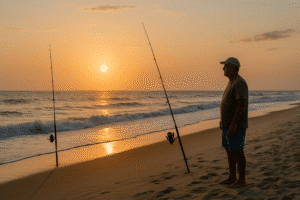
Standing on Ocracoke’s beaches at sunset, with a fishing rod planted in the sand and waves breaking at your feet, you begin to understand why these traditions endure. They’re not only about the catch or the boat—they’re about survival, community, and connection to the sea. To include fishing in your plans, use our Ocracoke travel guide.
Ocracoke fishing traditions remind us that heritage isn’t something in a book—it’s something lived, shared, and passed on. From surf fishing families at South Point to offshore captains guiding charters, from boatbuilders bending cedar planks to fish fries that bring the community together, every piece of island life is tied to the water.
For travelers, joining in these traditions isn’t just recreation—it’s immersion. Whether you cast your first line, share a story with a local fisherman, or taste seafood pulled from the ocean that morning, you become part of a living history that refuses to fade.
Ocracoke’s fishing and boating traditions are more than memories of the past—they’re the soul of the island, still shaping its present and guiding its future. Fishing is at the heart of Ocracoke’s identity, but to explore its full heritage and hidden corners, check out our Ultimate Guide to Ocracoke Island.