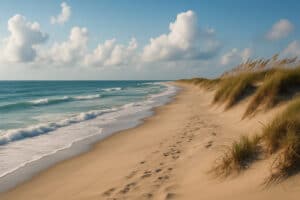
There’s something different about the beaches on Ocracoke Island. Unlike many coastal destinations filled with high-rises, boardwalks, and packed crowds, Ocracoke’s shoreline stretches for miles with little more than dunes, sea oats, and the sound of waves. It’s wild, raw, and wonderfully uncrowded. All of Ocracoke’s beaches are only accessible via ferry.
Here, you won’t find lifeguards every few blocks or concession stands lining the sand. Instead, you’ll discover stretches of pristine coastline where you can walk for an hour and see only a handful of people. That’s what makes Ocracoke special—it feels like you’ve stumbled onto one of the last true wild beaches in the Outer Banks.
But “wild” doesn’t mean unwelcoming. The island has specific beach access points that make it easy for visitors to enjoy the sand safely, whether you’re swimming with kids, surfing the waves, casting a line, or hunting for shells. This guide will walk you through the best Ocracoke beaches, what makes each one unique, and how to plan your perfect beach day. Many campers choose sites close to these beachfront campgrounds.
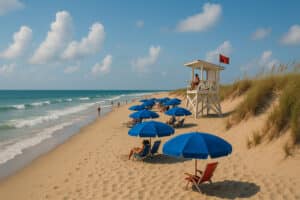
Lifeguarded Beach (NPS Beach Access)
If you’re traveling with family or prefer a more structured beach experience, the Lifeguarded Beach managed by the National Park Service is your go-to spot.
Explore the maps of Ocracoke Island beaches, ORV ramps, facilities, shelling and surf spots on google maps
We rode our bicycles from the village to this beach. There are nice rest rooms there and a good observation deck.
Location & Access
Where It Is: About 3 miles from Ocracoke Village, along Highway 12.
Access: A clearly marked parking lot with paved paths over the dunes.
Facilities: Restrooms, outdoor showers, changing rooms, and picnic areas.
This is one of the most accessible beach spots on the island, perfect for visitors who want convenience.
Why It’s Popular
Safety: Lifeguards are on duty daily in summer (typically Memorial Day through Labor Day).
Family-Friendly: Gentle slopes into the water make it safer for kids.
Crowd Level: While more popular than remote stretches, it still feels calmer compared to mainland beaches.
Parents especially appreciate the peace of mind that comes with lifeguards and facilities close by.
Best Activities Here
Swimming: The safest place on the island to take a dip.
Picnicking: Shaded picnic shelters make it easy to spend the whole day.
Sand Play: Kids love the wide, soft sand perfect for castles and digging.
Insider Tip
Arrive early during peak summer weekends—the parking lot can fill up quickly. If it does, don’t worry: other beach access points are only a short drive away, and they’re usually much less crowded.
Traveler’s Note
On my first trip to Ocracoke, I stopped at the Lifeguarded Beach before exploring the wilder stretches. Watching families set up umbrellas, kids building sandcastles, and lifeguards scanning the surf reminded me that even in such a wild place, there’s a spot for everyone to feel comfortable.
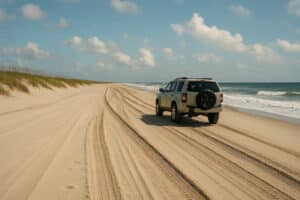
Ocracoke Beach Driving & ORV Access
One of the most unique things about Ocracoke is that much of the island’s shoreline is open to off-road vehicles (ORVs). While many beaches in the U.S. restrict driving on the sand, Ocracoke embraces it—with the right permits and respect for the environment. For adventurous travelers, this means you can load up your 4×4, drive straight onto the beach, and set up camp miles away from anyone else.
How It Works
Permits Required: The National Park Service (NPS) requires a valid ORV permit, which you can purchase online or at the Ocracoke Visitor Center.
Vehicle Rules: Only 4×4 vehicles are allowed—sedans and crossovers won’t cut it.
Access Ramps: Multiple ramps along Highway 12 lead to designated driving areas, clearly marked with signs.
Driving on the beach isn’t just about convenience—it’s about unlocking parts of Ocracoke that most visitors never see.
Why Drive the Beach?
Privacy: You can drive miles down the shore and set up where there’s nobody else in sight.
Fishing Access: ORV access is especially popular among surf fishermen hauling rods, coolers, and gear.
Photography: Sunrises, wild dunes, and untouched stretches of sand make for incredible photos.
Responsible Driving
Ocracoke’s beach driving is a privilege that comes with responsibilities.
Turtle Nesting: From May to August, sea turtles nest along the beaches. Some areas may be temporarily closed to protect them.
Bird Sanctuaries: Pay attention to signs marking closures for shorebird nesting areas.
Tire Pressure: Letting some air out of your tires (usually 18–20 psi) helps prevent getting stuck in soft sand.
👉 Tip: Bring a portable air compressor so you can reinflate tires when leaving the beach.
Where to Go
Ramp 59 (Near Village): A popular starting point for families and day-trippers.
Ramp 70 & Beyond: Leads to longer stretches of undeveloped beach, favored by fishermen and those seeking solitude.
South Point: Known for dramatic views and excellent fishing, though shifting sands mean access can change.
Traveler’s Note
I’ll never forget driving down the sand at sunrise, with the sky painted in pinks and oranges and the beach completely empty. I parked near the dunes, set up a chair, and watched dolphins swim by in the surf. That sense of freedom—reaching places only possible with an ORV—was one of my favorite Ocracoke experiences.
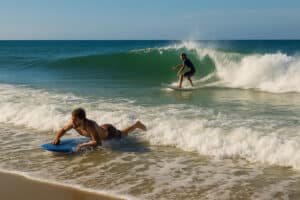
Surfing & Bodyboarding
Ocracoke’s beaches aren’t just for sunbathing—they’re also home to some of the best surf breaks in the Outer Banks. With wide, sandy beaches and consistent Atlantic swells, the island has long been a favorite spot for surfers looking for waves without the heavy crowds you’ll find at places like Nags Head or Wrightsville.
Why Surf Ocracoke?
Less Crowded: Many days you’ll share the waves with only a handful of people.
Consistent Swells: Atlantic currents and shifting sandbars keep the surf interesting year-round.
Beginner to Advanced: Conditions range from gentle rollers for bodyboarding to stronger breaks for experienced surfers.
The mix of solitude and natural beauty makes surfing here feel more like a retreat than a sport.
Best Times of Year
Summer (June–August): Small to medium waves, perfect for beginners and bodyboarding.
Fall (September–November): Best season for consistent surf, powered by tropical storms and steady winds.
Winter (December–February): Cold but powerful—experienced surfers only.
Spring (March–May): Unpredictable but can bring some excellent days.
👉 Insider Tip: Fall is the “sweet spot” for serious surfers—warm enough for comfort, strong enough for exciting waves.
Top Surfing Spots
Near Ramp 70: Known for sandbars that produce reliable breaks.
South Point: Offers long rides when conditions line up, though shifting sands make it changeable.
Any Open Beach: Part of the magic here is that good waves can pop up almost anywhere along Ocracoke’s 16 miles of shoreline.
Gear & Rentals
While Ocracoke doesn’t have big surf shops like larger OBX towns, you can still rent boards and bodyboards locally. Many vacation rentals also provide them.
Bodyboarding: Easy to rent and a great family-friendly way to enjoy the waves.
Surfboards: Limited availability, so plan ahead or bring your own if you’re serious about surfing.
Wetsuits: Needed in spring and winter; fall surfers often go without.
Surf Culture in Ocracoke
Unlike bigger surf destinations, Ocracoke’s surf scene is laid-back. Locals are friendly, the vibe is uncompetitive, and you’ll often see families mixing in with seasoned riders. Respect the ocean, share the waves, and you’ll feel welcome.
Traveler’s Note
On a breezy October morning, I paddled out near Ramp 70 with just three other surfers in sight. The waves were clean, the water still warm, and between sets I could hear nothing but gulls and the crash of surf. It felt like surfing at the edge of the world—a rare mix of adrenaline and peace.
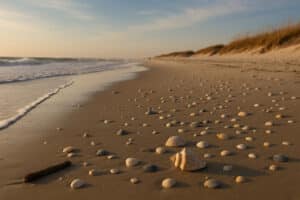
Shelling & Beachcombing
One of the simplest but most rewarding activities on Ocracoke is shelling. The island’s long, undeveloped shoreline makes it a natural treasure trove for shells, driftwood, and the occasional surprise washed in from faraway currents. For many visitors, a morning beach walk with a shell bag is as satisfying as any fishing trip or surf session.
Why Ocracoke Is Great for Shelling
Untouched Beaches: With fewer crowds, shells aren’t picked over as quickly as at more developed Outer Banks spots.
Ocean Currents: Ocracoke sits in a sweet spot where Atlantic currents deposit a variety of shells.
Year-Round Activity: Shelling can be enjoyed in any season, even winter, when the beaches are nearly empty.
It’s not unusual to walk a mile and find dozens of intact shells, many larger than you’d expect.
Common Finds
Scotch Bonnets: North Carolina’s state shell, often found here in good condition.
Whelks: Large, spiraled shells that make for dramatic keepsakes.
Sand Dollars: Sometimes found after storms, though fragile.
Olives, Augers & Conchs: Smaller shells that add variety to your collection.
Best Beach on the Outer Banks! Took the truck out 4 wheeling and the shell selection is amazing. Will be back soon !
👉 Tip: Early morning walks after high tide usually offer the best finds.
Rare & Surprising Finds
Occasionally, Ocracoke’s beaches surprise even seasoned collectors.
Sea Glass: Smoothed by waves, often green, blue, or clear.
Shark Teeth: Rare but possible with careful searching.
Driftwood: Naturally sculpted pieces that make great decorations.
Every tide seems to tell a new story about what the ocean carried in overnight.
Best Shelling Spots
South Point: Often yields a wide variety thanks to shifting sands.
Near Ramp 70: A quieter stretch where you can walk for miles without competition.
Random Luck: The truth is, great shells can appear anywhere along Ocracoke’s 16 miles of beach.
Shelling Etiquette
Leave Living Shells: If you find one with a creature still inside, return it gently to the water.
Take Only What You Need: Collecting a small bag is fine—hauling away buckets full harms the ecosystem.
Respect Closures: Some areas near turtle or bird nesting sites may be restricted.
Traveler’s Note
One foggy morning, I walked along South Point with only the sound of waves for company. In less than an hour, I had a handful of whelks, a perfect sand dollar, and even a piece of sea glass shaped like a heart. It felt like the ocean had left me a gift.
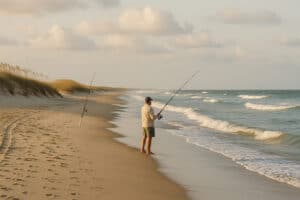
Fishing on Ocracoke Beaches
For many visitors, fishing isn’t just an activity—it’s a tradition. Ocracoke has long been a destination for anglers, thanks to its abundant waters, shifting sandbars, and the sheer variety of fish that migrate along the Outer Banks. Whether you’re an experienced surf fisherman or just curious to try casting from the shore, Ocracoke’s beaches deliver opportunities year-round.
This beach is not overrated, it’s awesome! White sand, not crowded, just beautiful. We parked in a public lot, which had restrooms and a ramp/boardwalk to the beach.
Why Fish Ocracoke?
Diverse Catches: From drum to flounder, the variety keeps things exciting.
Accessible: You don’t need a boat—just a rod, some bait, and a stretch of sand.
Community: Fishing is part of the island culture; swap stories with locals and you’ll quickly feel at home.
Common Catches by Season
Spring (March–May): Bluefish, Spanish mackerel, and puppy drum.
Summer (June–August): Flounder, pompano, sea mullet, and croaker.
Fall (September–November): Peak season for red drum (especially trophy-sized), plus bluefish and speckled trout.
Winter (December–February): Striped bass and occasional drum for those willing to brave the cold.
👉 Insider Tip: The fall red drum run is legendary—anglers travel from across the country hoping to land a giant.
Best Fishing Spots
South Point: Famous for its strong currents and variety of fish.
Ramp 70 Area: Popular with both locals and visiting anglers.
Anywhere Along the Shore: With 16 miles of accessible beach, you can often find your own quiet spot to cast.
Gear & Bait
Rods: Long surf rods (10–12 feet) work best for casting beyond the breakers.
Bait: Shrimp, mullet, squid, and artificial lures are all effective depending on the season.
Extras: Rod holders (sand spikes), coolers, and a beach cart help make fishing more comfortable.
Local shops in the village sell everything you need, including daily updates on what’s biting.
Regulations & Licenses
License Required: A North Carolina Coastal Recreational Fishing License (CRFL) is needed for anyone over 16.
Size & Bag Limits: Rules vary by species, so always check before keeping a catch.
Protected Areas: Respect closures around turtle and bird nesting sites.
Fishing Culture
On Ocracoke, fishing is more than sport—it’s woven into the island’s identity. Many families have fished these beaches for generations, and tournaments like the annual Ocracoke Invitational Surf Fishing Tournament bring anglers together in friendly competition.
Traveler’s Note
I once joined a group of surf fishermen at South Point on a cool October morning. As the sun rose, rods bent in unison as bluefish ran the surf. Even as a beginner, I felt the rush of excitement. By the time I packed up, I hadn’t landed the biggest fish, but I had a story—and on Ocracoke, that’s just as important.
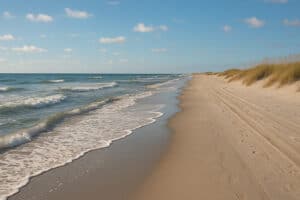
Practical Tips for Visiting the Beaches
Ocracoke’s beaches are wild and beautiful, but that also means you won’t find the boardwalk conveniences of more commercialized coasts. Planning ahead ensures you enjoy your time safely and comfortably.
Parking & Access Ramps
Highway 12 Ramps: Multiple beach access ramps are spread along Highway 12, each leading to different stretches of shoreline.
Lifeguarded Beach Lot: Offers the largest parking area with paved access, restrooms, and showers.
ORV Ramps: Designated for off-road vehicles; check signs before driving in.
Tip: Some smaller lots fill quickly in summer—arrive early or explore less-used ramps for solitude.
What to Bring
Essentials: Sunscreen, water, snacks, hats, and beach towels.
Comfort Items: Chairs, umbrellas, or a pop-up tent for shade.
Special Gear: Binoculars for spotting dolphins and birds, shell bags for collecting treasures, and fishing rods if you plan to cast a line.
Bug Protection: In summer, pack insect repellent—especially if you’ll be near dunes at dusk.
Safety Tips
Watch the Currents: Rip currents are strong along the Outer Banks. Swim at the Lifeguarded Beach when possible.
Check Flags: The NPS posts colored flags indicating surf conditions—pay attention before swimming.
Stay Hydrated: Ocracoke’s sun and wind can dehydrate you quickly. Bring more water than you think you’ll need.
Wildlife Respect: Don’t disturb turtle nests, shorebirds, or crabs.
Beach Driving Reminders
If you plan to drive on the sand:
Lower tire pressure before entering soft sand.
Avoid driving near the water’s edge—tides shift quickly.
Carry recovery gear like a shovel, traction boards, and a portable compressor.
When to Visit
Summer (June–August): Warm water, long days, and lifeguards on duty—but also the busiest season.
Fall (September–November): Fewer crowds, excellent shelling, and prime fishing.
Spring (March–May): Mild weather, great for beach walks, but water can be chilly.
Winter (December–February): Solitude at its finest—bundle up and enjoy the quiet.
Traveler’s Note
On my second visit to Ocracoke, I underestimated the sun and forgot extra water. After only a couple of hours walking and shelling, I was exhausted. Now, I always overpack water and snacks—it makes long days by the ocean far more enjoyable.
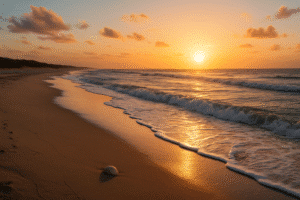
Conclusion – Why Ocracoke’s Beaches Stand Apart
Ocracoke’s beaches aren’t just stretches of sand—they’re the soul of the island. With 16 miles of wild shoreline, you can choose the calm of the Lifeguarded Beach, the adventure of driving your 4×4 to a remote spot, the thrill of catching waves, or the quiet joy of finding a perfect shell at sunrise. Few places on the East Coast offer this mix of raw beauty and solitude. Sunset walks sometimes feel like stepping into Ocracoke’s ghostly legends.
What sets Ocracoke apart is the freedom it gives you. You can walk for miles without seeing another person, fish where the surf meets the horizon, or simply sit and watch dolphins play in the breakers. It’s not about fancy resorts or crowded boardwalks—it’s about connecting with the coast in its purest form. For an overview of Ocracoke’s beaches along with its lighthouse, history, and hidden spots, visit our Ultimate Guide to Ocracoke Island.
For travelers who crave both relaxation and discovery, Ocracoke’s beaches are more than a destination—they’re an experience you’ll carry long after the sand is gone from your shoes.