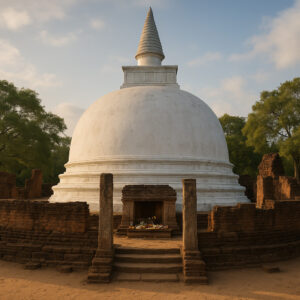
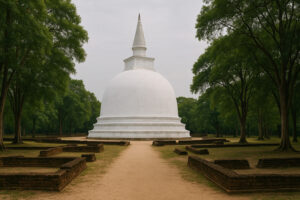
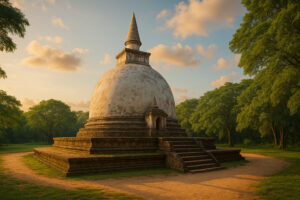
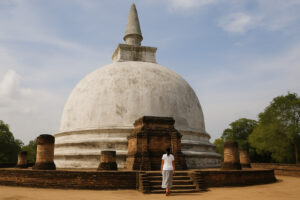
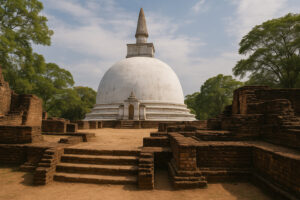
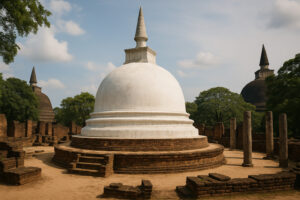
Kiri Vehera Polonnaruwa stands among the most peaceful sacred monuments of the ancient city. Unlike large stone temples and royal buildings, this stupa feels calm and deeply spiritual. The smooth white dome rises gently above the ruins and trees. Many visitors say they feel a sense of stillness as soon as they approach it.
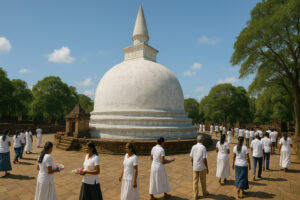
This stupa still serves as a place of worship today. Devotees come to offer flowers, light oil lamps, and walk around it in prayer. Kiri Vehera, located in Polonnaruwa, does not feel abandoned or frozen in history. It remains alive with faith.
The name Kiri Vehera means “Milk White Stupa.” The bright color connects with ideas of purity and devotion in Buddhist tradition. This meaning has remained strong for centuries.
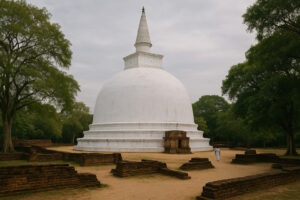
Overview of Kiri Vehera Polonnaruwa
Kiri Vehera Polonnaruwa is one of the most spiritually calming monuments in the ancient city. Unlike towering palace ruins or dramatic stone carvings, this white stupa influences visitors through stillness rather than spectacle. The moment you enter the open grounds, the pace of movement naturally slows. The clean dome rising against the sky, the soft sound of wind through trees, and the gentle footsteps of pilgrims combine to create an atmosphere that feels removed from time. Many travelers later describe this place not as something they saw, but as something they felt.
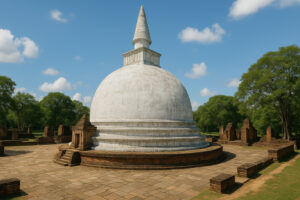
Royal Origins and Historical Background
Kiri Vehera was built during the reign of King Parakramabahu the Great in the twelfth century, the most powerful and prosperous era of Polonnaruwa. This king reshaped the entire kingdom with irrigation networks, royal palaces, monasteries, hospitals, and temples. His vision was not limited to display of power but extended deeply into spiritual development. Kiri Vehera emerged from this grand transformation as a sacred space dedicated to meditation, discipline, and quiet devotion within the larger religious framework of the city.
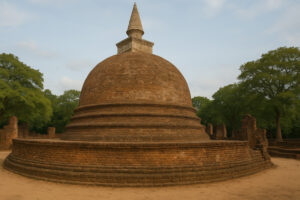
Preservation and Archaeological Importance
What makes Kiri Vehera Polonnaruwa exceptional is its level of original preservation. Many stupas across Sri Lanka collapsed over centuries and underwent heavy reconstruction using modern materials. Kiri Vehera remains largely untouched structurally. Archaeologists consider it one of the best living examples of Polonnaruwa-era stupa engineering. Its original brick pattern, dome curvature, and ancient lime plaster layers offer rare insights into medieval construction methods that would otherwise be lost to time.
Sacred Setting and Location in the City
The stupa rises from within the peaceful Alahana Pirivena zone on the western side of the Polonnaruwa archaeological park. This area once served as a monastic learning hub and healing center. Even today, the layout feels intentionally open and uncluttered. Tall trees edge the space, but the wide white dome remains clearly visible from afar, guiding visitors naturally toward the monument without the need for signage or gates.

Living Worship and Religious Meaning
Unlike many ancient ruins that function only as historical exhibits, Kiri Vehera Polonnaruwa remains a living place of worship. Local devotees believe sacred relics of the Buddha rest inside the stupa. This belief continues to shape daily prayer rituals. Throughout the year, pilgrims arrive with lotus flowers, incense, and folded hands. Worship here remains quiet and deeply personal, free from crowd-driven ceremony.
Daily Rituals and Pilgrim Experience
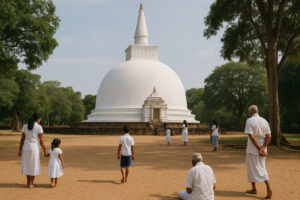
The main act of devotion at Kiri Vehera is circumambulation. Devotees walk slowly clockwise around the stupa in silence. Some complete one round, others three, and some walk until their minds feel settled. Oil lamps glow at dawn and after sunset. Flowers appear every morning. These rituals are not directed by priests or schedules. They happen naturally, passing from generation to generation.
Architecture and Symbolism of the Stupa
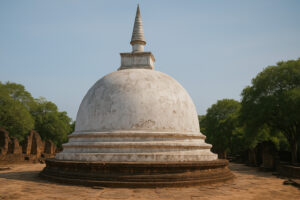
Kiri Vehera follows the classical Sri Lankan stupa form. The rounded dome symbolizes the universe and the peaceful mind. The square harmika on top represents ethical discipline. The tall spire rising upward signifies the spiritual journey toward enlightenment. The structure carries no heavy carvings or external decoration. Meaning is expressed purely through form, balance, and light.
Atmosphere and Emotional Impact
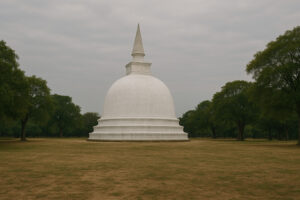
Visitors often describe a sudden emotional quiet after approaching the stupa. Loud thoughts seem to soften. The open ground and wide sky remove any feeling of confinement. Even travelers unfamiliar with Buddhism sense that the space encourages reflection. This emotional response emerges naturally rather than being guided. It is one of the most powerful impressions people carry away from Polonnaruwa.
Best Time and Practical Tips for Visiting
Early morning and late afternoon provide the most comfortable conditions. These hours offer softer light, cooler temperatures, and fewer crowds. During the rainy season, the surrounding vegetation becomes lush and green, but paths may grow slippery. Light clothing, sun protection, and water remain essential throughout the year. Visitors are advised to move slowly and deliberately, especially near the stone platform.
Respectful Behavior and Visitor Guidelines
As an active religious site, appropriate dress is required. Shoulders and knees must be covered, and shoes removed near the platform. Visitors should avoid loud conversation, flash photography during prayer, and any physical contact with the ancient structure. Walking is always done in the clockwise direction as a sign of respect.

Cycling Through the Sacred Zone
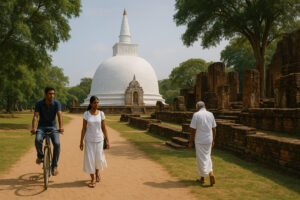
Cycling is one of the most rewarding ways to explore the sacred zone of Polonnaruwa. The paths remain flat and shaded in many sections. From the main entrance, visitors can cycle easily toward Gal Viharaya, continue to Kiri Vehera, and then reach Rankoth Vehera and Lankathilaka Image House. Cycling allows gentle airflow in the heat and creates a smooth connection between monuments without breaking the spiritual rhythm of the visit.
Gal Viharaya Polonnaruwa
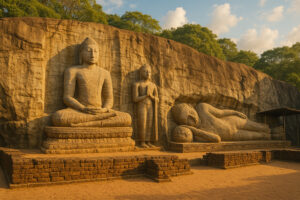
Gal Viharaya stands only a short walk or cycle away from Kiri Vehera. It features four massive Buddha statues carved directly into granite rock. These sculptures represent seated meditation, standing compassion, and reclining nirvana. The dramatic stone presence of Gal Viharaya contrasts strongly with the soft white simplicity of Kiri Vehera, allowing visitors to experience both strength and silence within minutes.
Rankoth Wehera Polonnaruwa
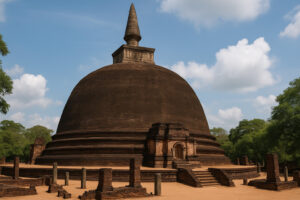
Rankoth Wehera is one of the largest stupas in the ancient city and was also built under King Parakramabahu. Its massive scale reflects royal authority and public devotion. When compared with Kiri Vehera, the contrast becomes clear. Rankoth Wehera represents national religious power, while Kiri Vehera represents personal spiritual discipline. Together, they tell the full story of Polonnaruwa’s religious life.
Alahana Pirivena Monastic Complex
The Alahana Pirivena complex surrounding Kiri Vehera once served as a combined center for meditation, education, and healing. Archaeological remains show monk residences, meditation cells, and hospital ruins. This confirms that spiritual training and medical care worked hand in hand during the Polonnaruwa era. Kiri Vehera stood as the spiritual core of this system.
Lankathilaka Image House
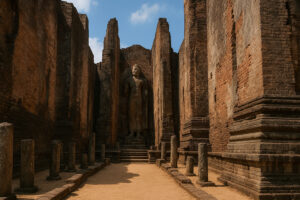
Lankathilaka Image House once housed a towering seated Buddha statue inside a tall brick and stone structure. Although the statue is now partially ruined, the interior space still conveys its former spiritual power. The contrast between this enclosed image house and the open space of Kiri Vehera reveals two complementary forms of devotion: inner stillness and visual reverence.
Cultural Role and Local Community Connection
For nearby communities, Kiri Vehera Polonnaruwa remains part of daily identity rather than distant history. Families bring children here to learn prayer and respect. Elders visit for quiet reflection. Local caretakers maintain the grounds gently without official authority, guided by inherited responsibility rather than obligation.
Legends and Folklore of the Sacred Zone
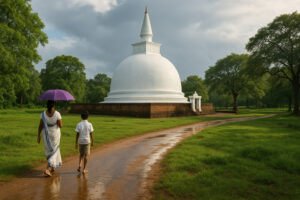
Village legends speak of rainfall returning after prolonged drought when special prayers were offered at Kiri Vehera. Others tell stories of travelers returning safely after silent visits. These glowing stories, whether symbolic or literal, strengthen emotional bonds between the people and the stupa.
Comparison with Other Great Stupas of Sri Lanka
While monumental stupas such as Ruwanwelisaya and Jetavanaramaya impress through massive scale and national ceremony, Kiri Vehera Polonnaruwa leaves a quieter impression. It teaches that devotion does not depend on height or ornamentation. Its strength lies in continuity, simplicity, and living faith.
How to Plan a Smooth Sacred Route Visit
A peaceful route begins at Gal Viharaya, continues gently to Kiri Vehera, passes through Alahana Pirivena ruins, and ends at Rankoth Wehera and Lankathilaka. This walking or cycling circuit typically takes one to one and a half hours and creates a natural spiritual progression through art, devotion, healing, and royal architecture.

Final Thoughts on the Sacred Heart of Polonnaruwa
Kiri Vehera Polonnaruwa does not dominate the landscape, yet it quietly defines the spiritual balance of the ancient city. Among grand monuments and royal ruins, it stands as a reminder that silence often holds greater power than spectacle. Alongside Gal Viharaya, Rankoth Wehera, Alahana Pirivena, and Lankathilaka Image House, it forms the true spiritual heartbeat of Polonnaruwa. Visitors may forget the height of walls and the depth of carvings, but the calm they discover at Kiri Vehera often remains with them long after the journey ends.
Frequently Asked Questions About Kiri Vehera Polonnaruwa
General Visiting Questions
What is Kiri Vehera Polonnaruwa famous for?
Kiri Vehera is famous for being one of the best-preserved ancient stupas in Sri Lanka and for its calm spiritual atmosphere.
Is Kiri Vehera still used for worship?
Yes. Devotees visit daily for prayer, flower offerings, and oil lamp lighting.
How long does a visit to Kiri Vehera usually take?
Most visitors spend between 15 and 30 minutes at the site.
Location and Access Questions
Where is Kiri Vehera located inside Polonnaruwa?
Kiri Vehera is located within the Alahana Pirivena complex, near Gal Vihara.
Can I visit Kiri Vehera with the same Polonnaruwa entrance ticket?
Yes. A single Polonnaruwa archaeological park ticket allows access to Kiri Vehera.
Is Kiri Vehera easy to reach by bicycle?
Yes. The route is flat and well marked, making it very suitable for cycling.
Dress Code and Visitor Conduct
What should I wear when visiting Kiri Vehera Polonnaruwa?
Visitors must cover their shoulders and knees and remove footwear near the platform.
Are tourists allowed to take photos at Kiri Vehera?
Yes, photography is allowed, but flash and posing disrespectfully should be avoided.
Can I sit on the stupa platform?
No. Sitting on sacred surfaces is not allowed and damages the structure.
Best Time and Weather Questions
What is the best time of day to visit Kiri Vehera?
Early morning and late afternoon offer the best light and cooler temperatures.
Is it safe to visit during the rainy season?
Yes, but visitors should walk carefully as stone surfaces may become slippery.
Does Kiri Vehera get crowded during peak season?
It usually remains quieter than other major sites like Gal Vihara and the Royal Palace.
Religious and Cultural Meaning
Why do people walk clockwise around Kiri Vehera?
Clockwise walking represents respect and spiritual alignment in Buddhist tradition.
Do locals still believe Kiri Vehera brings blessings?
Yes. Many locals visit for peace of mind, protection, and personal guidance.
Is Kiri Vehera connected to ancient healing practices?
Yes. The surrounding Alahana Pirivena area once supported both spiritual and medical care.
Safety and Travel Planning
Is Kiri Vehera safe for solo travelers?
Yes. The site is calm, open, and regularly visited by pilgrims and tourists.
Are food and restrooms available near the stupa?
No. Facilities are located closer to the main park entrance.
Is Kiri Vehera suitable for elderly visitors?
Yes, but they should walk slowly near raised stone edges.

