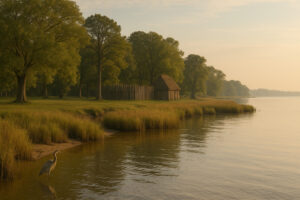
If you trace America’s story back to its very first English roots, the road ends on the banks of the James River. Here in 1607, amid forests and mosquitoes, 104 men and boys stepped ashore to found Jamestown, the first permanent English colony in North America. The Jamestown settlement history is rich with tales of struggle, survival, and growth.
Standing there for the first time, I remember the quiet more than anything else—the low call of herons and the steady lap of the river against the marsh. It’s hard to imagine that this peaceful place once echoed with gunfire, hunger, and desperate hope.
Jamestown isn’t a re-creation of history—it is history, rediscovered and revived. If you’re planning to explore all three towns that shaped early America, read our full Historic Triangle Virginia Itinerary for a complete 3-day route connecting Jamestown, Williamsburg, and Yorktown. Today the Jamestown Settlement and Historic Jamestowne tell the intertwined stories of survival, trade, and cultural exchange that shaped the nation that followed. This guide takes you through those stories as both traveler and student of time.
Explore Jamestown Settlement, VA on Google Maps
The Founding of Jamestown – 1607 and the Age of Exploration
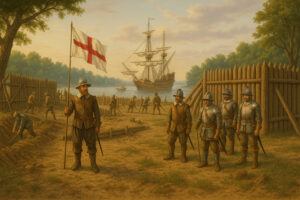
When the three ships—Susan Constant, Godspeed, and Discovery—left London in December 1606, their crew had no idea they were setting sail for legend. They were employees of the Virginia Company of London, granted a royal charter to search for gold, resources, and a passage to Asia.
After a storm-tossed journey of four months, they anchored at a small peninsula along the James River and named it after King James I. They built a fort, planted the flag, and claimed the land for England.
The site was strategic—defensible from Spanish ships but swampy and mosquito-ridden. Brackish water, disease, and a lack of experience with farming turned those first months into a trial by fire.
When I walked the archaeological pathways on Jamestown Island, it was hard to imagine the original settlers arriving here in wool clothes and armor in June heat. Yet their determination and the leadership of men like Captain John Smith kept the colony from collapse. Smith’s maps and journals remain among the most valuable records of early Virginia.
Life in the Early Colony – Hope, Hunger and Hardship
The first years at Jamestown were brutal. Hunger was constant, disease unrelenting, and relations with the local Powhatan peoples tense. By the winter of 1609–1610, known as the Starving Time, only 60 of the 500 settlers survived.
Walking through the Jamestown museum today, I stopped before a display of iron tools and skeletal remains unearthed from those terrible months. It’s sobering to realize that what began as an adventure quickly became a fight for existence.
But they endured. The introduction of tobacco cultivation by John Rolfe in 1612 transformed the settlement into a profitable enterprise. Soon, shipments of “Virginia leaf” reached England, and wealth poured back across the Atlantic. The colony expanded, and with it came new challenges—class divides, land conflicts, and the arrival of enslaved Africans to work the fields.
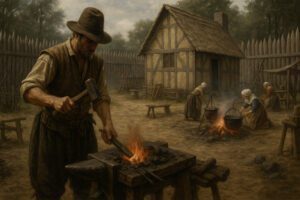
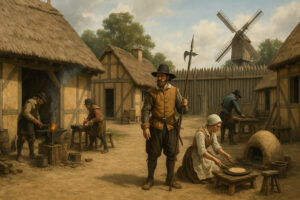
For modern visitors, life in the colony feels almost tangible. At the re-created James Fort, interpreters in period dress demonstrate blacksmithing and cooking over open fires. The smell of charcoal and bread mixes with the sound of hammer on iron—sensory clues to a century when every comfort was earned by hand.
Jamestown’s Role in American Democracy
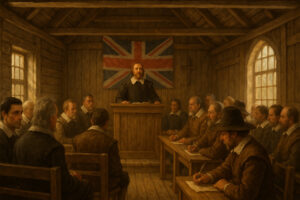
While Plymouth gets credit for Pilgrims and Thanksgiving, Jamestown was where representative government in America was born. In 1619, the first General Assembly met inside the Jamestown Church, marking the start of self-governance in the New World.
I stood in that church’s reconstruction, imagining those delegates sitting in the Virginia heat debating taxes and trade. It’s humbling to think that the ideas formed in this tiny wooden room would one day echo in the Declaration of Independence.
Jamestown’s political legacy also carried contradictions. Freedom for some came at the expense of others. The assembly’s records refer to laws about indentured servants and slaves that would shape centuries of inequality. Understanding Jamestown requires acknowledging both its achievements and its failures — both seeds of the nation that followed.
The Powhatan Confederacy – Encounters and Exchange
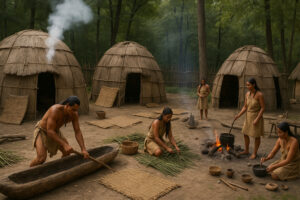
No story of Jamestown is complete without the Powhatan people. Before 1607, the Chesapeake region was home to a sophisticated network of Indigenous nations united under Chief Wahunsenacawh, whom the English called Powhatan. His confederacy spanned 30 communities and tens of thousands of people.
The early encounters were complex—part trade, part tension. Food and tools exchanged hands; so did mistrust. The legend of Pocahontas, Powhatan’s daughter, and her connection with Captain John Smith symbolizes the fragile bridge between two worlds.
At the Jamestown Settlement’s Powhatan Indian Village exhibit, I spoke with a Native educator who explained how their society thrived long before Europeans arrived. “People forget that we had governments, laws, and families too,” she said. Her words stayed with me.
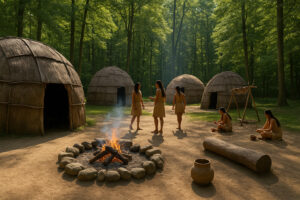
The village re-creation is no theme park—it’s a tribute. Smoke rises from reed houses, women weave mats from rushes, and children shape clay pots. It reminds visitors that Jamestown’s birth was not a beginning in a vacuum but a collision of cultures, both creative and tragic.
The Arrival of the First Africans – A Turning Point in History
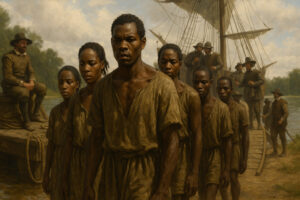
In August 1619, a ship called the White Lion anchored near Point Comfort on Virginia’s coast. On board were “20 and odd Africans” taken from a Portuguese slave ship. They were brought to Jamestown and sold as laborers — an event that marked the beginning of African presence in English North America.
Standing in the Jamestown museum’s “1619 Exhibit,” I read letters describing their arrival. It’s a moment of profound weight. These individuals contributed to Virginia’s growth even as they were denied freedom. Their descendants would become integral to the American story — builders, farmers, and leaders whose names often never made the records.
Modern Jamestown honors that truth openly. Interpretive panels and guided talks acknowledge the realities of slavery’s beginnings and invite visitors to reflect on how freedom and bondage grew side by side in the New World.
It was here that the contradictions of America first emerged: opportunity and oppression sharing the same soil. Remembering them isn’t just history—it’s responsibility.
Archaeology and Rediscovery of Jamestowne
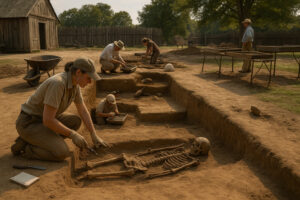
For centuries, historians thought the original Jamestown fort had been swallowed by the James River. Then, in 1994, archaeologist Dr. William Kelso and his team began digging—and proved everyone wrong. They uncovered postholes, hearths, weapons, and even human remains still resting in the soil laid down in 1607.
Today, visitors can watch the Jamestown Rediscovery Project in action. I remember standing beside an open trench where a gloved hand gently brushed dirt from a shard of pottery. The guide explained that each artifact helps rewrite a sentence of early American history.
A few of the most powerful finds include:
Captain Bartholomew Gosnold’s burial – identified by coffin shape and relics.
Glass trade beads and copper scraps – proof of exchange between English and Powhatan people.
Iron armor and weapons – showing how fearful and militarized life was.
The on-site Archaeology Museum displays these discoveries beside contemporary tools, connecting the dots between 17th-century life and modern science. Standing before the skeleton of a young woman nicknamed Jane—evidence of starvation-era survival cannibalism—is a sobering reminder of how high the price of endurance was.
Historic Jamestown is an absolute gem for history buffs and casual visitors alike.
Explore Historic Jamestowne on Google Maps
The Jamestown Settlement Museum Experience
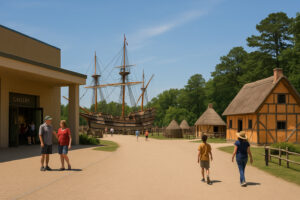
A short drive from the original island lies Jamestown Settlement, a living-history museum that translates archaeology into storytelling. Opened in 1957 for the 350th anniversary, it blends galleries, outdoor exhibits, and hands-on interpretation.
Museum has a lot of information, takes a while. Outdoor portion has a lot of walking. They have ships to look at, villages, etc. Will take a while to do it all. Very nice gift shop.
Indoor Galleries
Inside, climate-controlled halls tell the story chronologically—from the cultures of Virginia’s Native peoples through the English arrival to the growth of the colony. I paused longest at a section showing Powhatan artifacts beside European tools. The contrast—shell beads next to brass buttons—speaks volumes about exchange and adaptation.
Interactive displays invite visitors to test early navigation instruments or feel the weight of a matchlock musket. Kids trace trade routes on glowing maps, while adults linger over fragile parchments preserved behind glass.
Multimedia Storytelling
High-definition projections recreate the thunder of cannon fire and the creak of wooden ships. Yet the museum avoids romanticizing conquest—it frames colonization as a meeting of worlds, often uneasy, always transformative.
When I visited on a weekday morning, a school group sat cross-legged as an interpreter read from Captain John Smith’s journals. Their faces glowed in the light of simulated campfires, learning not just what happened—but how it felt.
Explore Jamestown Settlement Museum on Google Maps
Re-created James Fort and Living History
Step outside the museum, and you enter the smell of woodsmoke and the sound of hammering: the re-created James Fort. Timber palisades surround thatched buildings furnished exactly as they might have been four centuries ago.
Trades and Daily Life
Inside, costumed interpreters work as blacksmiths, carpenters, and cooks. I watched a smith forge nails while explaining that Jamestown’s survival depended on constant repairs—nails were so precious colonists once burned old buildings to salvage them.
At another hut, a woman baked cornbread in an earthen oven, describing how recipes blended English and Native ingredients. The scene felt alive with human rhythm—hammering, laughter, the whirr of the windmill turning above the fort walls.
Community Spirit
Visitors can pick up a halberd, try on armor, or write with a quill. It’s immersive without being staged. The interpreters speak naturally, answering questions about trade, religion, and politics as if they still lived in 1610. That authenticity is why many travelers say the re-created Fort feels like stepping through a tear in time.
Powhatan Indian Village Exhibit
Just beyond the Fort lies a forest clearing where smoke rises from domed yehakins—reed-covered houses of the Powhatan people. The air smells of cedar and ash, and handmade pottery cools beside a fire.
A Window into Indigenous Life
Guides of Native descent share how Powhatan families organized daily tasks long before Europeans arrived. I listened as one explained the matrilineal society: “Women built the houses, tended crops, and owned the land. Men hunted and fished.”
The realism extends to tools: shell hoes, stone axes, and fishing nets woven from plant fiber. Children are encouraged to grind corn or try shaping clay, giving them a tactile sense of pre-colonial skill.
What impressed me most was the tone of mutual respect. Interpreters don’t shy away from discussing conflict, but they emphasize resilience—the survival of culture, language, and craft despite colonization. As one elder put it, “We’re still here, telling our side of the story.”
The Ships of Jamestown – Susan Constant, Godspeed & Discovery
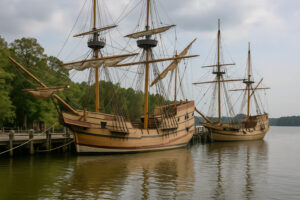
Down at the waterfront, three tall-masted ships rock gently against the pier: full-scale replicas of the vessels that carried the first settlers. Standing on their decks is pure time travel.
Life at Sea
The Susan Constant, largest of the trio, held most of the supplies; the smaller Godspeed and Discovery carried men and weapons. Below deck, the ceilings are low—barely five feet high—and hammocks swing inches apart. Imagine months here, seasick and hopeful.
Crew interpreters demonstrate knot-tying, navigation, and the constant struggle to keep provisions dry. Children can turn the whipstaff or haul a line, learning how even tiny mistakes could mean disaster on the Atlantic.
Symbol and Reality
For me, the ships embody courage mixed with naivety. The settlers believed they were founding a quick trading outpost, not an enduring society. Standing on the deck, looking upriver toward Jamestown, it’s impossible not to feel awe for their risk—and empathy for what awaited them.
We enjoyed the indoor exhibits and films and the outdoor exhibits, and people were available to answer questions outdoors. Very interesting.
Visitor Experience – What to Expect Today
Location & Access
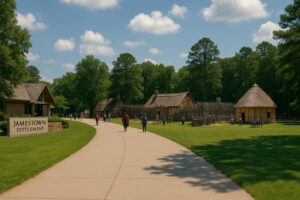
Jamestown Settlement lies on Route 31, about three miles west of Colonial Williamsburg and a short turnoff from the Colonial Parkway. Parking is free, and entry includes both indoor and outdoor exhibits.
Hours & Admission
Open daily 9 a.m.–5 p.m. (later in summer). Tickets cover all exhibits and demonstrations; combination passes include Yorktown Victory Center. Buying online saves a few dollars and time at the gate.
Guided Tours & Events
Ranger-led talks and costumed performances run hourly. During festival weeks, reenactors stage military drills and harvest celebrations. One of my favorite visits coincided with “Military Through the Ages,” when living historians from every century—from Roman legionaries to World War II troops—filled the grounds.
Facilities
The café serves sandwiches and local specialties like Brunswick stew. The gift shop stocks scholarly books, pottery, and handmade jewelry based on Powhatan designs. Restrooms, shaded benches, and accessible paths make the site comfortable for families and older visitors alike.
Practical Traveler Notes
Bring water, sunscreen, and at least half a day. Photography is welcome outdoors. Inside galleries, avoid flash. If you enjoy quieter visits, arrive early on weekdays—by 11 a.m. tour groups arrive in waves.
Educational Programs and Family Activities
Jamestown Settlement excels as both museum and classroom. Teachers, parents, and lifelong learners find endless ways to engage.
For Students
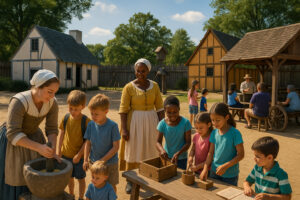
School programs align with history curricula, letting students grind corn, handle archaeological replicas, or role-play as council members in 1619. Watching their excitement as past becomes tangible explains why many Virginia schools return annually.
Workshops and Lectures
The Jamestown-Yorktown Foundation hosts evening lectures on colonial medicine, archaeology, and navigation. Scholars and descendants of early Virginians share perspectives that blend academic rigor with human story.
Family Activities
Younger visitors can complete “Explorer Passports,” collecting stamps from each exhibit. Seasonal camps teach sailing basics aboard the Discovery replica or pottery in the Powhatan village. Families leave with souvenirs far richer than trinkets—shared experiences of learning together.
Travel Tips – Tickets, Timing & Practical Planning
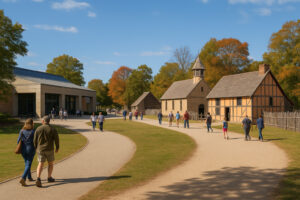
Jamestown may sit quietly beside the James River, but planning a visit wisely turns that stillness into an unforgettable day.
Best Times to Visit
Spring (Mar – May): Mild weather and flowering dogwoods make outdoor exhibits perfect.
Fall (Sep – Nov): Cool breezes and vivid color on the Colonial Parkway.
Winter: Peaceful and crowd-free for deep reflection.
Summer: Hot but alive with reenactments and boat shows on the James.
Tickets & Passes
Jamestown Settlement Admission: Covers museum, ships, village & fort.
Combination Historic Triangle Pass: Adds Yorktown and Colonial Williamsburg at a discount.
Purchase Online: Faster entry and small savings.
Timing Your Day
Arrive by 9 a.m. to see the ships before school groups arrive.
Spend 2–3 hours indoors, then move outdoors after noon.
Allow a full day if you’re pairing Jamestown with Yorktown or Williamsburg.
Accessibility & Comfort
Paved paths, ramps, and wheelchair rentals make the museum inclusive. Benches line most walkways and shade is plentiful. Carry water and a hat during summer visits.
Nearby Attractions Along the Colonial Parkway
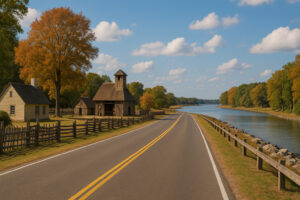
Because Jamestown anchors the western end of the Colonial Parkway, it’s easy to pair it with other landmarks in Virginia’s Historic Triangle. The scenic link between Jamestown, Williamsburg, and Yorktown is the Colonial Parkway Scenic Drive — 23 miles of forest, rivers, and history.
Colonial Williamsburg
Only ten minutes away, this living 18th-century town offers hundreds of preserved buildings and costumed interpreters.Plan your visit with our full Exploring Colonial Williamsburg guide to experience taverns, artisans, and revolutionary history. I often walk Duke of Gloucester Street after Jamestown to see how the colony matured into a capital.
Yorktown Battlefield
Drive the Parkway east to Yorktown to stand where Washington’s army won independence. The loop drive and riverside walk make a serene finish after a day of colonial origins.
Jamestown Island Drive
If you crave quiet, take this five-mile loop through forest and marsh. Interpretive stops describe archaeological sites and early settler farms.
Virginia Capital Trail
Cyclists can ride from Jamestown to Richmond along this 52-mile trail that parallels the James River—ideal for combining history with outdoors fitness.
Dining and Lodging Near Jamestown
Where to Eat
Jamestown Pie Company: Savory and sweet pies served fresh daily.
Billsburg Brewery: Craft beer with a view of the marina—perfect after a day on the trail.
Chowning’s Tavern (Williamsburg): Authentic 18th-century recipes in a candle-lit setting.
Carrot Tree Kitchens (Yorktown): Excellent for those continuing along the Parkway.
Places to Stay
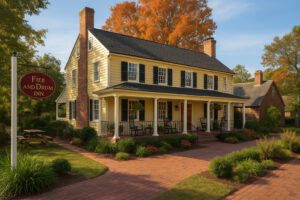
Fife and Drum Inn: Family-run B&B with colonial charm.
Williamsburg Inn: Historic luxury for a splurge.
Greensprings Vacation Resort: Spacious suites and pools for families.
Colonial National Park Campground: Simple sites under pines if you prefer a starry night.
Whichever you choose, book ahead during spring break and autumn foliage season when tour buses fill the Triangle.
Traveler Reflections – Lessons from Jamestown
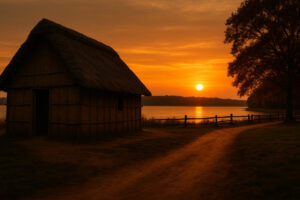
I’ve visited Jamestown many times, but each visit feels different. One rainy afternoon I stood under a thatched roof listening to raindrops on reed, thinking how the first colonists must have felt—cold, hungry, yet determined to build something lasting.
Jamestown is not merely a museum; it’s a mirror. It shows how ambition and struggle, ingenuity and injustice, coexisted from the very start. The stories of Native families, Africans, and Europeans intertwined here remind me that America’s strength lies in facing its entire past honestly.
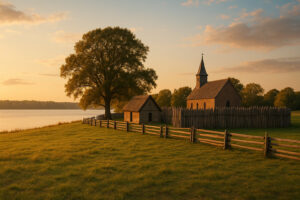
Driving away along the Colonial Parkway at sunset, the river glowed amber. History didn’t feel distant—it felt alive and listening.
Final Thoughts – Why Jamestown Still Matters
More than four centuries later, Jamestown remains the place where America took its first uncertain steps. It tells of hope amid hardship, of cultures meeting and colliding, of ideals born before their time.
Visiting here isn’t just about seeing artifacts—it’s about understanding how fragile and resilient beginnings can be. Standing on that soil, you realize every freedom and conflict since has roots in this marshy peninsula beside the James.
Jamestown isn’t a chapter in a textbook; it’s the first page of a living story that still writes itself today.
Frequently Asked Questions About Jamestown Settlement
It sits on State Route 31 just west of Williamsburg, Virginia, at the start of the Colonial Parkway.
No. Historic Jamestowne is the original archaeological site on Jamestown Island. Jamestown Settlement is a nearby living-history museum operated by the Jamestown-Yorktown Foundation.
Plan at least 3–4 hours; a full day if you want to see every exhibit and the replica ships.
Yes. Interactive galleries, hands-on crafts, and the Explorer Passport program keep kids engaged.
Only service animals are permitted inside the museum; pets on leash are allowed in designated outdoor areas.
Weekdays in spring and late autumn offer quiet grounds and plenty of parking.
Absolutely. The Historic Triangle Pass makes it easy to explore all three over two days via the Colonial Parkway.
Yes. Local buses run regularly from the Williamsburg Transportation Center to Jamestown Settlement.
Definitely. Ranger talks and costumed interpreters add depth you won’t get from signs alone.
Yes—non-flash photography is welcome indoors; outdoors you can shoot freely.