Few road trips tell America’s origin story as vividly as the Historic Triangle of Virginia. Within a 23-mile loop, three small towns—Jamestown, Williamsburg, and Yorktown—trace the nation’s transformation from colonial experiment to independent republic.
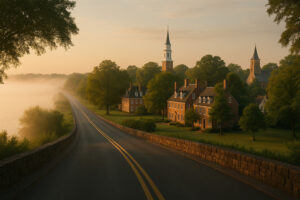
The first time I drove the Colonial Parkway, morning fog still hung over the York River. By the time I reached Williamsburg, sunlight struck the brick façades and church steeples, and it felt as though I’d slipped through centuries. The Triangle isn’t just a sightseeing route; it’s a living classroom, where each stop reveals a chapter of how the United States began.
This practical travel guide will help you plan a complete itinerary—how to reach the Triangle, what to see in each destination, where to stay, what to eat, and how to connect history with relaxation. Whether you’re a history buff, a family traveler, or a weekend explorer, you’ll find that these three towns share one continuous heartbeat.
Understanding the Historic Triangle Virginia
The Historic Triangle sits on Virginia’s Lower Peninsula between the James and York Rivers. It links:
Jamestown – the site of the first permanent English settlement in 1607. Discover how the 1607 colony survived famine and built America’s first government in our Jamestown Settlement History guide.
Williamsburg – the 18th-century capital of colonial Virginia and the intellectual center of the Revolution.
Yorktown – the port where General George Washington forced the British surrender in 1781.
These towns are connected by the Colonial Parkway, a 23-mile scenic byway maintained by the National Park Service. It’s a journey through forest, marsh, and river vistas where modern traffic fades and nature takes center stage.
Why It’s Called “Historic”
The Triangle isn’t just historic because of dates and monuments; it’s where the threads of exploration, settlement, independence, and freedom intertwine. Every stone, trail, and document found here has shaped American identity.
For Today’s Traveler
Modern amenities coexist with authentic landscapes. You can walk Jamestown’s archaeological site in the morning, attend a tavern dinner in Colonial Williamsburg by evening, and catch a sunset over Yorktown Riverwalk that feels timeless.
How to Plan Your Trip
How Many Days to Spend
To see the Triangle comfortably, plan three full days:
Day 1: Williamsburg (orientation and colonial history)
Day 2: Jamestown Settlement & Historic Jamestowne
Day 3: Yorktown Battlefield & Riverfront
If you love details and museums, add a fourth day for relaxed exploration and winery visits.
When to Visit
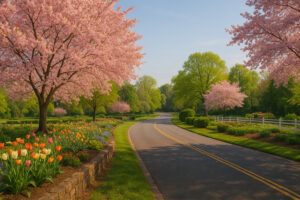
Spring (March–May): Flowering gardens and mild temperatures around 70°F.
Fall (September–November): Best for scenic drives and wine festivals.
Winter: Quiet streets and discounted lodging.
Summer: Lively events but hot and humid—plan early starts.
Getting There & Transportation
By Car: Easiest option. Interstate 64 connects Richmond and Virginia Beach to Williamsburg.
By Air: Fly into Newport News/Williamsburg International (PHF) or Richmond (RIC).
By Train: Amtrak serves Williamsburg station daily.
Within the Triangle: Use the free Colonial Williamsburg buses or drive the Colonial Parkway for flexibility. For a detailed map of pull-offs and hidden spots, see our Colonial Parkway Scenic Drive guide.
Essential Passes
Buy the America’s Historic Triangle Pass —it covers Colonial Williamsburg, Jamestown Settlement, Historic Jamestowne, Yorktown Battlefield, and the American Revolution Museum at Yorktown for one discounted price (valid seven consecutive days).
Overview of Each Destination
Williamsburg
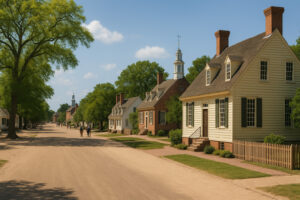
The heart of the Triangle and the perfect base for your trip. Here, Duke of Gloucester Street connects restored homes, taverns, and gardens. You’ll walk where Jefferson studied and Patrick Henry spoke about liberty. Spend at least a day immersed in its colonial ambience before exploring the outer sites. Read our complete Colonial Williamsburg walkthrough to plan your full day among artisans and landmarks.
Excellent tour. We had a great time and Patrick was informative and entertaining. Would recommend no matter what you believe about ghosts.
Jamestown
About eight miles southwest of Williamsburg, Jamestown is split into two distinct sites: the archaeological Historic Jamestowne and the interpretive Jamestown Settlement museum. Here you see where 1607 colonists built their fort, met the Powhatan people, and struggled to survive.
Educational and informative. Very exciting to see history in action. A lost art. Beautiful pieces available for purchase as well.
Yorktown
Eighteen miles east lies Yorktown, a quiet riverfront village where the Revolution ended. Cannons, redoubts, and battlefield tours bring 1770s drama to life. Modern cafés and the Yorktown Riverwalk offer relaxing views between history lessons.
Great museum and farm, loved the Cannon display. Museum was excellent, very informative and we really learned a lot! We attended the munition demonstration where they fired off a real Cannon!
See more reviews on Tripadvisor
Explore Destination on Google maps
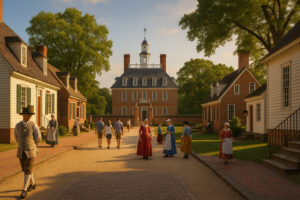
Day 1 – Arrival & Exploring Colonial Williamsburg
Morning: Orientation and First Impressions
Begin at the Colonial Williamsburg Visitor Center. Pick up maps, event schedules, and a bus wristband (valid for the free shuttle). From there, walk the footbridge into the 18th century.
Take your time on Duke of Gloucester Street—a mile-long avenue of shops and homes. Stop by the silversmith, blacksmith, and apothecary to watch craftsmen at work. They explain their trades with such passion that history feels immediate.
Afternoon: Landmarks and Living History
Tour the Governor’s Palace, once home to royal governors and later Patrick Henry. Next, visit the Capitol Building, where Virginia’s legislators debated the idea of independence.
If you enjoy museums, head to the Art Museums of Colonial Williamsburg for folk art and period decorative pieces. Families with children should try the hands-on “Revolutionary City” reenactments or the interactive farm programs.
Evening: Taverns & Night Tours
Reserve a candlelit dinner at King’s Arms Tavern or Chowning’s Tavern for authentic colonial recipes and live music. After dark, join a Ghost Walk to hear centuries-old legends. Walking under lantern light adds a touch of mystery to the day.
Traveler Reflection
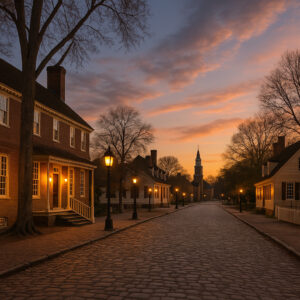
My favorite moment came at sunset in Palace Green. The bricks glowed deep red, a bell rang from Bruton Parish Church, and for a few seconds I forgot which century I was in. Williamsburg does that—it slows you down and invites you to listen.
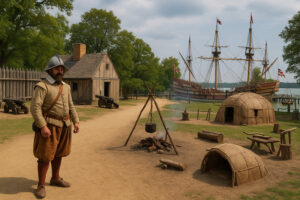
Day 2 – Jamestown Settlement – Where It All Began
Morning: Jamestown Settlement Museum
Drive about 15 minutes down Route 31 from Williamsburg to reach the Jamestown Settlement. Begin indoors with multimedia exhibits that set the scene for 1607: a group of 104 men and boys arrived from England seeking wealth and a foothold in the New World.
Artifacts like armor, navigation tools, and letters show how fragile that mission was. The museum’s storyline balances the English, Powhatan, and African perspectives to give a complete view of early Virginia.
Outdoor Living History Areas
After the exhibits, step outside into re-created environments:
Re-created James Fort: costumed interpreters demonstrate blacksmithing and musket firing.
Powhatan Indian Village: interpreters explain hunting, cooking, and tool-making from the Native viewpoint.
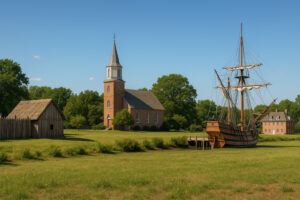
Ships’ Docks: board full-scale replicas of the Susan Constant, Discovery, and Godspeed. Standing on their tiny decks makes you marvel at the courage of those sailors.
Afternoon: Historic Jamestowne Archaeological Site
Continue a mile down the island to Historic Jamestowne, the actual archaeological location of the 1607 colony. Guided tours led by National Park Service rangers and archaeologists reveal ongoing discoveries — from the original fort outline to personal items belonging to settlers and enslaved Africans.
Walking here is humbling. You stand where the first English-speaking government met in 1619 and where the Anglo-Powhatan conflicts changed America’s course.
Evening: Return to Williamsburg
Drive back along the Colonial Parkway. The late-day sun filters through pines and reflects on the James River. Stop at the scenic pullouts to photograph wildlife or simply breathe in the quiet. Dinner options in Williamsburg range from casual pubs at Merchants Square to elegant southern fare at Fat Canary.
Traveler Tip
If you’re interested in early colonial economy, join the “Unearthing Jamestown” archaeology talk — offered seasonally. You see how soil layers unfold like pages of a book and learn that every artifact, no matter how small, rewrites a piece of history.
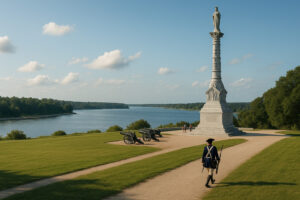
Day 3 – Yorktown Battlefield & Riverfront Walks
Morning: Where the Revolution Ended
Eighteen miles east of Williamsburg, the road widens and the trees open to reveal Yorktown, a peaceful village that hides the climax of the American Revolution. In October 1781, this was where General George Washington’s troops, supported by the French army and navy, forced British General Cornwallis to surrender — effectively ending the war.
Start your day at the Yorktown Battlefield Visitor Center, operated by the National Park Service. Pick up a map for the Battlefield Tour Road, a self-guided 7-mile loop. Along the drive, stop at Redoubt 9 and Redoubt 10 — the positions Washington’s men captured under cover of darkness. The park’s gentle hills, now silent and green, once thundered with cannon fire.
Inside the Visitor Center, exhibits explain troop movements, weaponry, and Washington’s decisive siege strategy. I found the replica of a Continental soldier’s tent particularly moving — a humble reminder of how endurance, not luxury, secured independence.
Afternoon: Riverwalk Landing and Museum
After the battlefield, head toward Yorktown Riverwalk Landing, a waterfront district of shops, cafés, and galleries. Walk the boardwalk along the York River; it’s a refreshing contrast to the weight of history you’ve just experienced.
Visit the American Revolution Museum at Yorktown, which blends artifacts with immersive storytelling. Highlights include a life-size Revolutionary War encampment where costumed interpreters demonstrate musket drills and medical treatments. A reconstructed 18th-century farm nearby shows how civilians lived during wartime.
Evening: Dinner with a View
Dine outdoors at Water Street Grille, known for local seafood and sunset views. As evening falls, the Yorktown Victory Monument glows softly against the river. Reading its carved names under twilight, you feel gratitude rather than distance — the Revolution becomes personal.
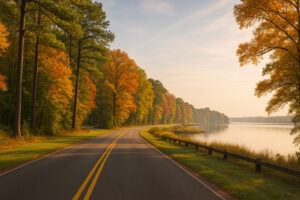
Colonial Parkway Scenic Drive – The Soul of the Triangle
Few roads in America feel as timeless as the Colonial Parkway. Stretching roughly 23 miles, it links Jamestown, Williamsburg, and Yorktown while running almost entirely through National Park land. There are no billboards, powerlines, or commercial distractions — only forest, rivers, and occasional glimpses of history.
Explore YorkTown on Google maps
Driving the Parkway
The speed limit is a calm 45 mph, perfect for leisurely travel. Start in Williamsburg and drive toward Yorktown in the morning when sunlight filters through the tree canopy. Pull-offs marked with brown signs lead to photo points overlooking the James or York Rivers.
What I love most is the variety: dense pine forest gives way to salt marsh, then open meadows alive with herons. In autumn, the Parkway becomes a tunnel of gold and crimson leaves. In spring, wildflowers line the shoulders like ribbons.
Biking and Picnicking
Cyclists often use the wide shoulders for scenic rides. Several picnic areas — notably near Felgates Creek — provide tables under shade trees. Bring local treats from the Williamsburg Farmers Market for an old-fashioned picnic with river breezes and birdsong.
A Journey Through Time
The Parkway isn’t just a connector; it’s a story thread. Each mile represents a century of American evolution—from the 1607 settlement at Jamestown to the 1781 victory at Yorktown. Driving it, you sense that history and nature are partners, not rivals.
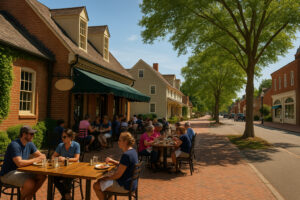
Food & Dining Along the Route
History may be the main attraction, but the Triangle’s culinary scene is its most pleasant surprise.
Williamsburg Flavors
Start with breakfast at Aromas Coffeehouse or Blue Talon Bistro near Merchants Square. For lunch, try Food for Thought, where walls are lined with quotes from famous thinkers — a fitting stop between museum visits.
Dinner choices range from tavern classics like Christiana Campbell’s (seafood favorites of George Washington himself) to upscale southern cuisine at Fat Canary. I still remember their house-made bread and pecan butter — simple, perfect, unforgettable.
Jamestown & En Route
Near Jamestown Settlement, Jamestown Pie Company serves comforting pot pies ideal for quick meals before or after a museum visit. For a casual riverside experience, Billsburg Brewery offers craft beer and live music beside the marina.
Yorktown Eats
Yorktown’s Water Street Grille and Carrot Tree Kitchens bring modern flavor to historic surroundings. The latter’s ham biscuits and lemon bars have earned local legend status.
Each town’s dining culture celebrates Virginia’s agricultural roots: peanuts, oysters, sweet potatoes, and seasonal fruits. Many recipes date back centuries, showing that food here isn’t an afterthought — it’s part of the heritage.

Where to Stay – From Colonial Inns to Modern Comforts
Williamsburg as Your Base
Williamsburg sits centrally within the Triangle, making it the ideal home base. You can choose between Colonial-style inns and contemporary hotels depending on taste and budget.
Williamsburg Inn: five-star elegance adjacent to the Historic District; expect chandeliers, golf courses, and classic southern hospitality.
Williamsburg Lodge: comfortable, modern, and family-friendly, offering vacation packages with attraction passes.
Fife and Drum Inn: boutique bed-and-breakfast right on Prince George Street.
For longer stays, Greensprings Vacation Resort provides kitchen suites and pools near Freedom Park — convenient for groups or families.
Yorktown & Riverside Options
If you prefer waking up to water views, try Hornsby House Inn, a historic B&B overlooking the York River, or the Marriott Vacation Club at Ford’s Colony, which combines resort amenities with proximity to all three towns.
Campgrounds & Outdoor Stays
Adventurous travelers can stay at Chickahominy Riverfront Park or Williamsburg KOA for a balance of nature and history. Evening campfires under star-filled skies offer tranquility after full days of exploration.
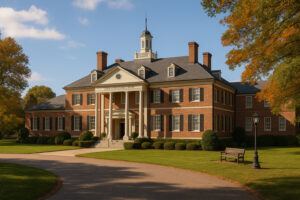
Beyond the major attractions, the Triangle hides smaller gems worth seeking out.
In Williamsburg
Bassett Hall: Once the Rockefeller family’s residence; its modest charm contrasts with grander mansions.
Public Hospital of 1773: America’s first mental health institution, reconstructed with poignant exhibits.
Muscarelle Museum of Art: Located on the William & Mary campus, featuring rotating fine-art collections.
In Jamestown
Glasshouse of 1608: Demonstrates early colonial glassmaking techniques using wood-fired furnaces.
Jamestown Island Drive: A 5-mile loop with interpretive signs showing settlement expansions and wildlife viewpoints.
In Yorktown
Yorktown Victory Center Monument: A soaring column dedicated in 1881; climb the nearby hill for panoramic photos.
Nelson House: Home of Thomas Nelson Jr., signer of the Declaration of Independence, beautifully preserved with period furnishings.
Unique Guided Experiences
Consider joining a kayak history tour on the York River or a bike-and-brew ride combining Colonial Parkway sights with local breweries. These small-group options blend exercise and education for travelers who prefer active exploration.
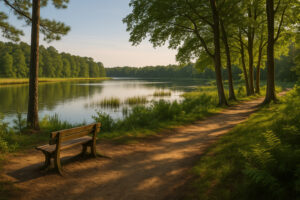
Nature & Outdoor Experiences
While the Historic Triangle shines for its architecture and politics, nature here tells its own story.
York River State Park
Located just north of Williamsburg, this park spans 2,500 acres of forest and tidal marsh. Trails like the Taskinas Creek Trail reveal birdlife, fossils, and serene water views. Kayak rentals are available in summer.
Freedom Park
A lesser-known gem with 20 miles of multi-use trails. It’s also home to the site of one of the first free Black settlements in Virginia, dating to 1803. The combination of outdoor recreation and historic context makes it uniquely moving.
Waller Mill Park
Only minutes from downtown Williamsburg, this reservoir park offers paddleboats, fishing, and quiet picnic areas — perfect for an evening wind-down after a full day of sightseeing.
Wildlife Along the Parkway
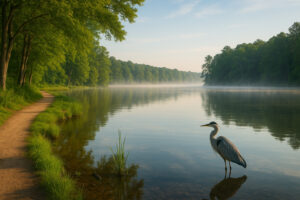
Deer, bald eagles, and osprey are common sightings. Early mornings bring mist over the rivers and silhouettes of herons gliding low over the water — natural moments that remind travelers that this land’s beauty long predates its politics.
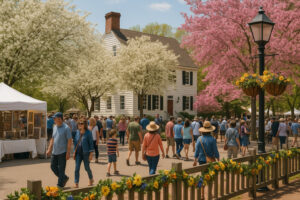
Special Events & Annual Festivals
The Historic Triangle is alive year-round with festivals that merge history, food, and community spirit. Timing your visit around one adds an entirely new dimension to your trip.
Spring: Colonial Garden Week & Arts Festivals
Every April, Virginia’s Historic Garden Week opens private estates and manicured colonial gardens. In Williamsburg, locals decorate gates and fences with fresh blooms, while guides explain 18th-century landscaping traditions.
At the same time, the Art on the Square Festival fills Merchants Square with painters, potters, and jewelry makers. I spent an entire morning browsing handmade crafts before stopping for lemonade under blooming dogwoods.
Summer: Independence Celebrations & Music Nights
The Fourth of July in the Triangle is unforgettable. Colonial Williamsburg hosts a full-day festival with fife-and-drum parades, readings of the Declaration of Independence, and evening fireworks over the Palace Green.
Meanwhile, Yorktown’s Sounds of Summer Concert Series brings live bands to Riverwalk Landing every Thursday evening. Families spread blankets, boats drift by, and fireworks sometimes cap the night.
Fall: Wine, Food & Heritage
Autumn colors pair perfectly with the Virginia Wine Festival and Yorktown Market Days Harvest Celebration. Local vineyards pour Viognier and Cabernet Franc while farmers sell honey, pumpkins, and crafts. The cool air and orange leaves make the Colonial Parkway drive especially stunning.
Winter: Grand Illumination & Christmas Town
In December, the Grand Illumination in Williamsburg transforms the historic district with candlelit windows, carolers, and fireworks. A short drive away, Busch Gardens Christmas Town displays millions of lights and festive shows—proof that even history enjoys holiday magic.
Travel Tips & Suggested Add-Ons
Packing & Practicalities
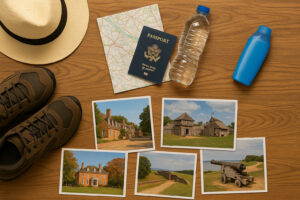
Footwear: Expect miles of walking on cobblestone and uneven paths. Bring sturdy shoes.
Weather: Summers are humid; carry water and sunscreen. Winters are mild but pack a jacket for evening tours.
Tickets: The Historic Triangle Pass saves money if you plan to visit all sites within a week.
Guided Tours: Book at least one themed experience—such as “Freedom’s Paradox” or the “Siege of Yorktown”—for context you can’t get from signs alone.
Nearby Add-Ons
If you have extra days, extend your route slightly outward:
Historic Jamestowne Island Drive (5 miles): peaceful nature and colonial ruins.
Berkeley Plantation: ancestral home of Benjamin Harrison V and site of the first official Thanksgiving.
Chippokes State Park: across the James River, offering ferry rides, campgrounds, and 17th-century farmsteads.
Williamsburg Winery: just minutes from downtown, perfect for tastings after a long museum day.
Responsible Tourism
Respect the preservation work that keeps these towns authentic. Use marked paths, avoid touching delicate artifacts, and support local businesses instead of chains. Each dollar spent locally keeps history alive.
Connectivity & Apps
Cell coverage is strong in all three towns. Download offline maps if you plan to explore the Colonial Parkway’s less-developed sections. The Visit Williamsburg App lists daily events, restaurant openings, and shuttle schedules.
Personal Reflections – What the Triangle Teaches About Time
I’ve visited many historical destinations, but none balance reflection and accessibility like the Historic Triangle. Each town feels like a stage in life: Jamestown is youth—hopeful and uncertain; Williamsburg is maturity—learning, debating, creating; Yorktown is resolution—hard-won independence and peace.
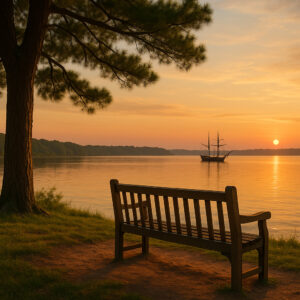
One afternoon, I sat on a bench overlooking the York River. The water was calm, but I imagined ships once anchored here with flags fluttering in surrender. The moment felt both grand and quiet. That’s the Triangle’s gift—it tells monumental stories in whispers.
Driving back along the Colonial Parkway at dusk, I rolled down the window. Pine scent filled the car, and the sky glowed amber. I thought about how much courage it took for those first settlers to cross an ocean and how much persistence it took for revolutionaries to challenge an empire. Traveling here isn’t just sightseeing; it’s gratitude in motion.
Sample 3-Day Williamsburg–Jamestown–Yorktown Itinerary
| Day | Morning | Afternoon | Evening |
|---|---|---|---|
| 1 – Williamsburg | Visitor Center, Duke of Gloucester St., Capitol Tour | Governor’s Palace, Art Museums | Tavern Dinner + Ghost Walk |
| 2 – Jamestown | Jamestown Settlement Museum | Historic Jamestowne Archaeology Tour | Return via Colonial Parkway, Dinner at Merchants Square |
| 3 – Yorktown | Battlefield Visitor Center, Redoubts 9 & 10 | American Revolution Museum + Riverwalk | Dinner at Water Street Grille, Sunset Over York River |
Optional Fourth Day
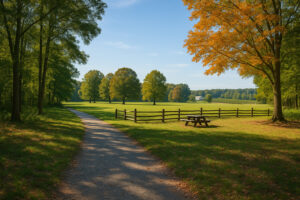
Freedom Park hiking & picnic.
Williamsburg Winery tasting.
Relaxed shopping at Williamsburg Premium Outlets.
This itinerary keeps daily travel minimal (no segment exceeds 30 minutes) and combines immersive history with comfort and leisure.
Final Thoughts – Walking Through the Birthplace of a Nation
The Historic Triangle of Virginia isn’t a relic—it’s a mirror. Here, progress and preservation coexist, showing that remembering the past doesn’t mean living in it.
Every traveler experiences it differently. Families find education disguised as fun; couples discover romance under lantern light; historians uncover layers of meaning in soil and scripture. For me, it’s the realization that America’s ideals—freedom, debate, perseverance—were born from ordinary people living extraordinary moments in these three towns.
When you drive the last mile of the Colonial Parkway back toward modern traffic, there’s a subtle ache, the kind that comes from leaving a good conversation unfinished. But that’s the beauty of the Triangle: it invites you to return, to listen again, and to keep the dialogue with history alive.
If you’re planning a longer stay in the area, dive deeper into the city’s charm with our Williamsburg, Virginia Travel Guide — complete with hidden gems, wineries, and seasonal events.
Frequently Asked Questions About the Historic Triangle
A: About 23 miles. Allow 40–60 minutes each way depending on stops.
A: Yes, but both are included in the America’s Historic Triangle Pass.
A: Pets on leashes are welcome on outdoor grounds and trails but not inside museum buildings.
A: Late April or mid-October—pleasant weather and fewer tour buses.
A: Yes. The Colonial Parkway accommodates bicycles; bring a helmet and lights for tunnels.
A: Major museums and visitor centers meet ADA standards. Some historic interiors have steps but offer virtual tours.
A: Williamsburg sits roughly midway—Jamestown 8 miles west, Yorktown 18 miles east.
A: It’s one of the few places where 1600s, 1700s, and 1800s landmarks remain within a short scenic drive, forming a continuous story of American beginnings.