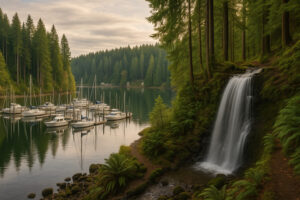
When you arrive in Port Ludlow, the first thing you notice is the calm. The marina glimmers quietly, the air carries a faint salt scent, and evergreen trees rise like watchful guardians over the bay. But just beyond this tranquil waterfront lies another world — one of hidden waterfalls, forest paths, and trails that wander from tide to treetop.
For hikers, Port Ludlow is a quiet gift. Unlike the crowded routes near Seattle or Olympic National Park, the trails here remain unhurried. You can walk for an hour and hear nothing but the wind through cedar branches or the soft rustle of deer in the undergrowth. It’s the kind of hiking that feels personal — where every turn brings a new discovery, and solitude itself becomes part of the scenery.
Though small in size, Port Ludlow sits in the heart of a vast natural corridor. Within a 30-minute drive, you can move from coastal paths to forested lakes, from paved waterfront walks to mountain-view ridgelines. Every trail seems to tell its own story — of rain, moss, and resilience. And because the community values preservation over development, these paths feel timeless, as if you’ve stepped into an older, slower version of the Pacific Northwest.
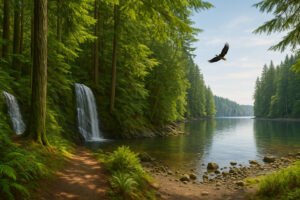
Why Hikers Love Port Ludlow
Most visitors come here expecting a resort stay, but they leave talking about the trails. What makes this area special isn’t just beauty — it’s variety.
Forest serenity: Walk beneath centuries-old fir and hemlock trees that filter sunlight into shifting green.
Waterfront peace: Follow gentle paths where eagles circle overhead and waves lap softly at rocky shores.
Waterfalls and lakes: Hidden cascades like Ludlow Falls and reflective waters like Teal Lake turn simple hikes into miniature adventures.
Easy access: Trails start just minutes from the inn and marina, meaning you can enjoy a morning hike before breakfast or a sunset walk after dinner.
Each trail near Port Ludlow offers something different — yet they all share a rare stillness. Whether you’re a first-time hiker or a seasoned explorer, the pace here feels human. There’s no rush to reach the end; the journey itself is what matters.

The Landscape Behind the Trails
The hiking routes of Port Ludlow unfold across an ecosystem shaped by sea and mountain. Moist air from Hood Canal meets the rising ridges of the Olympic foothills, creating a landscape that is perpetually alive — ferns, moss, and lichens covering everything they touch. Streams trickle across paths, salmon spawn in nearby creeks, and forests echo with bird calls from dawn until dusk.
This environment gives the region its unique personality. You don’t just walk through nature here; you walk with it. The trails feel like corridors through living history — every fallen log, every moss-coated rock carrying stories of decades of rain and renewal.
Because the area is smaller and less traveled than its famous neighbors, you’ll often have trails to yourself. Locals greet you with easy smiles, and most carry the same quiet respect for the land that defines life on the peninsula.
Best Way to Begin Your Hiking Journey
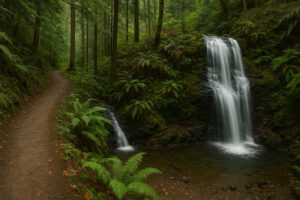
If you’re new to Port Ludlow, start gently. The Ludlow Falls Trail, right in the heart of the village, is the perfect introduction. It’s short but captivating — a shaded loop leading to a hidden waterfall tucked behind ferns. The sound of the falls blends with the rustle of leaves, creating a soundtrack that instantly centers you.
Once you’ve warmed up, venture outward. Trails like Teal Lake Loop and Shine Tidelands expand the scenery from forest to saltwater. You can hike one in the morning, stop for coffee at the marina café, then explore another by afternoon — all without long drives or parking battles.
The secret to enjoying Port Ludlow’s hikes is rhythm. Don’t try to conquer every path in a day. Take time to notice details: the glint of dew on spiderwebs, the fragrance of cedar needles after rain, the echo of a woodpecker in the distance.

Respecting the Land
Every trail around Port Ludlow is maintained through cooperation between local residents and conservation groups. Signs encourage Leave No Trace principles — stay on paths, pack out trash, and let wildlife remain wild.
These trails aren’t meant to be hurried through; they’re meant to be honored. Step carefully over roots, avoid disturbing nesting areas, and pause often to appreciate how much care goes into preserving this landscape.
This mindfulness is part of what makes hiking here so restorative. You’re not just moving through nature — you’re participating in a shared effort to protect it.

What to Bring
Even though most hikes are easy to moderate, preparation matters. A few essentials go a long way:
Lightweight rain jacket — showers can appear suddenly, even on sunny days.
Comfortable waterproof shoes — trails may have slick roots or soft soil.
Water bottle and small snacks — there are no vendors once you’re on the trail.
Binoculars or a camera — wildlife and scenery reward patient eyes.
Downloaded map — cell service fades quickly in wooded areas.
Locals will tell you: “Pack like it might rain, and you’ll always be happy.” The unpredictability is part of the charm.
Linking Nature and Community
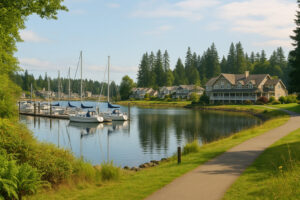
One of the joys of hiking near Port Ludlow is how seamlessly the trails connect to the town itself. You might start a morning walk through forest shade and finish with brunch overlooking sailboats. The community layout keeps everything within reach — lodging, dining, and nature flow together without barriers.
Many visitors extend their hikes by exploring community paths that link the marina, golf course, and neighborhood viewpoints. These shorter walks, lined with native plants and interpretive signs, are perfect for families or anyone seeking a peaceful stroll after dinner.
If you’re staying at The Inn at Port Ludlow, ask the front desk for current trail maps. They often have updated suggestions based on weather or wildlife activity — such as where to spot eagles nesting or deer crossing at dusk.
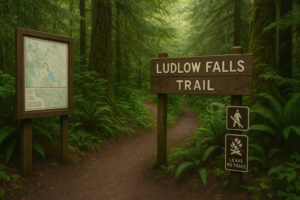
Why This Guide Matters
This guide was created for travelers who want to experience Port Ludlow slowly — on foot, through discovery. Each section ahead will lead you deeper into the area’s hiking network, from well-known routes to hidden forest escapes. You’ll find practical directions, personal insights, and local recommendations drawn from real exploration.
By the time you finish reading — and walking — you’ll understand why locals call this area “Washington’s quietest adventure.”
So lace your boots, breathe in the salt air, and step onto the trail. The forest is waiting.
Ludlow Falls Trail – A Local Treasure
Hidden just a short walk from the marina and resort area, Ludlow Falls Trail captures the essence of Port Ludlow — quiet, green, and beautifully self-contained. You don’t have to drive miles or climb steep switchbacks to find peace here; the moment you step beneath the trees, the town seems to fade behind you.
The trail begins off Paradise Bay Road, near the intersection with Teal Lake Road. Parking is limited, which is part of its charm — most visitors are locals out for an early-morning walk or travelers staying at the inn who heard about it from a friendly bartender or front-desk clerk. The entrance looks ordinary, but within minutes you’re surrounded by forest so lush that daylight turns soft and green.
A Short Hike with Big Rewards
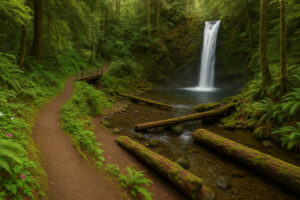
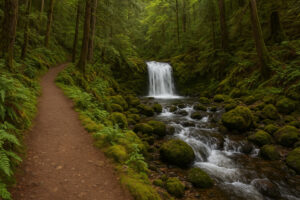
At only about 1.5 miles round-trip, Ludlow Falls Trail is more stroll than trek. Yet it feels like a complete wilderness experience. The path descends gently through ferns and moss-covered logs, crossing small wooden bridges over trickling streams. In spring, wildflowers bloom along the trail edges — trilliums, bleeding hearts, and salmonberry blossoms adding dots of color to the forest floor.
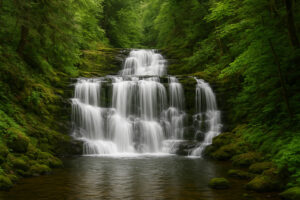
After ten or fifteen minutes, the sound begins: water sliding over rock, low at first and then unmistakable. A final bend reveals Ludlow Falls, a narrow ribbon of white cascading through basalt walls into a clear pool below. Mist hangs in the air, cool even on warm days, and fallen trees form natural benches where hikers pause to watch the flow.
There’s no fence, no gift shop, no noise — just the steady rhythm of water. On quiet mornings, sunlight filters through the canopy and lands in golden patches on the spray, creating the sort of simple beauty that feels both fragile and endless.
Local History Flowing Through the Falls
Before Port Ludlow became a marina community, it was a mill town powered by the very water that now draws hikers. In the mid-1800s, lumbermen used this creek to float timber toward Hood Canal. Over time, as the mills closed and the forest returned, the falls shifted from industry to sanctuary.
Locals still talk about how, decades ago, children would hike down with buckets to collect crayfish or just cool off during summer heat. Many of the volunteers who maintain the trail today are those same children, now grown — keeping a small promise to protect what they once played beside.
That history adds a quiet weight to the experience. You’re not just visiting a waterfall; you’re walking through a living link between Port Ludlow’s past and its present.

Photographer’s Corner
If you love photography, bring your tripod. Morning light is best, when the sun slips sideways through the trees. The green tones here are incredibly rich — the kind of deep mossy palette that makes every frame look painterly.
To capture the falls at their most dynamic, set up slightly downstream where the creek curves and reflects the upper drop. Long-exposure shots transform the water into silk, while close-ups reveal textures of bark, stone, and fern that define the Pacific Northwest’s aesthetic.
After heavy spring rain, the flow is strong; in late summer it softens into a graceful veil. Each season tells the same story differently.
Trail Details & Tips
Distance: 1.5 miles round trip
Difficulty: Easy to moderate (short incline on the return)
Time: 30–45 minutes
Elevation Gain: Approx. 120 ft
Trailhead Parking: Small gravel area off Paradise Bay Road
Restrooms: None on site (nearest at Port Ludlow Marina)
Best Season: March to October for ideal conditions
A few extra pointers:
Footing: Watch for slick moss after rain.
Family-friendly: Perfect for kids, though keep a hand on them near the falls.
Bring bug spray: Mosquitoes can appear in late spring.
Respect the creek: Stay off rocks and avoid disturbing fish habitats.
Because the trail is so close to the community, many visitors return multiple times during a stay — morning walks before breakfast, sunset strolls before dinner. Each visit feels slightly different depending on light and tide.

Connecting the Trail to the Community
From the end of Ludlow Falls Trail, it’s only a few minutes’ drive (or a scenic 20-minute walk) back to the Port Ludlow Marina. Some hikers stop at the Marina Café for coffee and pastries afterward; others head straight to the waterfront benches to rest and watch sailboats drift by.
Local shops occasionally sell postcards of the falls — hand-painted scenes made by Jefferson County artists. Buying one feels like taking home a small piece of the trail’s soul.
Residents see Ludlow Falls as more than a landmark. It’s a shared heartbeat — the sound that reminds everyone why they chose to live near the water and forest. Visitors who hike here often leave comments in the guest book at the marina, describing the sense of calm they found beneath those trees.

When to Go
Early Morning: Cool air, empty trail, birdsong echoing through the canyon.
Late Afternoon: Soft light, fewer shadows — ideal for photos.
After Rain: The falls roar to life, and the air smells of pine and earth.
Even in winter, the trail stays open. You’ll need waterproof boots, but the payoff is a private waterfall framed by mist. It’s especially beautiful when frost lines the leaves — a quiet contrast of cold air and moving water.

Traveler’s Reflection
There’s something grounding about a place this humble. Ludlow Falls Trail doesn’t ask you to chase summits or count miles. It simply invites you to slow down. To listen. To remember that nature’s finest moments often fit inside a single, unhurried walk.
One afternoon, as I stood beside the pool, an older couple arrived — locals who’d walked this trail every Sunday for years. They said they come to “check if the world still feels right.” Watching them smile beneath the spray, I understood what they meant.
For hikers visiting Port Ludlow, this is where the journey truly begins — not with challenge, but with gratitude.
Teal Lake Loop – Peace by the Water
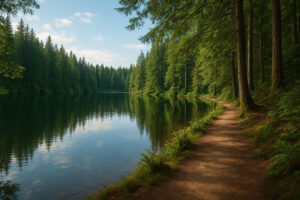
If Ludlow Falls is Port Ludlow’s hidden heartbeat, then Teal Lake is its reflection — a place where stillness deepens and the forest seems to exhale. Nestled just a few miles south of the marina, this quiet lake trail offers a slower, more meditative kind of hike. It’s not about reaching a peak or chasing a view; it’s about rhythm — footsteps syncing with rippling water, wind threading through the pines, and the occasional call of a heron slicing the silence.
Teal Lake doesn’t announce itself. There’s no flashy sign or tourist marker. You reach it by turning off Paradise Bay Road, following a gravel stretch that winds through trees until the forest opens to reveal a modest parking area and a glint of blue between the trunks. From there, a looping trail circles the lake, blending shoreline paths with soft inland stretches carpeted in pine needles.

A Walk Meant for Reflection
The Teal Lake Loop Trail runs about 2.8 miles round trip, making it ideal for a relaxed two-hour walk. The grade is mostly gentle, with a few rolling sections that rise just enough to give you a new perspective of the water. Benches appear at intervals, inviting you to stop and simply watch the surface change — glassy and still one moment, textured with ripples the next.
For much of the loop, you’re close enough to hear fish leap and see the reflection of clouds drift across the water. When the sun filters through the canopy, the lake takes on a teal hue — the color that gave it its name. The air here feels cool and resinous, carrying the faint smell of cedar and sap.
What makes Teal Lake special isn’t its distance or difficulty. It’s how complete it feels. By the time you’ve circled it once, you’ve not only seen the lake from every side — you’ve also felt the quiet shift inside yourself.

A Favorite Among Locals
Many residents of Port Ludlow consider Teal Lake their secret retreat. Early mornings bring joggers and photographers; afternoons are for families with picnic baskets; and evenings belong to fishermen waiting for the last light.
It’s a favorite spot for birdwatchers, too. Bald eagles nest in the tall firs that rim the shoreline, and you’ll often see them diving with sudden precision. Ducks, geese, and great blue herons glide across the lake like brushstrokes. In late spring, the surrounding meadows bloom with purple lupine and yellow buttercups, adding soft color to the reflection of the evergreens.
Even when several cars fill the lot, the trail never feels crowded. The trees absorb sound, leaving only the whisper of leaves and the gentle slap of water against shore.
Trail Details & Tips
Distance: 2.8 miles round trip
Difficulty: Easy to moderate
Elevation Gain: About 200 feet
Best Season: April through October
Trailhead Location: Off Teal Lake Road (follow signs from Paradise Bay Road)
Facilities: None — bring water and snacks
Dogs: Allowed on leash
Tips for an ideal hike:
Walk clockwise for the best lighting if you’re photographing the lake in the morning.
In early spring, sections of the north shore can be muddy — waterproof boots are helpful.
Bring binoculars if you love spotting wildlife; the lake attracts everything from otters to ospreys.
Visit just before sunset — the light turns honey-colored and reflects off the water like molten gold.

Connecting Water and Forest
Halfway around the loop, the trail veers slightly uphill into thicker forest. The air cools, and the sounds of the lake grow distant. It’s here you’ll find some of the best old-growth trees in the area — wide trunks draped in moss, their roots gripping stones like living sculptures.
These woods feel older than the town itself. Fallen logs nurse carpets of new ferns; mushrooms sprout in clusters after rain; and the ground breathes with the slow rhythm of life cycles repeating endlessly. It’s a living classroom for those who pay attention — a reminder that even still places are constantly moving, growing, decaying, and renewing.
Soon the path curves back toward the water, where sunlight flashes through branches and the lake reappears, calm and patient as ever.

A Painter’s Dream
If you enjoy sketching, painting, or photography, Teal Lake is pure inspiration. The reflections alone can hold your gaze for hours. On overcast days, the muted palette — deep greens, gray sky, and mirror-dark water — creates a moody calm. On sunny afternoons, the scene shifts to shimmering blues and radiant greens, as if someone brushed light directly onto the surface.
Local artists often bring easels here, setting up on small clearings near the south shore. One resident once told me, “I’ve painted this lake for twenty years, and it never looks the same twice.” That truth captures Teal Lake’s essence — familiar yet ever-changing.

Wildlife Encounters
Besides birds, the area around Teal Lake hosts deer, raccoons, and occasionally black-tailed squirrels that dart across the trail. On quiet mornings, you might spot their tracks in the soft soil near the waterline.
Fishing is allowed (with a valid Washington State license), and the lake is stocked seasonally with trout. It’s common to see anglers casting lines from small float tubes or the shore. If you’re not here to fish, it’s still worth pausing to watch them — the stillness, the patience, and the satisfaction of a single catch all seem perfectly matched to this place.

Pairing the Hike with Local Stops
After finishing your loop, consider extending your outing with nearby experiences:
Breakfast at The Fireside Restaurant: Start early, hike, then reward yourself with a local Dungeness crab omelet.
Stop at Chimacum Corner Farmstand: Just 15 minutes away, it’s great for fresh cider or snacks.
Teal Lake Overlook Drive: Continue down Teal Lake Road for a few scenic turnouts that offer elevated views back over the water and forest.
You can easily make a half-day adventure combining this trail with a later visit to Ludlow Falls or Shine Tidelands — each one showcasing a different side of Port Ludlow’s landscape.

A Quiet Moment Worth Keeping
Toward the end of the loop, a small wooden bench faces west. It’s easy to miss — tucked beneath a cedar, half-hidden by tall grass. Sit there if you find it. Late in the day, the sun dips low, and the lake mirrors the sky in soft layers of pink and blue. You’ll hear frogs calling, water lapping, and wind shifting through branches. Nothing more.
It’s one of those rare places where time seems to stop — not dramatically, but gently. When you finally rise to finish the walk, you realize the quiet has settled into you too.
That’s the real beauty of Teal Lake: it doesn’t just show you nature; it teaches you how to listen again.
Shine Tidelands Trail – Where Forest Meets Sea
Just across the Hood Canal Bridge, about a 20-minute drive from Port Ludlow, lies one of the Olympic Peninsula’s most quietly beautiful places — Shine Tidelands State Park. It’s where forest, beach, and tide all blend together in a single hike that feels like three landscapes in one.
Unlike mountain or woodland trails, Shine Tidelands offers something far rarer — the feeling of walking between worlds. One moment you’re under the shade of cedar and alder trees, and the next you’re standing on an open beach scattered with driftwood, shells, and seaweed that gleam in the salt air.
This is a place of shifting boundaries. The tides erase and redraw the shoreline daily, and each visit feels new. For travelers seeking a peaceful coastal escape within easy reach of Port Ludlow, there’s no better trail to follow.
A Trail Shaped by the Tide
The Shine Tidelands Trail begins at the small gravel parking lot beside the park’s entrance, off Paradise Bay Road, just before the bridge to Kitsap Peninsula. The area feels secluded, framed by evergreens on one side and the broad blue of the canal on the other.
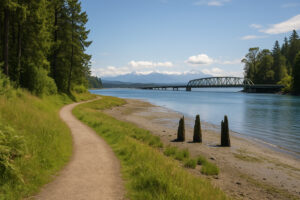
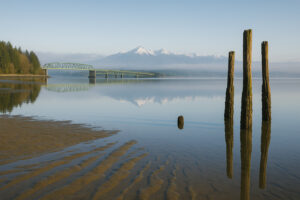
From the lot, a flat, 1.3-mile out-and-back path leads through coastal meadow and thin forest before spilling onto the beach. Along the way, you’ll cross old pilings from the bridge’s original construction — now weathered monuments covered in barnacles and sea moss.
The trail surface alternates between packed dirt and sand. On damp days, it glistens like polished stone. As you walk, keep your eyes open for bald eagles perched high in the shoreline trees or ospreys hovering above the water.
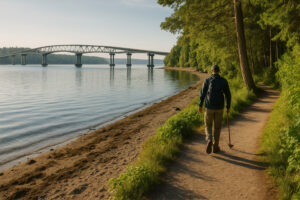
When you finally step out onto the open tidal flats, the view stretches wide: the bridge to your right, the snow-tipped peaks of the Olympic Mountains far across the water, and the glimmering curve of Hood Canal reaching endlessly north and south.

Best Time to Visit
Shine Tidelands transforms with the tide. At low tide, the sea retreats to reveal vast stretches of sand and shallow pools teeming with life — crabs, starfish, tiny fish darting between eelgrass. Children (and adults) can spend hours exploring, crouched in fascination over every shell and ripple.
At high tide, the beach narrows, the water deepens into rich blues, and reflections of sky and bridge shimmer on the surface. Both are beautiful, but for walking and photography, plan your visit around a mid-to-low tide cycle.
Sunrise and sunset are equally magical here. Morning brings soft fog that hangs low over the water, while evening light paints the entire shore in hues of gold and violet.
Trail Details & Essentials
Distance: 1.3 miles (out and back)
Difficulty: Easy
Elevation Gain: Negligible
Trailhead: Shine Tidelands State Park parking area, Paradise Bay Road
Facilities: Restrooms and picnic tables available
Dogs: Allowed on leash
Best Season: Year-round
What to bring:
Waterproof footwear — the sand can be damp even at low tide.
Windbreaker — breezes off the canal can surprise you.
Binoculars or camera — wildlife viewing is excellent here.
A small trash bag — beach cleanups are encouraged, and locals appreciate visitors helping keep it pristine.
Wildlife Encounters and Coastal Wonders
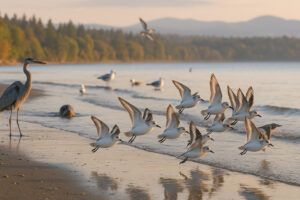
Shine Tidelands is part of a vital marine habitat that supports shellfish, migratory birds, and countless small creatures. You’ll likely see herons stalking the shallows, gulls diving for clams, and if you’re lucky, seals surfacing briefly offshore.
In spring, flocks of sandpipers arrive by the hundreds, skimming low over the water in perfect synchrony — an extraordinary sight in the late-day light. The park’s tidepools are home to moon snails, anemones, and tiny shrimp; watch carefully where you step, as the ecosystem here is delicate.
Visitors often describe a sense of discovery with every step. What looks like an empty stretch of sand reveals movement the moment you pause — crabs burrowing, fish flashing beneath the surface, birds tracing arcs across the sky.

Connecting Forest and Sea
The short inland section of the Shine Tidelands Trail shouldn’t be overlooked. Before reaching the beach, you’ll pass through lowland forest where moss carpets every branch and fern. It feels ancient, especially when fog drifts between the trunks.
This transition — from forest quiet to coastal openness — makes Shine Tidelands so captivating. The contrast reminds you how the Olympic Peninsula folds so many ecosystems into a small compass: rainforest, shoreline, meadow, and mountain, all within an hour’s drive.
At one bend, the trail opens to a wooden bench overlooking the canal. It’s an ideal stop to sit, sip coffee, and listen to the distant hum of the bridge mixed with the murmur of water. The soundscape alone could calm even the most restless traveler.
The Human Touch
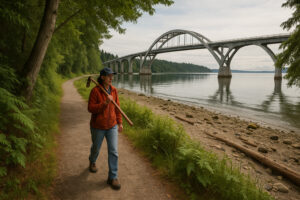
Though it feels wild, Shine Tidelands has deep roots in local history. Indigenous communities once gathered shellfish along these shores, leaving traces of ancient middens buried under layers of sand. Later, when the Hood Canal Bridge was first built in the 1960s, this shoreline served as a staging site for materials and workers.
Today, volunteers from nearby towns — including Port Ludlow — maintain the trail and organize seasonal beach cleanups. Their work keeps the area both accessible and unspoiled, ensuring future generations can walk the same quiet path between forest and tide.
A Photographer’s Paradise
Photographers adore Shine Tidelands for its open skies and reflections. The mix of water, sand, and weathered wood pilings creates compositions that change by the minute.
If you’re chasing the perfect shot:
Morning: Soft light and mist; ideal for minimalism and mood.
Midday: Crisp reflections of the bridge and mountains.
Evening: Golden tones across the flats; silhouettes of birds and driftwood.
Drone photography is occasionally permitted, but always check local regulations first and respect nesting areas.
Pairing Shine Tidelands with Other Adventures
Because it’s so close to Port Ludlow, Shine Tidelands fits beautifully into a half-day itinerary:
Morning coffee at Fireside Restaurant or the Marina Café
Drive over to Shine Tidelands for a mid-morning walk and beach exploration
Lunch in Port Gamble or a picnic on the shore
Optional afternoon drive across Hood Canal Bridge toward Poulsbo or back to Port Ludlow for kayaking
The park’s relaxed pace makes it ideal for couples, families, and photographers alike. You can spend thirty minutes or three hours here, and it always feels like time well spent.

Traveler’s Reflection
On one late-summer visit, I arrived just as the tide was turning. The beach stretched wide, glistening with scattered shells, and the water shimmered pale silver under a soft sky. A single heron stood motionless near the shallows, waiting for a fish that may or may not have come.
I walked the length of the flats until I could hear nothing but waves and wind — no cars, no voices, only the long, patient breath of the sea. That’s when I realized why this place stays with people. It’s not dramatic. It’s quiet, honest, and alive.
Shine Tidelands doesn’t ask you to climb, conquer, or chase anything. It simply invites you to walk — and listen — where the forest meets the tide.
Larry Scott Trail – From Bay to Mountain View
If you’re craving a longer, more varied route near Port Ludlow — one that blends salt air with forest quiet and mountain views — the Larry Scott Trail is your answer. It begins in nearby Port Townsend, just a 25-minute drive north, and offers one of the most scenic, accessible adventures on Washington’s Olympic Peninsula.
What makes this trail special is its spirit of connection. It’s the eastern gateway to the Olympic Discovery Trail, a massive path stretching nearly 130 miles across the peninsula from Port Townsend to the Pacific Ocean. The Larry Scott segment serves as both a beginning and a celebration — where ocean, town, and forest all meet before the land opens into wild country.
For hikers staying in Port Ludlow, it’s the perfect day trip: easy to reach, suitable for all skill levels, and endlessly photogenic.
Trail Overview
Distance: Up to 8 miles (round trip; out-and-back)
Difficulty: Easy to moderate
Trailhead: Boat Haven Marina, Port Townsend (Haines Place Park & Ride also available)
Surface: Packed gravel and paved sections
Elevation Gain: About 300 feet total
Open To: Hikers, cyclists, equestrians
Best Season: Year-round
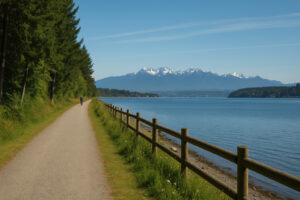
The Larry Scott Trail follows an old rail corridor, hugging the coast before winding inland through forest and farmland. The first two miles are flat and paved — great for casual walkers or families with strollers — while farther sections transition to crushed gravel, ideal for steady hiking or biking.
From the Bay to the Trees
The trail begins at the edge of Port Townsend Bay, where fishing boats sway in the marina and gulls wheel overhead. The opening stretch feels almost urban — benches, interpretive signs, and occasional joggers passing by — but within minutes, the noise fades.
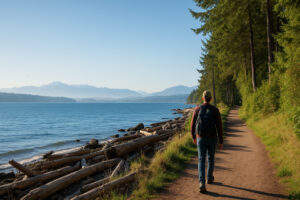
Soon, you’re walking beside saltwater, the scent of kelp and sea spray sharp in the air. To your right, glimpses of the Olympic Mountains emerge beyond the treeline, hazy blue in morning light. Driftwood piles mark the shoreline; waves lap softly against the rocks.
About a mile in, the trail curves inland, entering mixed forest. The air cools, the light softens, and the surface turns springy with layers of pine needles. Tall cedars rise around you like pillars. It’s here that the character of the trail changes — from coastal to woodland, from open to intimate.
Historic Echoes
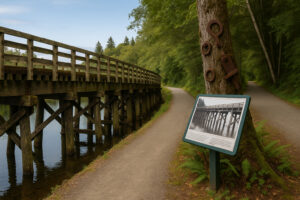
The Larry Scott Trail runs along the former Chicago, Milwaukee, St. Paul and Pacific Railroad line, once used to transport lumber and goods across Jefferson County. The line was abandoned decades ago, but the path it left has become one of the most beloved recreational routes in the region.
Occasionally, you’ll spot remnants of its industrial past — old pilings, rusted hardware, and cuttings through the hillside now softened by moss. Interpretive signs describe the history of logging and shipping in Port Townsend, adding depth to the landscape you’re walking through.
These small details connect today’s hikers to the generations that built, worked, and traveled this land before it became a trail.
Sights Along the Way
As you follow the trail, expect subtle but beautiful shifts in scenery:
1 mile: Coastal section with bay views and seabirds.
2 miles: Forest canopy and small creeks crossing beneath wooden bridges.
3 miles: Open meadows filled with wildflowers in spring.
4 miles: Turnaround point near Milo Curry Trailhead, with picnic tables and portable restrooms.
If you want to extend the journey, continue west into the early stretches of the Olympic Discovery Trail, where the path narrows and climbs gently toward Discovery Bay. Even walking a short distance beyond the Larry Scott segment gives you a glimpse of Washington’s wilder side.

Best Times to Hike
The trail is open year-round, but each season offers its own version of beauty:
Spring: Ferns uncurl, birds sing constantly, and wildflowers border the edges.
Summer: Long, bright days with cool coastal breezes; perfect for combined hiking and biking.
Autumn: Golden leaves blanket the forest floor, and the air turns crisp.
Winter: Quieter, moodier walks under mist and fog — especially photogenic near the shoreline.
Because it’s close to Port Townsend, the trail can be busier on weekends. Visit early morning or late afternoon for solitude and soft light.

Wildlife and Nature Moments
The variety of ecosystems along the Larry Scott Trail makes it a haven for wildlife watchers. You might see:
Bald eagles perched along the bay.
Great blue herons hunting in tidepools.
Deer crossing the trail’s meadow sections.
Woodpeckers and owls deeper in the forest.
The blend of saltwater and woodland ecosystems also creates a unique soundscape — waves mixing with wind in the trees, gulls calling above, and the crunch of gravel underfoot.
Take your time. This isn’t a trail to rush through. Every pause reveals something new.

Cyclists and Families Welcome
One of the joys of the Larry Scott Trail is its accessibility. It’s wide, well-maintained, and clearly marked. Families often bike the first few miles, stopping for snacks or photos at scenic pullouts. Dogs are welcome on leashes, and there’s enough space to share comfortably with other trail users.
For hikers from Port Ludlow, renting a bike in Port Townsend and riding part of the route is a fun alternative. It’s an easy half-day adventure — pedal out for a few miles, stop for a picnic, and coast back into town with the wind at your back.

Nearby Stops and Pairings
To make the most of your day, combine the Larry Scott Trail with Port Townsend’s charm:
Breakfast: Blue Moose Café near the trailhead — a local favorite for pancakes and strong coffee.
Post-hike lunch: Sirens Pub downtown, offering seafood and harbor views.
Explore afterward: Walk along Water Street’s Victorian storefronts or visit Fort Worden State Park for beaches and lighthouse views.
On your return to Port Ludlow, stop by the Chimacum Corner Farmstand for cider and snacks — a tradition many locals swear by after a long day outdoors.
A Trail That Connects More Than Places
More than just a scenic route, the Larry Scott Trail represents a vision — one of connection, sustainability, and shared stewardship. Locals see it as a living link between communities, a way to move gently across the land without disturbing it.
When you walk or ride here, you’re part of that story. You’re tracing the footsteps of loggers, sailors, and conservationists — people who each, in their own time, shaped this landscape.
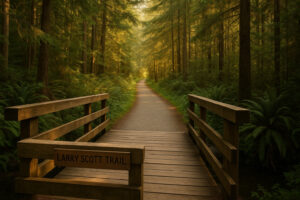
At the 3.5-mile mark, there’s a small wooden bridge where forest light filters down in silver threads. Pause there. The air smells of salt and cedar, and the water below murmurs softly. It’s a perfect place to reflect on how every trail — no matter how well-marked — still leads to discovery.
Traveler’s Reflection
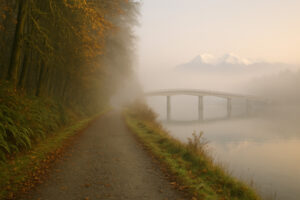
I first walked the Larry Scott Trail on a foggy autumn morning. The bay was hidden under a gray veil, but the forest glowed — every leaf slick with dew, every step cushioned in quiet. By the time I reached the bridge, the sun began to burn through, and suddenly the mountains appeared in the distance, their peaks dusted white.
That moment felt like a gift, the kind that stays long after the walk ends. That’s what this trail offers — the slow unfolding of beauty, one turn at a time.
For hikers from Port Ludlow, it’s not just another route — it’s a way to step into the heart of the peninsula, where every horizon promises something new.
Olympic Discovery Trail Access – Gateway Adventures
Few places in Washington blend accessibility and wilderness as beautifully as the Olympic Discovery Trail. Stretching from Port Townsend on the east end of the Olympic Peninsula all the way to La Push on the Pacific Ocean, this evolving route is one of America’s most scenic long-distance trails.
For travelers staying in Port Ludlow, this legendary trail lies right at your doorstep. Within half an hour, you can reach several key access points, each opening a different chapter of the peninsula’s story — from forested valleys and quiet creeks to saltwater bays and misty ridgelines.
Whether you’re after a short day hike or a multi-day adventure, the Olympic Discovery Trail (often shortened to ODT) is your gateway to the untamed beauty that defines Washington’s west.
A Trail That Spans the Peninsula
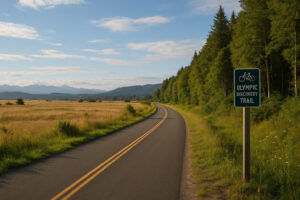
The Olympic Discovery Trail stretches roughly 135 miles across Jefferson and Clallam Counties, linking Port Townsend to the Pacific Coast. It passes through small towns, farmland, forest, and shoreline, eventually connecting to the Olympic Adventure Trail near Port Angeles for more challenging backcountry routes.
The vision behind it is as grand as its scenery — to create a continuous, non-motorized path that allows hikers and cyclists to traverse the peninsula safely while experiencing its full range of landscapes.
For Port Ludlow visitors, the eastern sections are the most convenient — and some of the most rewarding.
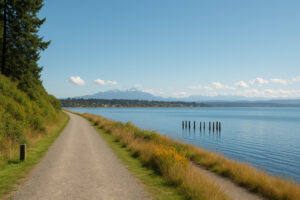
The Port Townsend Segment – Where It All Begins
The trail’s eastern gateway begins just north of Port Ludlow, at the Larry Scott Trailhead in Port Townsend. This initial stretch (which you explored in the previous section) sets the tone for what’s to come — gentle coastal curves, wide-open sky, and glimpses of the Olympics rising in the distance.
This is the most accessible portion for families and casual hikers. It’s also fully integrated into Port Townsend’s rhythm, allowing you to pair hiking with café stops or a stroll through the town’s Victorian streets.
For many travelers, this first segment offers the perfect “taste” of the ODT — easy, scenic, and full of life.
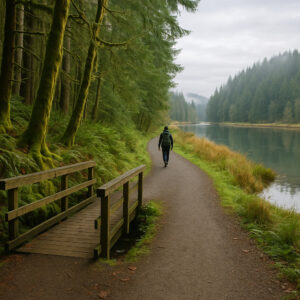
Discovery Bay to Blyn – Forests and Tides Collide
Continue west from the Port Townsend segment, and the trail crosses toward Discovery Bay. This section feels wilder. Forest crowds closer to the path, moss softens every branch, and wooden bridges cross quiet creeks.
Between Discovery Bay and Blyn, the trail skirts saltwater marshes alive with herons and eagles. The scent of cedar and seaweed mixes in the breeze — a combination uniquely Olympic.
There’s a small pullout off Highway 101 where you can access this portion for a shorter hike. It’s perfect for anyone seeking solitude without going deep into the mountains.
Highlights:
Rustic footbridges over small inlets.
Elevated viewpoints with water and mountain views.
Frequent sightings of eagles and herons.
Trailside benches crafted by local volunteers.
Round-trip option: 6–8 miles, depending on how far you go before turning back.
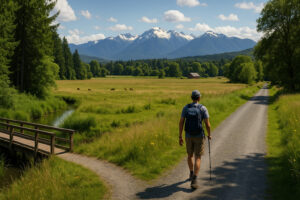
The Blyn to Sequim Stretch – Meadows and Mountains
Roughly 45 minutes from Port Ludlow, this middle section of the trail reveals an entirely new landscape — open farmland with the Olympic Mountains towering above. The air feels different here: drier, lighter, filled with the scent of grass and wildflowers.
The Blyn Trailhead (near the 7 Cedars Resort) offers parking, restrooms, and easy entry onto the ODT. From here, the path winds gently west toward Sequim Bay, following a rhythm of forest shade and open sun.
For hikers, this segment is one of the most photogenic. You’ll pass small wooden boardwalks, creeks lined with reeds, and wide meadows where deer graze at dusk. On clear days, Mount Olympus itself glows faintly white in the distance.
Round-trip option: 10 miles or less — choose your own turnaround point.
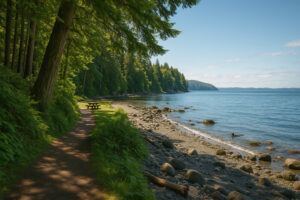
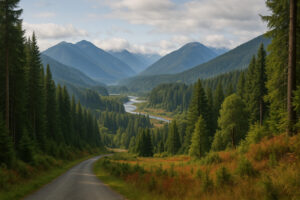
Sequim Bay State Park – A Coastal Gem Along the Way
If you want to combine hiking with camping or beachcombing, Sequim Bay State Park (just west of Blyn) is the place. The ODT passes directly through it, offering a unique mix of forest trail and shoreline walking.
Walkers can start at the park entrance, follow the trail past picnic areas and old-growth trees, and end up at a small, rocky beach with tidepools. This is a favorite stretch for families and wildlife enthusiasts — it’s common to see harbor seals bobbing offshore or kingfishers diving for their next meal.
Facilities: Bathrooms, picnic tables, and overnight campsites.
Bonus tip: Visit during spring or fall migration seasons for spectacular birdwatching.
Beyond Sequim – Toward Adventure and Wilderness
West of Sequim, the Olympic Discovery Trail begins to rise and bend into wilder terrain. It skirts Port Angeles, merges briefly with the Olympic Adventure Trail, and then continues toward the rainforests and river valleys near Forks.
For hikers based in Port Ludlow, this might be beyond a day trip — but it’s inspiring to know the connection exists. Many travelers plan multi-day adventures that start near Port Townsend, biking or hiking as far as they wish before resting at trail towns along the way.
That spirit of continuous exploration is what makes the ODT so captivating: it’s not just a trail; it’s an evolving journey that ties together communities, ecosystems, and experiences.
Tips for Exploring the ODT from Port Ludlow
Start Early: Morning light and calm weather make for ideal conditions, especially near the coast.
Check the Weather: The Olympic Peninsula’s microclimates can shift quickly — sun in one area, mist in another.
Bring Layers: The trail alternates between shade and open sun; dress for both.
Use Official Trail Maps: The Olympic Discovery Trail website and local visitor centers provide updated conditions and segment maps.
Respect Private Land: Some portions pass through easements — stay on marked paths.
Hydrate & Snack Smart: Facilities are spaced out; carry what you need.
If you’re traveling without a car, some portions near Port Townsend and Sequim can be accessed by Jefferson Transit or Clallam Transit buses that accommodate bikes and backpacks.
Why It’s Worth the Drive
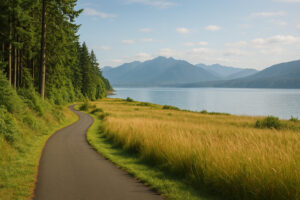
The Olympic Discovery Trail is less about distance and more about immersion. Every few miles, the landscape shifts: forest to field, saltwater to mountain shadow. It’s a reminder that the peninsula isn’t a single destination — it’s an unfolding of countless small worlds, each with its own rhythm.
Hiking here from a base in Port Ludlow offers the best of both: peaceful lodging by the bay and easy access to one of the Northwest’s most iconic trails. You can spend your mornings hiking coastal stretches and your evenings dining on fresh seafood while the sun sinks behind the marina.
Traveler’s Reflection
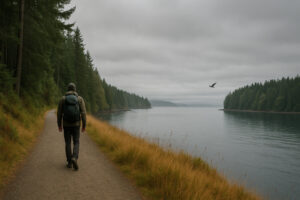
On my first walk along the ODT near Blyn, the sky was low and gray, the air thick with the scent of pine. About two miles in, the trail opened suddenly onto a bluff above Sequim Bay. Below me, the water shimmered silver, and an eagle traced lazy circles overhead.
It struck me how quiet it was — not empty, just still. Every sound belonged: the rhythm of my boots, the creak of a branch, the distant hum of waves.
That’s the gift of the Olympic Discovery Trail. It doesn’t just lead across the land; it teaches you how to move through it with reverence.
For those who begin their journey in Port Ludlow, this trail is more than a path — it’s a bridge between worlds: from the calm of the bay to the wild heart of the mountains, one step at a time.
Forest Etiquette & Safety Tips
The trails around Port Ludlow are more than routes through nature — they’re living ecosystems that locals cherish and protect. Every tree, stream, and patch of moss contributes to a delicate balance that has survived centuries of wind, rain, and time. As hikers, we share a responsibility to move gently through these spaces.
Whether you’re walking a short loop around Ludlow Falls or exploring deeper sections of the Olympic Discovery Trail, following good trail etiquette ensures these landscapes stay wild and welcoming for years to come.
Stay on the Path
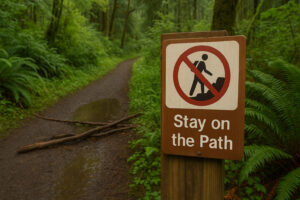
It can be tempting to step off the trail for a better photo or shortcut, but every detour leaves a mark. Foot traffic compacts soil, damages native plants, and encourages erosion.
In the Pacific Northwest, trails often weave through sensitive wetlands and fern beds. Even a few off-trail steps can disturb root systems and tiny wildlife that rely on undisturbed ground.
If you see puddles or fallen branches blocking the path, walk through them, not around — trail crews design routes to handle water and natural debris safely. It might get your boots muddy, but it keeps nature intact.

Carry In, Carry Out
You won’t find many trash cans along Port Ludlow’s trails — and that’s by design. The goal is to keep the forest looking exactly as it did long before people arrived.
Always bring a small bag to pack out wrappers, fruit peels, or tissues. Even biodegradable items take months to decompose in these cool, shaded environments.
A simple rule: if you brought it with you, take it back with you. Locals often carry an extra bag to pick up any litter they find along the way — a small act of gratitude to the land that gives so much peace.
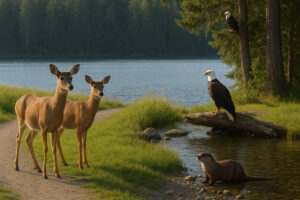
Respect Wildlife
You’ll likely meet a few of Port Ludlow’s quieter residents during your hikes — deer grazing in the meadows, eagles circling above the canal, or otters slipping through streams.
Keep your distance, and observe without interfering. Feeding animals may seem kind, but it changes their natural behavior and can make them dependent on humans.
If you’re hiking with a dog, leash it in wildlife areas. Even friendly pets can startle birds or chase small animals, leaving lasting stress in fragile habitats.
In spring and summer, be especially mindful around nesting areas near the shore and forest edges — stay quiet and move slowly.

Silence Is a Gift
One of the greatest luxuries of hiking near Port Ludlow is the quiet. Out here, sound travels differently. You can hear the flutter of wings, the trickle of a hidden stream, the wind moving through cedar needles.
Try walking stretches of trail without talking or playing music aloud. Not only does it enhance your experience — it also lets others enjoy the solitude they came for.
Many local hikers practice what they call “sound stewardship” — leaving space for nature’s voice to fill the silence. It’s a simple courtesy that deepens the sense of belonging in the forest.

Be Weather-Wise
Washington’s coastal forests have their moods. A trail that begins under sunlight can end under rain clouds within an hour.
Before heading out:
Check the forecast.
Bring a lightweight rain shell and a hat.
Waterproof your shoes — even “dry” trails can hold hidden puddles.
Carry an extra layer for warmth.
If a storm rolls in, find shelter among trees but avoid standing under large limbs or near cliffs. The weather here changes fast but rarely lasts long — patience is part of the adventure.
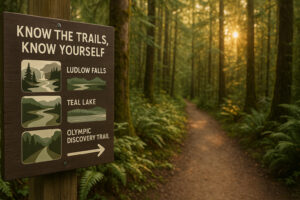
Know the Trails, Know Yourself
Each trail near Port Ludlow has its own rhythm. Ludlow Falls is short and shady; Teal Lake meanders gently around calm water; the Olympic Discovery Trail stretches for miles.
Choose trails that match your energy and experience. It’s better to enjoy a two-mile loop fully than rush a longer one half-heartedly.
Download maps before you go — cell service fades in forested areas. Apps like AllTrails or printed Jefferson County trail guides are excellent companions. And always tell someone your planned route, even for short hikes.
Locals follow an old saying: “The forest will wait for you. You don’t need to race it.”
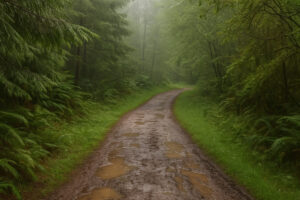
Tread Lightly in Wet Seasons
From late fall to early spring, Port Ludlow’s trails soak up heavy rainfall. Mud is part of the experience, but it also makes footing tricky and erosion more likely.
Stick to wider, well-drained routes like the Larry Scott Trail or lower sections of Teal Lake Loop during winter. Avoid cutting corners or widening muddy paths — every bootprint pushes water into new places.
If conditions are too wet, swap your hike for a beach walk at Shine Tidelands, where firm sand replaces slippery slopes. The view is different but no less refreshing.

Support Local Stewardship
Many of the trails around Port Ludlow exist because of community volunteers and environmental groups. Crews maintain boardwalks, clear fallen branches, and restore native vegetation year-round.
If you enjoy your time on the trails, consider giving back:
Join a Port Ludlow Trails Committee event.
Donate to the Jefferson Land Trust or Olympic Discovery Trail Alliance.
Spend a morning helping with invasive species removal or signage repair.
Participation builds connection. The more people care for these paths, the longer they’ll endure.
Safety Essentials Checklist
Even easy trails deserve respect. Here’s what locals never hike without:
Water: One liter minimum per person.
Snacks: Nuts, fruit, or energy bars.
Navigation: Map or offline GPS.
First Aid Kit: Even small scrapes can sting in salt air.
Whistle: Audible signal if lost or injured.
Headlamp or flashlight: Trails darken quickly under forest canopy.
Charged phone: Emergency contact, even without reception (GPS works offline).
Light gloves and hat: Weather shifts fast, especially near the canal.
Most hikes near Port Ludlow are safe and well-traveled, but preparedness transforms a pleasant outing into a confident one.
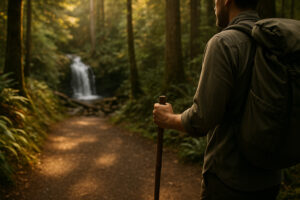
Hiking With Respect and Gratitude
Every trail here has its rhythm — the soft crunch of gravel underfoot, the breath of wind through trees, the call of distant gulls. The best way to honor that rhythm is to move through it with awareness.
When you pause beside a waterfall or sit at a viewpoint, remember that these spaces existed long before us and will continue long after. Your presence becomes part of their story — a small, respectful footnote in a much larger book.
As one local ranger put it, “We don’t own these trails. We borrow them, one step at a time.”
That mindset — quiet gratitude, gentle curiosity, and care for what’s living around you — is what turns hiking into something deeper. It’s not just exercise. It’s belonging.

Seasonal Highlights & Best Times to Hike
Each season in Port Ludlow tells a different story. The forests shift colors, the lakes mirror new skies, and the air itself changes texture — soft and fragrant in spring, warm and bright in summer, golden and calm in autumn, crisp and misty in winter. For hikers, these subtle transformations make every visit unique. Whether you’re returning for the fourth time or exploring for the first, the rhythm of the year gives the trails around Port Ludlow endless life.
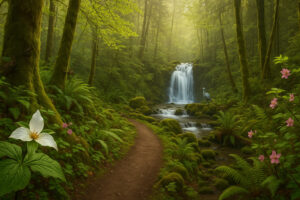
Spring (March – May): Renewal in Every Step
Spring breathes life back into the Olympic Peninsula. The forests shimmer with new leaves, and the air smells of rain and cedar. Waterfalls like Ludlow Falls run strong after winter’s melt, creating a soothing roar that echoes through the trees.
What to expect:
Trilliums and salmonberry blossoms lining forest floors.
Birds returning — woodpeckers, chickadees, and herons nesting near creeks.
Cool mornings (40–50°F) and mild afternoons (55–65°F).
Trails such as Teal Lake Loop and Larry Scott Trail are at their most beautiful now, their edges softened with moss and ferns. This is also the best time to visit Shine Tidelands, when low tides reveal wide beaches perfect for exploring tidepools and driftwood.
Local tip: Carry a light rain jacket. Showers come and go quickly, and the mist makes the forest even more photogenic.
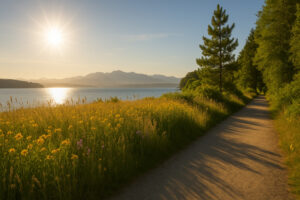
Summer (June – August): Sunlight and Long Trails
Summer in Port Ludlow stretches the days into gold. Sunrise arrives early, sunset lingers until nearly 10 p.m., and the world feels wide open. It’s the perfect time for longer hikes — especially the Larry Scott Trail and sections of the Olympic Discovery Trail, where clear skies offer views of both mountains and sea.
What to expect:
Temperatures averaging 70–80°F (cooler near the coast).
Wildflowers blooming along meadows and trail edges.
Refreshing breezes from Hood Canal keeping the heat comfortable.
This is also peak kayaking and paddleboarding season. Many hikers combine a morning trail with an afternoon on the water, returning to the marina for seafood and sunset views.
Best experience: Start early to avoid midday glare, then stop for lunch at one of Port Ludlow’s shaded picnic spots or café terraces.

Autumn (September – November): Quiet Beauty and Golden Light
Autumn brings a shift — not just in temperature, but in mood. The crowds fade, the air turns crisp, and the forests glow with amber, crimson, and rust. Every trail feels more intimate, as if the land itself is slowing down.
What to expect:
Fall foliage at its peak in late October.
Cooler days (50–65°F) ideal for steady hiking.
Morning fog rising from Teal Lake and low-lying valleys.
The Ludlow Falls Trail becomes especially magical now — leaves drifting across the water, the sound of the falls deepened by recent rain. On Teal Lake Loop, reflections of gold and red shimmer on the still surface, creating mirror-like scenes perfect for photography.
This is also the best time to sample local harvests — apples, pears, and fresh cider from Chimacum Valley make post-hike treats all the sweeter.
Local tip: Bring layers. Days can start chilly and end warm, especially near the coast.

Winter (December – February): Mist, Solitude, and Reflection
Winter in Port Ludlow doesn’t mean heavy snow or biting cold — it means quiet. The trails remain open, often empty, wrapped in soft fog that gives the forest a dreamlike quality.
What to expect:
Temperatures around 40–50°F.
Occasional frost or drizzle adding sparkle to branches.
Waterfalls roaring at full power after seasonal rains.
This is the season for introspective hikes — short, mindful walks where sound becomes texture: the drip of water from moss, the hush of wind through cedar. Ludlow Falls and Shine Tidelands feel especially private during this time.
When sunlight breaks through the mist, it often creates breathtaking scenes — beams of light piercing the fog, reflections rippling across still pools, and a peace so deep you can almost hear it.
Local tip: Waterproof shoes are essential. Pack a thermos of tea or cocoa and enjoy it at one of the benches overlooking the marina after your hike.
Month-by-Month Highlights
| Month | Experience |
|---|---|
| March | Early wildflowers, waterfalls at full strength. |
| April | Best time for birdwatching; mild rain keeps forests vibrant. |
| May | Trails dry out; forest scents are strongest. |
| June | Ideal hiking weather, long daylight hours. |
| July | Warm, clear skies; best for coastal walks and photography. |
| August | Wild berries ripen — watch for huckleberries along trails. |
| September | Transition month; mix of summer warmth and fall color. |
| October | Peak foliage; quiet, cool days for reflection. |
| November | Early rains bring misty, moody forests. |
| December | Calm trails, great time for solitude seekers. |
| January | Low crowds, moss-covered landscapes feel ancient. |
| February | Subtle sunlight returns; waterfalls surge again. |
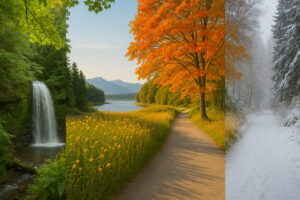
Combining Seasons and Experiences
For travelers planning multiple trips to Port Ludlow, alternating between spring and fall visits offers the richest variety. Spring gives you lush greenery and birdsong; fall brings serenity and warmth in color.
Summer is ideal for first-timers — reliable weather, full trail access, and community events like Port Ludlow’s Summer Market. Winter, meanwhile, belongs to those who seek stillness — the kind of days that invite journaling, sketching, or simply sitting by the falls and listening.
If you stay at The Inn at Port Ludlow, ask the front desk for seasonal trail updates. They often track local conditions — from wildflower blooms to eagle nesting — so you’ll know exactly where to wander that week.

Final Thought: The Season Belongs to You
There’s no wrong time to hike around Port Ludlow. The landscape never sleeps; it only changes its rhythm. One month, you’ll find sunlight breaking through leaves like stained glass. Another, you’ll walk through mist so thick it feels like walking inside a memory.
Every season rewrites the trails slightly — fallen branches, new ferns, shifted light — but the feeling remains constant: a deep, steady calm.
So whenever you arrive, bring curiosity and time. The trails will meet you exactly where you are.

Nearby Eats & Post-Hike Rest Spots
After hours spent under green canopies or along the tide, few things feel better than good food and a comfortable seat with a view. Luckily, Port Ludlow’s charm continues long after the trail ends. Cafés and restaurants here pair local ingredients with waterfront calm, turning every meal into part of the journey.

The Fireside Restaurant – Local Flavor by the Water
Located inside The Inn at Port Ludlow, The Fireside Restaurant is the perfect first stop after a morning on the trail. Large windows overlook the marina, and menus shift with the seasons — think wild-caught salmon, Dungeness crab chowder, and greens sourced from nearby Chimacum Valley farms.
Come for brunch and you’ll likely find hikers swapping stories over crab omelets or warm scones with marionberry jam. Dinner brings candlelight reflections on the bay and a glass of Washington Pinot Gris to celebrate another day outdoors.

Marina Café & Pub – Casual Harbor Hangout
Steps from the docks, the Marina Café & Pub is where locals refuel between walks. You can grab strong coffee, a breakfast burrito, or a late-afternoon sandwich and watch sailboats drift in and out.
It’s laid-back, friendly, and often filled with the soft hum of conversation about tides, trails, and the weather — the universal language of coastal life. Many visitors stop here before heading to Shine Tidelands or after looping Ludlow Falls.

Chimacum Corner Farmstand – Snacks for the Road
Fifteen minutes south lies Chimacum Corner Farmstand, a community favorite stocked with local cider, honey, cheeses, and homemade pastries. It’s the perfect detour after hiking Teal Lake Loop or driving back from Port Townsend.
Fill a basket with fresh apples and a loaf of sourdough, then take your picnic to one of Port Ludlow’s shoreline parks. Eating outside, with the sound of gulls and water nearby, completes the sense of slow travel that defines this region.

Finnriver Farm & Cidery – Relaxation with a View
For those wanting to linger a little longer, Finnriver Farm & Cidery in Chimacum Valley is pure Olympic Peninsula magic. After a day on the Larry Scott Trail or Olympic Discovery Trail, you can unwind with a flight of orchard-crafted ciders under string lights and open sky.
Live acoustic music fills the weekends, and food trucks serve farm-to-table meals that pair perfectly with crisp pear or black-currant cider. It’s a local tradition for hikers to finish their adventure here, shoes muddy, smiles easy.

Rest and Recharge
When it’s time to slow down completely, Port Ludlow offers quiet corners designed for unwinding — places that invite reflection as naturally as the trails invite motion.
The Inn at Port Ludlow Spa: Treat tired legs to a deep-tissue massage or aromatic soak while watching sunlight shimmer across Hood Canal.
Bay Club Park: A grassy bluff overlooking the marina, ideal for reading, journaling, or simply breathing in the salt air.
Marina Benches at Sunset: Perhaps the simplest luxury — sitting beside the water, watching masts sway, and feeling the day’s effort settle into calm satisfaction.
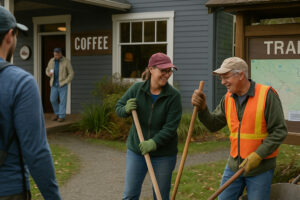
Connecting Trails to Community
Hiking here doesn’t end at the trailhead. It spills into everyday life — in the way café owners greet returning hikers by name, or how locals volunteer each weekend to maintain bridges and boardwalks.
The trails themselves are woven into Port Ludlow’s identity. They guide visitors not just through landscapes but through the community’s values: stewardship, slowness, and appreciation. Each step supports that balance, keeping the town’s rhythm steady and sustainable.

Planning Your Perfect Day
If you’re short on time, combine adventure and rest like a local:
Morning – Start with Ludlow Falls Trail, then grab coffee at Marina Café.
Midday – Drive to Shine Tidelands for a coastal walk and picnic.
Afternoon – Stop at Finnriver Cidery on your way back for a cider flight.
Evening – Watch the sun fade from the balcony at The Inn at Port Ludlow, dinner at The Fireside, journal in hand.
It’s a single day, but it captures everything that makes this place unforgettable — sea, forest, and the quiet pleasure of returning to comfort.
Closing Reflections
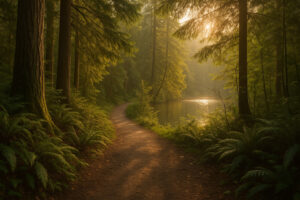
Port Ludlow isn’t about conquering peaks or breaking records. It’s about intimacy — the closeness between people and place, between footsteps and forest floor. The hikes here remind you that beauty doesn’t need grand gestures; it lives in details: the smell of wet cedar, the shimmer of lake water, the hush before a bird takes flight.
Walk slowly. Listen more than you speak. Let the rhythm of these trails change the pace of your thoughts. When you leave, you’ll find that part of the forest leaves with you — in the steadiness of your breath, the calm in your stride, and the way you start noticing quiet things again.
That’s the real secret of Port Ludlow’s hiking trails: you don’t just explore them. You become part of them.