Home » Destinations » Northeast Hidden Gems » Hidden Stories of Rockingham: Vermont’s River Town Heritage

Hidden Stories of Rockingham: Vermont’s River Town Heritage

by Secret America Travel

Scenic hillside and historic buildings overlooking the river in Rockingham VT on a clear day

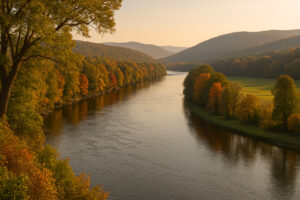
Every town has a story, but Rockingham, Vermont, or as some call it Rockingham VT, feels like a collection of stories woven together by time and water. Resting along the Connecticut River, this historic community quietly shaped the identity of the region long before highways, railways, or even the nation itself.

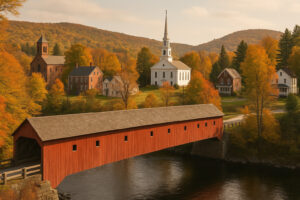
The Town of Rockingham VT is older than most of its neighbors — chartered in 1753, back when Vermont was still a wild frontier. It’s a place where old meetinghouses still echo with the voices of founders, and covered bridges creak softly with age but never collapse.

You might recognize Rockingham through its most famous village, Bellows Falls, but there’s far more to this river town than one name. Here, every field, millstone, and church steeple tells a different piece of Vermont’s heritage. This is where industry met faith, where water powered invention, and where generations built lives from granite and willpower.

I came here chasing a single story about Bellows Falls — but I left with a deep respect for Rockingham’s enduring spirit, a town that shaped history by staying true to itself.
Scenic hillside and historic buildings overlooking the river in Rockingham VT on a clear day

The Heart Of Rockingham

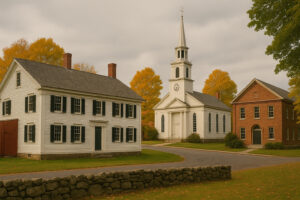
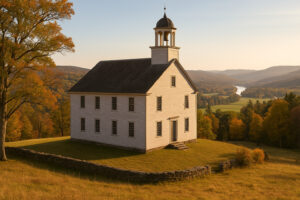
Rockingham began as a community long before it became a mill town or rail hub. At its center stands the Rockingham Meeting House, completed in 1787 and still preserved in its original form. With no electricity, no plumbing, and sunlight pouring through wavy glass, it feels like stepping back more than two centuries. Here, early residents debated land, planned schools, and gathered for worship. Set high on a hill overlooking farms, forests, and the silver curve of the Connecticut River, the meeting house became a symbol of endurance and shared purpose that still defines Rockingham today.

Scenic hillside and historic buildings overlooking the river in Rockingham VT on a clear day

From Farmland To Waterpower

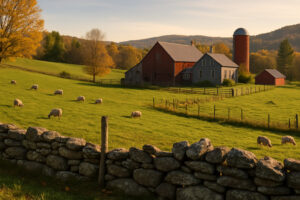
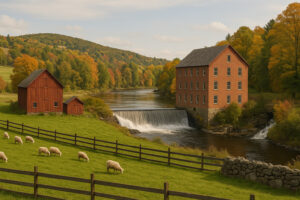
Rockingham’s first generations worked the land. Farms spread across upland fields, where settlers raised sheep and planted corn in rocky soil. Slowly, streams and the Connecticut River drew people downward. Gristmills and sawmills appeared on nearly every brook, giving farmers a second livelihood along the water. By the early 1800s, Rockingham learned to balance hillside agriculture with river powered industry. That mix of good soil and reliable water energy created a self sustaining local economy and set the stage for one small riverfront settlement, Bellows Falls, to become the industrial heart of the town.

Scenic hillside and historic buildings overlooking the river in Rockingham VT on a clear day

Bellows Falls – Industrial Engine Of The Town

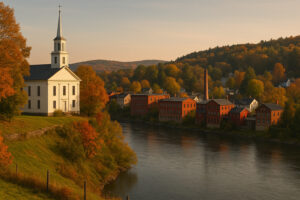
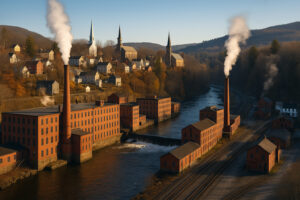
Bellows Falls grew from a modest mill village into one of Vermont’s earliest industrial centers. The Bellows Falls Canal, completed in 1802, let boats bypass dangerous rapids and turned the falls into controlled waterpower. Mills, machine shops, and later rail depots rose along the banks, and smokestacks joined church spires on the skyline. Families who once farmed on the hills moved closer to the river and traded plows for factory tools. Bellows Falls drew attention, but its strength came from Rockingham as a whole, which supplied workers, raw materials, and a shared sense of direction.

Scenic hillside and historic buildings overlooking the river in Rockingham VT on a clear day

Life Shaped By The Connecticut River

For Rockingham, the Connecticut River has always been a companion rather than a boundary. It froze into winter pathways, shimmered with salmon in spring, and caught long summer sunsets on its surface. The river’s moods decided when crops could be shipped, when mills ran, and when floods demanded repair and resilience. Old diaries describe its “melancholy murmur” in autumn and its “boiling fury” during high water. Generations learned to read and respect this waterway, building a way of life that moved with the current instead of fighting against it.

Scenic hillside and historic buildings overlooking the river in Rockingham VT on a clear day

Architecture And Craftsmanship

Rockingham’s buildings tell a story of quiet practicality rather than showy wealth. Federal and Greek Revival homes, simple farmhouses, sturdy barns, and modest churches rely on proportion and craftsmanship instead of excess decoration. Many structures were built between 1790 and 1850, using timber frames pinned with wooden pegs. The Rockingham Library and Town Hall, with their tall ceilings, brick walls, and archival rooms, anchor civic life. Together, these buildings express the same idea: progress built slowly, carefully, and with an eye toward longevity rather than fashion.

Here is a simple “architecture snapshot” chart you can use in your article:

StyleTypical EraWhere You See ItOverall Feel
FederalLate 1700s to early 1800sOlder homes and small public buildingsBalanced, refined, modest
Greek RevivalEarly to mid 1800sFarmhouses, churchesSimple lines, strong gables, practical beauty
Industrial brick1800sCanal and riverfront mills, downtown blocksFunctional, durable, repurposed for arts and shops

Scenic hillside and historic buildings overlooking the river in Rockingham VT on a clear day

Farms, Families And Working Land

Away from the river and village centers, Rockingham remains a patchwork of farms, stone walls, and woodlots that look much as they did a century ago. Many family names on barns and mailboxes stretch back generations. Fields along roads like Parker Hill still support sheep, dairy cattle, and mixed crops. Local producers sell maple syrup, honey, and farm goods at places like Great River Co op, blending older traditions with regenerative methods. In a world of industrial agriculture, Rockingham’s small farms quietly prove that slow, local and steady still works.

Scenic hillside and historic buildings overlooking the river in Rockingham VT on a clear day

Folklore, Legends And Local Stories

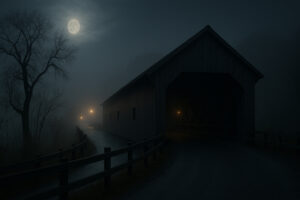
Rockingham carries its history not only in records and buildings, but in stories that slip between fact and legend. Locals talk about a “ghost bridge” where phantom footsteps echo on stormy nights, about rumored Prohibition era tunnels beneath Bellows Falls that may or may not still exist, and about Hetty Green, the so called Witch of Wall Street, who summered nearby and allegedly hid part of her fortune in the hills. These tales, half history and half campfire story, add texture to walks through town and keep curiosity alive for visitors and residents alike.

Scenic hillside and historic buildings overlooking the river in Rockingham VT on a clear day

Preserving The Past Together

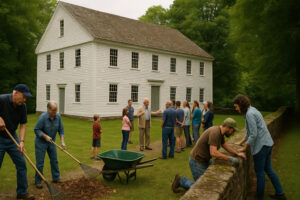
Rockingham’s heritage survives because the community chooses to protect it. The Rockingham Meeting House, the Vilas Bridge, and the Canal Street Historic District owe their condition to local volunteers, preservation committees, and everyday residents who show up for clean up days and heritage walks. Historical societies maintain archives, organize tours, and invite schoolchildren and travelers to learn directly from people who still remember earlier eras. Preservation here is not abstract policy, it is a personal act, like the resident who points to an old barn beam and says “my grandfather helped raise that in 1901.”

Scenic hillside and historic buildings overlooking the river in Rockingham VT on a clear day

Rockingham Today, Map View And Travel Snapshot

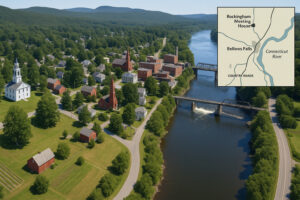
Modern Rockingham blends old foundations with new livelihoods. Tourism, small scale agriculture, arts, and renewable hydropower now shape the local economy. On a map, you will see Bellows Falls along the river as the busy creative hub, the Rockingham Meeting House on its hill above fields and forest, and country roads connecting outlying farms and hamlets back into town. Bellows Falls links Rockingham to regional rail and road networks, while the surrounding countryside offers quiet drives, history walks, and river access.

You can present this quick visitor chart as a simple “trip planning” guide:

Traveler TypeBest SeasonMain FocusRockingham Highlight
History loverSpring to fallMeetings, tours, old buildingsRockingham Meeting House, Canal Street
Scenic wandererLate spring and autumnViews, drives, riversParker Hill Road, Connecticut River overlooks
Culture and arts fanSummer and early fallEvents, galleries, live showsBellows Falls Opera House, murals, art walks
Slow travelerAny seasonQuiet, everyday lifeFarm roads, library, small cafés

Scenic hillside and historic buildings overlooking the river in Rockingham VT on a clear day

Final Thoughts On Rockingham’s Story

Rockingham’s story is not about grand monuments or sudden booms. It is about steady endurance and adaptation along a single river. The meetinghouse on the hill, the canal carved from granite, the mills of Bellows Falls, the family farms, the folklore, and the restored brick blocks all tell different parts of the same narrative. When you visit, you do not stand outside history, you stand inside it, feeling how past and present flow together like the Connecticut River below. That quiet continuity is what makes the Town of Rockingham Vermont unforgettable, and why its voice still matters in the larger story of New England.

 
Frequently Asked Questions About Rockingham Vermont
Q1. Is Rockingham the same as Bellows Falls?

Bellows Falls is a village within the larger Town of Rockingham VT. Rockingham includes several rural areas, farms, and smaller villages.

Q2. What is Rockingham known for?

For its early settlement history, preserved meetinghouse, and role in Vermont’s industrial development through Bellows Falls.

Q3. Can you visit the Rockingham Meeting House?

Yes. It’s open for tours in warmer months and for special community events during summer.

Q4. What connects Rockingham and Bellows Falls today?

They share government, heritage, and a community spirit that blends rural tradition with cultural creativity.

Q5. Why should travelers stop in Rockingham?

Because it captures the essence of small-town New England — history, community, and natural beauty, all within reach of the Connecticut River.

You may also like

Leave a Comment