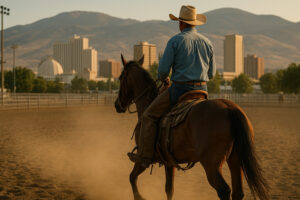
Reno is known today as the “Biggest Little City in the World,” but beyond its bright lights and riverfront restaurants lies a heartbeat that has never changed — the sound of hooves on hard-packed dirt. Long before slot machines and high-rise hotels, this region was cowboy country, with cowboy heritage trails in Nevada showcasing its rich history.
From dusty cattle drives to modern rodeos, Nevada’s landscape has shaped the soul of the American West. The cowboy heritage trails of Nevada aren’t tourist inventions — they’re living history, still ridden, sung about, and celebrated every year.
As I stood near the Reno Livestock Events Center during a late-summer afternoon, I could hear echoes of generations past. The smell of hay, the creak of saddles, and the rumble of horses — all reminders that in Nevada, history doesn’t sit behind glass. It rides by in real time. Pair these ranching routes with museums, historic inns, and festivals from Historic & Cultural Experiences in Nevada. Explore mining echoes across White Pine County ghost towns. Align your visit with festive traditions in Northern Nevada for local events. Plan your broader western circuit through scenic USA road trips for every season.
Reno’s Ranching Legacy – The Foundation of Cowboy Culture
Before the City: Basque Shepherds and Nevada Cattlemen
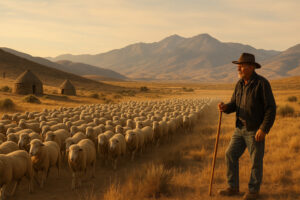
The story of Nevada’s cowboy heritage begins not with casinos but with ranchers and shepherds. In the 1850s, settlers arrived in the Truckee Meadows valley — the area now known as Reno. They brought cattle, sheep, and determination.
Many of the earliest herders were Basque immigrants from Spain and France. They built stone huts across the Great Basin and tended flocks in isolation, often living months at a time in the high desert. Today, the Basque influence remains strong — in the food, the festivals, and the spirit of independence that defines Nevada’s west.
Restaurants like Louis’ Basque Corner and J.T. Basque Bar and Dining Room still serve traditional lamb stew, beans, and picon punch — recipes passed down from the earliest cowhands.
On TripAdvisor, diners say it’s “like stepping into old Nevada — massive portions, friendly crowd, and authentic Basque charm.”
When I visited Louis’ one evening, a longtime rancher told me, “Basques taught Nevada what hard work really meant.” Without them, half the trails wouldn’t exist.”
Explore J.T. Basque Bar and Dining Room on Google Maps
The Cattle Drives that Shaped the Desert
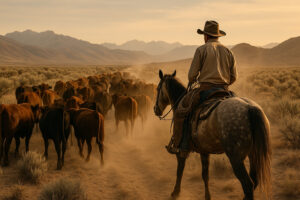
Before fences and freeways, ranchers drove herds across open range from Elko to Carson Valley. These trails, cut by hooves and wagon wheels, later became the routes known collectively as the Cowboy Heritage Trails.
The longest of these routes connected the Humboldt River corridor to Reno, crossing hundreds of miles of sagebrush plains. Cowboys slept under stars, following the same paths that Native Paiute and Washoe peoples had traveled for centuries.
Artifacts found along these routes — branding irons, worn bridles, and weathered boots — now rest in the Nevada Historical Society Museum, just north of the university campus.
TripAdvisor reviewers describe the museum as “small but full of personality,” praising its exhibits on early ranch life and mining-era settlements.

Reno’s Rise as a Western Hub
The Birth of the Reno Rodeo
By the early 1900s, Reno had grown into a supply center for surrounding ranches. In 1919, local ranchers gathered to celebrate their hard work with competitions that tested true cowboy skill — roping, riding, and bronc busting.
That gathering became the first Reno Rodeo, now one of the most famous in the United States.
Every June, the city transforms for “The Wildest, Richest Rodeo in the West.” The Reno Livestock Events Center fills with horses, bulls, and riders from across the country. Parades roll through downtown, and visitors line Virginia Street waving cowboy hats.
According to TripAdvisor, visitors describe the Reno Rodeo as “authentic, family-friendly, and exhilarating — the best blend of sport and history you’ll find anywhere in the West.”
As a traveler, there’s nothing like standing in the grandstands during a nighttime show. The dust rises under the floodlights, the crowd cheers, and when the announcer calls a perfect 8-second ride, the entire arena seems to breathe as one.
Explore Reno Livestock Events Center on Google Maps
Nevada’s Working Ranches
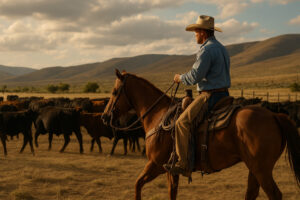
While Reno celebrates rodeo season, ranchers across the state keep the cowboy way of life alive. In Elko County, multi-generation families still manage sprawling cattle operations across thousands of acres.
Many of these ranches participate in the Nevada Cattlemen’s Association, which helps maintain the trails, share resources, and organize heritage events.
Some even welcome travelers for immersive experiences. I stayed a weekend at a guest ranch near Winnemucca, where I helped herd cattle and learned how to throw a lasso. It was harder than it looked — the rope stung my hands, but when I finally caught a dummy calf, the rancher grinned and said, “Now you’re one of us.”
That sense of inclusion — of history made personal — is what sets Nevada’s cowboy culture apart.
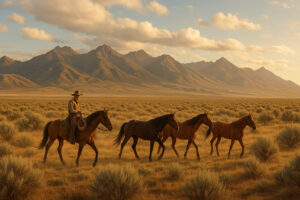
The Cowboy Heritage Trails – Paths Through Time
The Humboldt Trail
Running parallel to the Humboldt River, this trail was once the artery of westward migration. Covered wagons, stagecoaches, and later cattle herds all followed its winding course.
Today, you can trace parts of it along Interstate 80, but to truly experience its history, exit near Battle Mountain or Carlin. Dirt tracks still lead to old ranch outposts and creek crossings where cowboys watered their horses.
I once pulled over at a trailhead near Lovelock, where sagebrush stretched to the horizon. In that silence, I could almost hear hoofbeats echoing across time.
The Ruby Valley Route
Farther east, the Ruby Valley Trail connects a chain of alpine valleys framed by the Ruby Mountains. It’s one of the most scenic sections of the Cowboy Heritage Trails — high meadows, wildflowers, and creeks that glint like silver.
In summer, wild horses roam the hillsides. Seeing them at dusk feels like watching freedom itself move through the desert.
Locals in nearby Elko often say that if you truly want to meet Nevada’s soul, ride through Ruby Valley at sunrise.
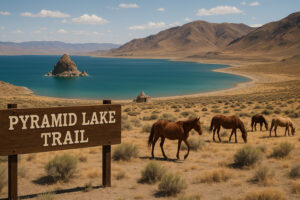
The Pyramid Lake Trail
Closer to Reno, the Pyramid Lake Trail follows routes once used by Native Paiute people and 19th-century cattle drives. The lake, sacred to the Paiute people, shimmers with shifting blue and turquoise hues.
The Pyramid Lake Paiute Museum and Visitors Center tells the story of this region — its wildlife, traditions, and the bond between land and people. A TripAdvisor reviewer called it “a place where Nevada’s spirit slows down enough for you to listen.”
Reviewers on TripAdvisor call it “a quiet, meaningful stop where Nevada’s spirit slows down enough for you to listen.”
The nearby Cowboy Heritage Loop Drive connects Reno, Pyramid Lake, and Spanish Springs, offering stunning views of desert ridges and grazing land.
Explore Pyramid Lake Paiute Museum & Visitors Center on Google Maps
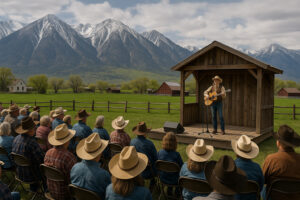
Carson Valley Heritage Trail
South of Reno, near Minden and Gardnerville, the Carson Valley Heritage Trail weaves through some of the oldest ranches in Nevada.
These lands were settled in the mid-1800s by pioneers who found water flowing from the Sierra Nevada. The green pastures they built remain among the most fertile in the state.
Many farms here are still family-owned. Visitors can tour ranches, taste local beef and honey, and join the Carson Valley Cowboy Poetry & Music Festival, where stories and songs celebrate the endurance of western life.
I attended last spring — the music was raw, funny, and full of heart. An old rancher’s poem ended with the line, “We don’t tame the desert — we learn to dance with it.” The crowd roared in agreement.
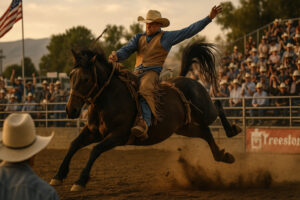
The Spirit of the Arena – Rodeo as Living History
The Meaning of the Rodeo
A rodeo isn’t just a competition — it’s a conversation between past and present. When riders climb into the saddle at the Reno Rodeo, they honor the same skills that once kept Nevada’s ranches alive. Every lasso swing, every bucking horse, carries echoes of the first cowboys who tamed the frontier.
The air smells of dust and barbecue smoke; cowboy hats rise with each cheer. To some, it’s sport. To locals, it’s heritage. For over a century, the Reno Rodeo has symbolized Nevada’s resilience — a celebration of grit and grace beneath an open sky.
I met a young competitor named Claire who grew up in Elko. She said, “My granddad rode bulls in this arena. When I’m out there, it’s like he’s still with me.” Her words reminded me that rodeo isn’t just performance — it’s inheritance.
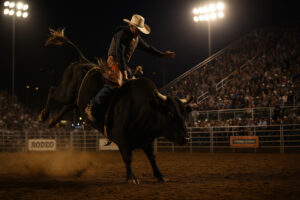
Nevada’s Signature Livestock Events
The Reno Rodeo – The Wildest, Richest Rodeo in the West
Each June, Reno hosts the Reno Rodeo, a ten-day spectacle that draws riders, ranchers, and families from across the West.
Events range from bareback riding and team roping to barrel racing and bull riding — all under the floodlights of the Reno Livestock Events Center. The opening parade floods downtown with horses, wagons, and marching bands, followed by live country music and food stalls that smell like campfire suppers.
TripAdvisor reviews describe the Reno Rodeo as “authentic, family-friendly, and exhilarating,” with many guests calling it the highlight of their summer.
Behind the scenes, volunteers known as the “Rodeo Wranglers” keep the tradition running smoothly — handling livestock, setting up chutes, and welcoming visitors. Every ticket sold supports youth scholarships and local ranching education.
That’s what makes this rodeo unique: it doesn’t just entertain; it gives back to the land and people that built it.

The Elko National Basque Festival
In northeastern Nevada, Elko hosts one of the state’s most beloved cultural gatherings — the National Basque Festival, held every Fourth of July weekend since 1964.
Though not a rodeo in the strict sense, it celebrates another crucial part of Nevada’s cowboy culture — the Basque shepherds who helped shape the state’s ranching industry.
There are traditional sports like wood chopping, weight lifting, and sheep herding demonstrations, alongside Basque dancing, music, and communal meals.
At one long wooden table, I shared paella with a ranching family who’d driven five hours from Winnemucca. The father said, “The festival isn’t just a party. It’s proof that our traditions still matter.”
Nearby, a parade of oxen and horse-drawn carts rolled through the streets, cheered by locals waving both Nevada and Basque flags. The smell of grilled chorizo filled the air, and for a moment, time blurred — it could’ve been 1880 or 2025.
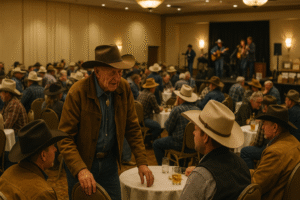
Nevada Cattlemen’s Annual Convention
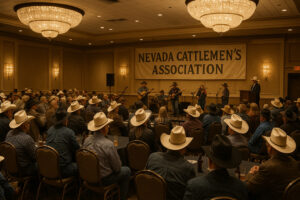
Held in different cities each winter, the Nevada Cattlemen’s Association Convention is where the state’s ranchers gather to share knowledge, honor heritage, and shape the future of ranching.
Workshops cover everything from sustainable grazing to water conservation, but evenings belong to cowboy camaraderie — live music, auctions, and storytelling sessions that last late into the night.
In one corner of the ballroom, I met an old rancher from Ely who told me, “You can take the cowboy out of the saddle, but you’ll never take the saddle out of the cowboy.”
It’s at conventions like this that the Cowboy Heritage Trails of Nevada find new life — as younger generations step forward to keep them open and authentic.
Festivals and Cowboy Gatherings
National Cowboy Poetry Gathering – The Voice of the West
Every January, Elko becomes the cultural capital of the cowboy world during the National Cowboy Poetry Gathering, organized by the Western Folklife Center.
Cowboys, ranchers, poets, and musicians from across the West come to share stories of hard work, open skies, and quiet dignity. There’s laughter, sorrow, and pride in every verse.
I sat in the audience as a poet named Waddie Mitchell recited,
“We ride for reasons words can’t say,
But sometimes we speak so they won’t fade away.”
That line sums up what this gathering is all about — preserving a language of the land that’s fading in most places but thriving in Nevada.
TripAdvisor reviewers often call the event “the most moving celebration of rural life in America.”
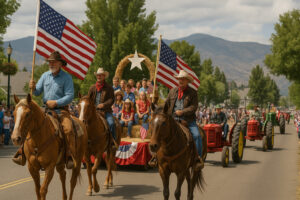
Carson Valley Days and Western Parades
Down south, Minden and Gardnerville hold Carson Valley Days, a festival combining parades, rodeos, and ranch history tours.
Cowboys ride alongside antique tractors, while local schools march behind floats decorated with hay bales and flags. Families gather at Lampe Park for country bands, craft fairs, and ranch-style cookouts.
The sense of community here is powerful — everyone waves to everyone else. You realize the cowboy spirit isn’t just about open range; it’s about belonging.

The Art and Music of the Cowboy Trail
Songs of the Desert
Music has always been the lifeblood of cowboy culture. Nevada’s wide horizons have inspired songs for generations — from fiddle tunes at campfires to country ballads played in Reno taverns.
Modern musicians continue this tradition at festivals like Night in the Country and Cowboy Christmas, blending old Western rhythms with contemporary country and folk.
I remember hearing a young singer at a bar near Sparks perform a song called Dust Between the Stars. Her voice carried the loneliness and hope of every rider who ever crossed the desert.
It reminded me that the cowboy’s music isn’t nostalgia — it’s storytelling in motion.
Cowboy Art and Craftsmanship
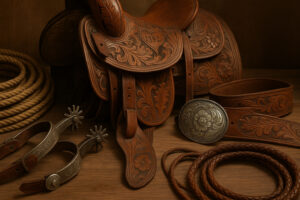
Throughout Nevada, artisans keep the handmade traditions of the cowboy alive — tooled leather saddles, silver belt buckles, rawhide ropes, and spurs engraved with desert flowers.
In Elko’s Western Folklife Center, an exhibit displays old saddles carved with intricate scrolls and initials. One is dated 1892, its leather cracked but still beautiful.
I once spoke with a silversmith in Carson City who designs concho belts for rodeo champions. He said, “It’s not about decoration — it’s about identity. A cowboy wears his story.”
That sentiment, simple yet profound, captures why the heritage endures.

Cowboy Heritage Trails – The Modern Experience
Trail Rides and Ranch Stays
Today, visitors can experience cowboy life firsthand through guided trail rides and ranch stays. The Cottonwood Guest Ranch near Wells, for example, offers multi-day horseback expeditions through the Independence Mountains.
Guests on TripAdvisor say it’s “a real working ranch where you ride, rope, and eat like family — unforgettable scenery and hospitality.”
Explore Cottonwood Guest Ranch on Google Maps
Guests learn to saddle, rope, and navigate desert terrain — often ending evenings around a fire under skies thick with stars.
Another favorite stop is Tracy’s Ranch Experience outside Fallon, where travelers can join cattle drives during branding season. The ranch hosts photography tours and teaches guests the history of each trail they ride.
Following the Cowboy Heritage Loop
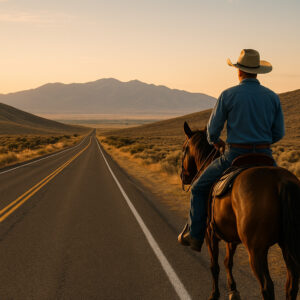
The official Cowboy Heritage Loop connects Reno, Fallon, Austin, Eureka, and Elko — five destinations that represent the evolution of Nevada’s cowboy story.
Along the way, roadside markers highlight historic ranches, old stagecoach stops, and towns that once supplied cattle drives.
A detailed Google Map of the route is available through Travel Nevada’s heritage site, which I recommend bookmarking before your trip.
Driving or riding the loop feels less like sightseeing and more like traveling through a living museum.
Modern Nevada – Where the Cowboy Way Still Rides
Ranching in the 21st Century
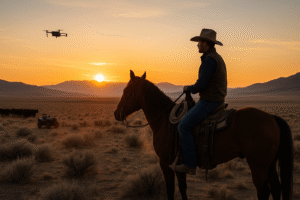
While the old trails have turned into highways, Nevada’s cowboy tradition hasn’t disappeared — it has adapted. Across the Great Basin, ranchers still rise before dawn, saddle up, and ride through land as open as it was a century ago.
The work looks different today. ATVs sometimes replace horses, drones help track herds, and ranch management software monitors grazing conditions. Yet, every rancher I met says the same thing: “Technology may help, but instinct still leads.”
During one trip through Eureka County, I watched a young cowboy ride out at sunrise. His horse’s breath clouded in the cold. The landscape was endless — sage, sand, and silence. When I asked what kept him in this life, he said simply, “Freedom. Same reason my granddad stayed.”
That’s what Nevada’s cowboy heritage really means — independence rooted in the land.
Museums and Cultural Landmarks
The Wilbur D. May Museum – Reno’s Western Legacy
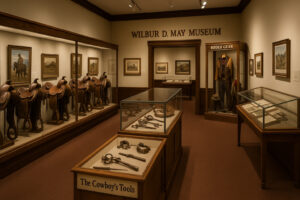
Inside Reno’s Rancho San Rafael Park stands the Wilbur D. May Museum, named after a rancher, explorer, and philanthropist who once ran one of the largest cattle operations in Nevada.
The museum showcases saddles, rodeo gear, early Western art, and personal journals from 19th-century ranchers. A small exhibit titled “The Cowboy’s Tools” displays spurs, branding irons, and lassos that once shaped Nevada’s economy.
TripAdvisor visitors often describe it as “the most underappreciated museum in Reno,” noting its blend of adventure, travel, and Western authenticity.
TripAdvisor visitors call it “a hidden gem — part ranch history, part global adventure, and totally worth an hour or two.”
Explore Wilbur D. May Museum on Google Maps
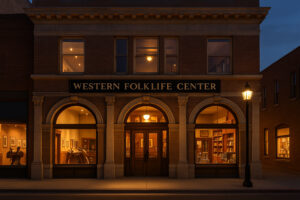
Western Folklife Center – Elko’s Cultural Heart
If Reno is the hub of modern cowboy sport, then Elko is the heart of cowboy art. The Western Folklife Center, housed in a restored 1912 bank building, preserves oral histories, photographs, and live recordings from ranchers and poets across the state.
This is also the home of the National Cowboy Poetry Gathering, held each January. The center’s small theater screens documentaries about ranching life, and its gift shop sells handmade belts, silver buckles, and locally crafted music albums.
Standing inside, surrounded by old saddles and voices from past performances, I realized that cowboy heritage in Nevada isn’t nostalgia — it’s a living art form.
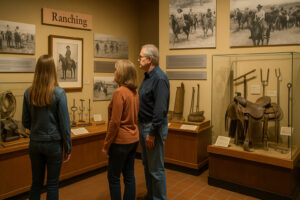
Nevada State Museum – Carson City
In Carson City, the Nevada State Museum dedicates part of its gallery to the state’s ranching and livestock history. Visitors can explore displays on open-range grazing, irrigation systems, and even the role of horses during the mining boom.
One of the most fascinating exhibits features photographs of early cowgirls — women who broke stereotypes long before rodeo queens became icons. Their determination adds a vital thread to the story of Nevada’s cowboy trails.
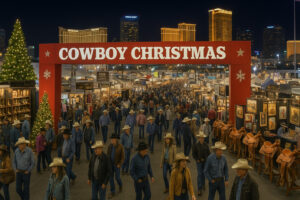
Modern Cowboy Events and Experiences
Cowboy Christmas in Las Vegas
Every December, during the National Finals Rodeo, Las Vegas transforms into a celebration called Cowboy Christmas — a massive expo filled with Western art, handmade saddles, and thousands of vendors selling everything from boots to belt buckles.
Even though the city’s skyline is dominated by neon and glass, for ten days it feels like the old West moved back in. I spent hours watching craftsmen carve leather and silversmiths etch names onto spurs. One artist told me, “Las Vegas was built by dreamers — cowboys just dream with dust instead of lights.”

Ranch-to-Table Dining
Across Nevada, local restaurants now highlight their ranching roots through ranch-to-table dining. In Fallon, The Slanted Porch sources beef from nearby farms, serving dishes like grass-fed ribeye with roasted desert vegetables.
In Elko, Machis Saloon & Grill offers a modern twist on cowboy cooking — smoky ribs, cast-iron cornbread, and apple pie straight from iron skillets.
Dining this way connects travelers to the land as deeply as any trail ride. Every meal tells a story — of soil, effort, and endurance.
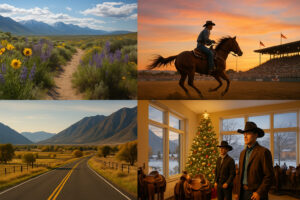
Planning Your Cowboy Heritage Trail Adventure
Best Time to Visit
Spring (March–May): Wildflowers bloom across the high desert; best for trail rides and photography.
Summer (June–August): Rodeo season; Reno, Elko, and Carson Valley host major events.
Fall (September–November): Cooler weather for long drives through the Cowboy Heritage Loop.
Winter (December–February): Perfect for festivals like Cowboy Christmas and museum visits.
Top Stops on the Cowboy Heritage Loop
| Stop | Highlight | Why Visit |
|---|---|---|
| Reno | Reno Rodeo & Wilbur D. May Museum | Classic rodeo and historical exhibits |
| Fallon | Guest ranch experiences | Learn cattle herding and roping |
| Austin | Old ranch ruins | Authentic ghost ranch photography |
| Eureka | Cattlemen’s Heritage Site | Small museum and local rodeo |
| Elko | Cowboy Poetry Gathering | Artistic heart of cowboy culture |
Travel Tips
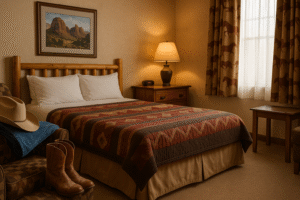
Stay Local: Choose heritage lodges and small inns — they often feature regional art and ranch-style decor.
Pack for Dust: Lightweight boots, denim, and a brimmed hat are essential on Nevada’s trails.
Respect the Land: Ranch roads are private; ask permission before entering fenced areas.
Use Offline Maps: Cell service fades quickly in rural areas — download directions in advance.
Attend a Rodeo: It’s the fastest way to feel the rhythm of Nevada’s living cowboy tradition.
Reflections – The Cowboy Way in a Changing World
When you spend time along Nevada’s cowboy heritage trails, you realize that the cowboy’s endurance isn’t about nostalgia — it’s about identity. The values that defined the old West — courage, honesty, independence — still guide the people who call this state home.
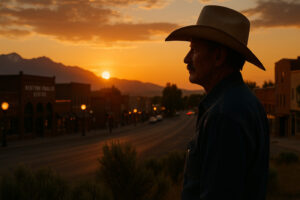
During my last evening in Elko, I stood outside the Western Folklife Center as the sun dropped behind the Ruby Mountains. Somewhere nearby, a fiddle played an old tune. The sound drifted across Main Street, blending with the smell of sage and coffee. For a moment, time folded — past and present shared the same sky.
That’s what Nevada’s cowboy trails do best: they remind you that history isn’t gone. It just keeps riding forward.
Frequently Asked Questions About Cowboy Heritage Trails in Nevada
They’re historic routes once used by ranchers and cattle drives, now preserved as cultural and scenic travel routes across Nevada.
It starts in Reno and circles through Fallon, Austin, Eureka, and Elko, linking ranch towns and historical museums.
June. The ten-day event features professional competitions, parades, and live music.
Yes. Ranches near Fallon, Winnemucca, and Wells offer authentic stays and guided horseback rides.
Its mix of Basque culture, Native American traditions, and frontier independence makes it one of the most diverse cowboy legacies in the U.S.
Absolutely. Many guest ranches welcome first-time riders and provide training for safe, enjoyable experiences.
An annual cultural festival in Elko where poets, musicians, and artists celebrate Western life through performance.
Yes — ranching remains a major part of Nevada’s economy and identity. Many families have maintained operations for generations.
The Wilbur D. May Museum and Nevada Historical Society both display artifacts and exhibits dedicated to ranching history.
Attend a rodeo, visit a working ranch, and drive the Cowboy Heritage Loop — each will show you a different side of Nevada’s living West.