Some roads feel like shortcuts; others feel like stories. The Colonial Parkway belongs to the second kind — a 23-mile stretch connecting Jamestown, Williamsburg, and Yorktown that threads through 400 years of American memory. It’s a perfect day for a Colonial Parkway scenic drive to explore Virginia’s Historic Triangle Itinerary — a journey through 400 years of American history.
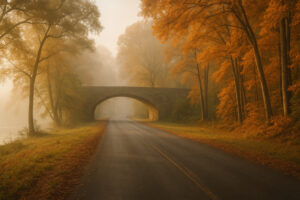
The first time I drove it, mist rose off the James River, and sunlight caught the copper leaves. There were no billboards, no gas stations, not even painted lane dividers — just stone bridges, forest, and silence. It was the closest I’ve ever come to time travel without leaving the driver’s seat.
Explore Colonial Parkway on Google Maps
This guide unpacks everything I’ve learned from multiple visits: how to plan the trip, the best stops, picnic spots, food, lodging, and seasonal views that make this route one of Virginia’s most beautiful scenic drives.
Why the Colonial Parkway Is Virginia’s Most Beautiful Drive
The Parkway was designed not merely as transportation but as interpretation. Built between the 1930s and 1950s by the National Park Service, its purpose was to link three historic towns into a continuous open-air museum.
Timeless Design
Every detail serves the illusion of the 18th century:
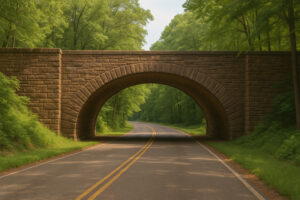
Bridges built of hand-cut stone instead of concrete.
Curving alignments that hide traffic ahead and frame natural vistas.
Absence of billboards and commercial clutter.
Even the road surface — a rust-colored mix of crushed Virginia bluestone — was chosen to resemble dirt while still being modern pavement.
Blending History and Nature
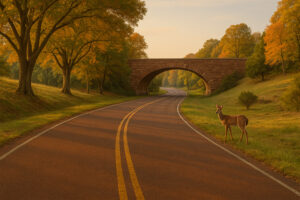
Unlike many scenic byways, the Colonial Parkway never isolates history from its landscape. Deer wander near earthworks from the Revolutionary War; herons fish beneath bridges modeled after 17th-century arches.
Travelers often describe the road as a meditation in motion — slow, quiet, reflective. The posted 45 mph limit enforces that rhythm.
Planning Your Journey
Best Time to Visit
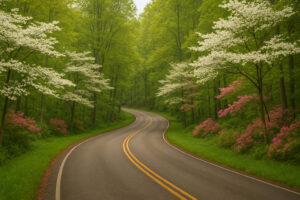
Spring (Mar–May): Dogwoods and azaleas bloom; average 70 °F days make walking comfortable.
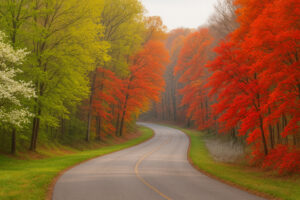
Fall (Sep–Nov): Crimson maples line the route — the season photographers dream of.
Summer: Green tunnels and warm rivers, but plan early starts to avoid heat.
Winter: Peaceful solitude; frost gives the forests a silver sheen.
Drive Length & Timing
The Parkway covers about 23 miles, linking Jamestown Island on the west end to Yorktown Battlefield on the east, with Williamsburg roughly midway.
Non-stop: ≈ 45 minutes.
Leisurely exploration with stops: 4 – 6 hours.
Getting There
By Car: Access via I-64 Exits 242–238.
By Air: Fly into Newport News/Williamsburg International (PHF) or Richmond (RIC).
Parking: Free pull-offs and picnic areas every few miles.
Fees & Passes
There’s no fee to drive the Parkway itself. However, if you stop at Jamestown Settlement or Yorktown Battlefield, you’ll need tickets (or the America’s Historic Triangle Pass).
Safety Notes
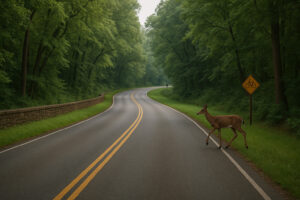
Cell service can fade between Williamsburg and Yorktown. Download maps offline. Wildlife crossings are common at dusk and dawn — drive slowly.
Route Overview – Jamestown to Yorktown
The Colonial Parkway follows two rivers and four centuries of change:
Jamestown Island: 1607 colonial origins and archaeological sites.
Williamsburg: 18th-century politics and culture.
Yorktown: 1781 victory that ended the Revolution.
Between these anchors lies forest, meadow, and marsh — untouched views rare on the East Coast.
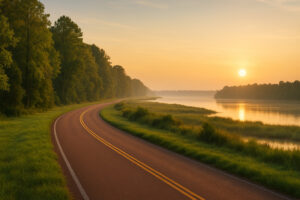
Driving west to east follows chronological order: the birth of a colony to the birth of a nation. I recommend starting in the morning from Jamestown so the sun rises ahead and you finish in Yorktown by sunset over the river.
Explore Colonial Parkway Driving Route on Google Maps
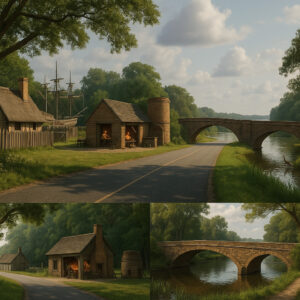
Stops and Sights Between Jamestown & Williamsburg
This western segment — about 8 miles — traces the earliest colonial story.
💬 Read traveler reviews of Historic Jamestowne and Jamestown Settlement to see why visitors call them essential stops on the Colonial Parkway.
Jamestown Settlement & Historic Jamestowne
Begin at the visitor center to understand why English colonists chose this location. Dive deeper into the exhibits, ships, and archaeology in our Jamestown Settlement History article. The museum offers recreated ships, Powhatan villages, and the 1607 fort palisade. A mile beyond lies Historic Jamestowne, the actual archaeological site where excavations still reveal artifacts every season.
Glasshouse of 1608
A short walk from the entrance shows glassblowers working over wood-fired furnaces, reviving Virginia’s first industrial experiment.
Scenic Pull-Offs
East of Jamestown, the road follows the James River closely. There are several unmarked viewpoints where you can watch herons or kayakers passing below low bridges built from native stone.
Powhatan Creek Bridge & Marshlands
The bridge over Powhatan Creek is a quiet highlight. Pull over and listen — you might hear tree frogs and red-winged blackbirds. Interpretive panels explain how these tidal marshes sustained both Native and colonial communities.
Historic Turnoffs
Near mile 5 you’ll find the turn for Jamestown Island Drive, a 5-mile loop through woodlands and ruins of 17th-century homes. It’s ideal for bird-watching and short hikes.
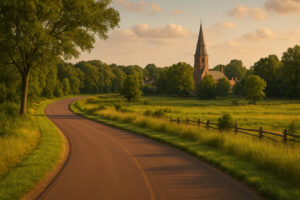
Historic Highlights Along the Way
Between Jamestown and Yorktown, the Parkway is a timeline built into pavement.
Early Colonial Era (1607–1700)
This was where Virginia’s first laws, crops, and conflicts took root. Look for signs to the site of Green Spring Plantation, home of Governor Sir William Berkeley. Archaeological markers detail how tobacco and trade made Virginia the wealthiest colony — and how enslaved labor sustained it.
Colonial Capital Period (1700–1780)
By the time you reach Williamsburg, you’ve entered the age of enlightenment and revolution. The city’s grid layout and brick architecture symbolize a new order built on reason and education. The Parkway preserves approach views to the city exactly as 18th-century travelers saw them.
Revolution and Aftermath (1781)
Approaching Yorktown, the landscape changes — rivers widen, and earthworks appear. Here the War for Independence reached its decisive end. Every turnout frames a different perspective on that moment in history.
Driving the Parkway from start to finish feels like reading a book you can see and hear. Each mile is a page, each curve a chapter linking centuries together.
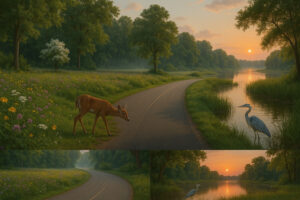
Wildlife and Natural Beauty of the Parkway
One of the joys of driving the Colonial Parkway is realizing that it’s also a wildlife corridor. The route crosses tidal marshes, forests, and estuaries that teem with life.
Forests and Meadows
The woodland canopy mixes loblolly pine, oak, and sweet gum. In spring, dogwoods bloom like white clouds against the green. In autumn, maples ignite into red and gold. At dawn, mist rises over clearings, and deer feed along the verge—proof that conservation and history coexist here.
Birdlife Along the Rivers
Bring binoculars. The James and York Rivers draw ospreys, eagles, and great blue herons. Between Jamestown and Williamsburg, I often stop near Powhatan Creek Bridge; its shallow water attracts ducks and egrets year-round. During migration, hundreds of swallows dart over the marshes, painting motion into still air.
Flora in Season
Wildflowers line the shoulders in spring—violets, buttercups, and crimson clover. The National Park Service mows only sparingly to protect pollinators, so the edges feel like a living border. Travelers in late summer will notice fields of goldenrod and Queen Anne’s lace swaying under the heat.
Evening Moments
One of my favorite memories is parking near Felgates Creek as the sun set. The water mirrored orange light, frogs started singing, and the first fireflies blinked. It felt like nature applauding the day’s end.
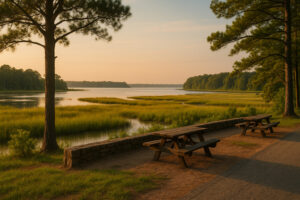
The Parkway rewards curiosity. Some of its best stops are unmarked—simple gravel pull-offs that open to unforgettable views.
Felgates Creek Pull-Off
Roughly halfway between Williamsburg and Yorktown, this small turnout overlooks tidal wetlands where osprey nests crown dead trees. There are picnic tables shaded by pines, perfect for lunch with river breezes.
Indian Field Creek Trail
Just east of Williamsburg, a short loop trail leads through forest to a quiet creek. I’ve walked it at dawn and met joggers, birdwatchers, even a painter capturing reflections on canvas.
King Creek Overlook
This overlook near Yorktown offers a wide bend of the river dotted with sailboats. Bring a thermos of coffee—sunrise here feels cinematic.
Explore Felgates Creek on Google Maps
Picnicking Tips
There are more than a dozen picnic areas, all free and first-come-first-served. Restrooms are limited, so plan ahead. Local markets in Williamsburg sell sandwiches and Virginia peanuts, ideal road-trip fuel.
Short Hikes Near the Route
Powhatan Creek Trail: 2.5 miles one way, connecting the Parkway to Jamestown Island Drive.
Waller Mill Park Loop: Nearby lakeside trail for paddling and fishing after your drive.
These little detours transform a simple drive into an immersive outdoor day.
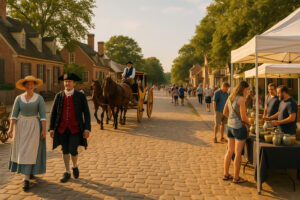
Cultural and Local Experiences Along the Route
While the Parkway itself avoids commercial clutter, small towns and communities just beyond it add warmth and flavor to the journey. At the midpoint of your drive, explore the city that defined colonial culture in our Exploring Colonial Williamsburg guide.
Williamsburg’s Living History
At mid-point, Colonial Williamsburg hums with interpreters, horse-drawn carriages, and artisans practicing 18th-century crafts. Even if you explored it on a previous trip, it’s worth returning—each season brings new reenactments and exhibits.
Very worthwhile to see, hear and feel Colonial Williamsburg, steeped in history and tradition and ghostly encounters; truly an amazing part of old American culture; recommended.
Yorktown’s Waterfront Life
Locals stroll Riverwalk Landing in the evening, browsing art galleries and farmers markets. I once chatted with a potter selling hand-glazed mugs inspired by colonial patterns; he told me, “Tourists come for history, but they stay for conversation.” That sums up the Triangle’s charm.
One can shop, go visit the beach, watch the ships or walk up the hill to see Yorktown in the 1600’s.
Jamestown Island Archaeology
Join an Archaeology Talk at Historic Jamestowne. Seeing excavations live connects theory to earth—the guides explain how each layer reveals lives once forgotten.
Community Events
From Yorktown’s “Sounds of Summer” concerts to Williamsburg’s “2nd Sundays Art Festival,” music often spills into the air along the Parkway corridor. If you plan ahead, you can pair the drive with local celebrations for a fuller experience.

Where to Eat Along the Colonial Parkway
Scenic driving builds an appetite, and the Triangle serves food with both tradition and creativity.
Jamestown Area
Billsburg Brewery: Riverside craft beer and food trucks with a view of Jamestown Marina.
Jamestown Pie Company: Savory chicken pot pies and apple crumb desserts — comfort food in a colonial setting.
Williamsburg Eats
Blue Talon Bistro: French-inspired Southern fare; try the peanut soup and grilled salmon.
Aromas Coffeehouse: Morning stop for pastries and strong coffee before driving.
DoG Street Pub: Laid-back gastropub serving Virginia ciders and local cheese boards.
Yorktown Dining
Water Street Grille: Seafood on the riverfront; oysters and crab cakes are favorites.
Carrot Tree Kitchens: Homestyle baking with famous lemon bars and Brunswick stew.
Farmers Markets & Picnics
If you prefer open-air meals, shop at the Williamsburg Farmers Market (Saturdays 8 a.m.–noon). Pack Virginia ham, fresh fruit, and local cheese for a picnic at Felgates Creek or Yorktown Beach.
Good food anchors the day and connects you to the land; many recipes trace back to colonial traditions but still taste modern.
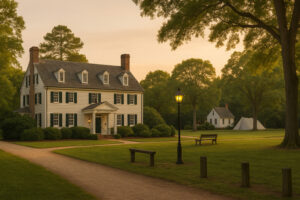
Lodging & Campgrounds Nearby
You can drive the Parkway in one day, but staying overnight lets you savor its sunsets and quiet mornings.
Historic Inns in Williamsburg
Williamsburg Inn: Five-star luxury with colonial elegance; ideal if you want history at your doorstep.
Fife and Drum Inn: Boutique B&B in the historic district; personal service and homemade breakfast.
Cedars of Williamsburg: Quaint Georgian guest house within walking distance of DoG Street.
Yorktown and Riverside Retreats
Hornsby House Inn: Overlooks the York River; balconies catch sea breezes and sunrise light.
Colonial National Historical Park Campgrounds: Simple sites amid trees; perfect for campers seeking nighttime peace under stars.
Alternative Stays
Vacation rentals in Toano and Lightfoot offer family-friendly cottages with kitchenettes. If you want resort facilities, the Greensprings Vacation Resort has pools and spacious suites.
I’ve slept in both luxury and tent here. The constant is tranquility — no traffic roar, no city glow, only crickets and the rustle of pines.
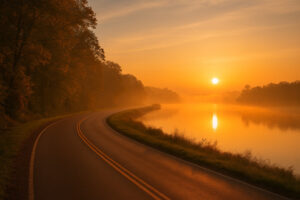
Photography & Best Viewpoints
Photographers love the Parkway for its natural light and historical textures. Whether you use a DSLR or a phone, timing matters more than equipment.
Top Spots for Photos
Jamestown Bridge Pull-Off: Sunrise reflections on the James River.
Powhatan Creek Bridge: Morning mist and wildlife.
Colonial Williamsburg Entrance Arch: Framed by trees, it feels like a portal to another century.
King Creek Overlook: Best for golden-hour sunsets.
Yorktown Victory Monument: Night lighting with river background.
Tips for Great Shots
Golden Hour: Drive early morning or late afternoon for soft light.
Avoid Midday Glare: Trees create dappled patterns that can fool auto exposure.
Include Curves: Use the road as a leading line for composition.
Respect Nature: Stay on paved pull-offs — stepping into grass can damage delicate habitats.
Personal Moment
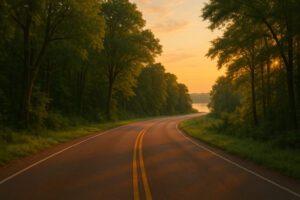
On my last trip, I stopped near Indian Field Creek and watched fog lift off the water. As the sun broke through, the road ahead glimmered like bronze. It was a photo I could never fully capture — the kind you keep in memory instead.
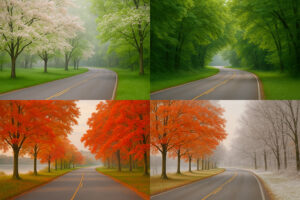
Seasonal Experiences – From Spring Blossoms to Autumn Colors
The Colonial Parkway never looks the same twice. Its quiet beauty evolves with each season, and travelers who return often notice new moods with the changing light.
Spring – Rebirth and Renewal
Between March and May, Virginia awakens in color. Dogwoods bloom white against fresh green, azaleas blaze pink, and tulips surround the entrances of Colonial Williamsburg. I like to start early—mist still hanging over the James River—when the air smells of pine and soil.
Wildlife stirs too. Turtles bask on logs, and red-winged blackbirds call from the marshes. Spring also marks festival time: the Historic Garden Week tours open private estates, and local farmers’ markets brim with strawberries and herbs.
Summer – The Lush Season
From June through August, the Parkway turns into a tunnel of green. Sunlight filters through the canopy like shifting lace. It’s hot—mid-80s to 90s—but shade and river breezes make it bearable.
Bring water, insect repellent, and take advantage of picnic areas. Evening drives are magical: the sinking sun reflects off the York River, and the smell of honeysuckle lingers in the air. I often stop by the Yorktown beach for a quick barefoot stroll before dinner.
Fall – Virginia’s Painted Season
September to November is the Parkway’s masterpiece. Maples, oaks, and hickories explode into red, orange, and gold. Photographers line the overlooks, and even locals take the long way home just to soak in the view.
I once pulled over near Felgates Creek one October evening, and the reflection of trees in still water looked like a painter’s palette. It’s impossible not to feel grateful in that moment—for the land, for preservation, for time itself.
Winter – Quiet Elegance
December to February brings calm. The trees bare their bones, the crowds vanish, and the Parkway feels contemplative. Occasionally frost sparkles on the bridges at dawn. It’s the best season for solitude and reflection, ideal for those who prefer silence over spectacle.
Safety Tips & Driving Etiquette
The Colonial Parkway rewards patience and mindfulness. It’s not a highway; it’s a shared heritage corridor where history, wildlife, and travelers coexist.
Obey the Speed Limit
The posted limit is 45 mph, and rangers enforce it. The curves are gentle but deceptive—wildlife often crosses unexpectedly. Slowing down isn’t a burden here; it’s the point.
Use Pull-Offs for Photos
Don’t stop on the road itself. Scenic turnouts appear every few miles, many with stone walls or picnic areas. Use these to step out safely for photos.
Watch for Cyclists and Wildlife
Cyclists love this route for its lack of commercial traffic. Give them wide space. In early mornings and evenings, deer and raccoons may appear from the woods—drive alertly.
Limited Lighting
There are no streetlights after dusk. Night drives can feel mysterious but keep headlights on low beam for better contrast and slower reactions.
Respect Nature and History
Take nothing but photos. Don’t climb on earthworks or disturb archaeological sites. Trash bins are limited—bring your own bag to pack out what you bring in.
Driving here isn’t about speed or efficiency. It’s about connection—between person, place, and past.
How the Parkway Was Built – A Legacy of Preservation
Behind the Parkway’s beauty lies one of the most remarkable engineering and conservation stories in U.S. history.
Vision and Origins
The idea took root in the 1930s as part of President Franklin D. Roosevelt’s New Deal projects. The National Park Service sought to connect Jamestown, Williamsburg, and Yorktown in a way that respected history and landscape alike.
The goal: build a road that looked old but functioned modern. The result was a masterpiece of contextual design.
Design Philosophy
Engineers used local stone and minimal grading, allowing curves to follow the natural contours. Overpasses were built with hand-laid masonry, and utilities were buried underground to preserve 18th-century sightlines. The Parkway deliberately excluded gas stations, power poles, and commercial signs.
Labor and Craftsmanship
Much of the work was done by the Civilian Conservation Corps (CCC)—young men who also planted trees, cleared trails, and built picnic areas. Their craftsmanship still endures nearly a century later.
When I learned that the CCC workers earned a dollar a day and sent most home to their families, the Parkway suddenly felt more than scenic—it felt human.
Preservation Today
The Parkway remains part of the Colonial National Historical Park, protected by the National Park Service. Despite millions of annual visitors, its appearance has barely changed since the 1950s. Every repair uses original materials and techniques to maintain authenticity.
This enduring harmony of history, nature, and design is why the Colonial Parkway stands as a model for heritage preservation worldwide.
Traveler Reflections & Personal Story
Every time I drive the Parkway, I’m reminded that travel isn’t just about movement; it’s about meaning.
The first time I brought my family here, my son asked why the road had no advertisements. I told him, “Because the view is the message.” He nodded, watching trees blur past, and said quietly, “It looks like the past is still alive.”
That’s exactly what this road does—it keeps the past breathing.
There’s something deeply grounding about a route where technology pauses and time slows down. The Colonial Parkway doesn’t demand your attention; it earns it. The hum of tires on stone-textured pavement, the smell of pine and salt, the echo of history—all merge into an experience that feels almost sacred.
If you ever need to reset your sense of perspective, come here. Leave the car windows open. Let the wind carry the stories.
Suggested 1-Day and 2-Day Drive Itineraries
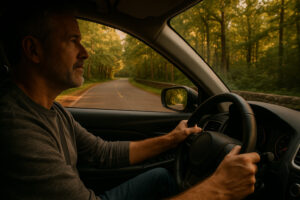
Whether you have a single day or a weekend, you can experience the Parkway fully with careful pacing.
1-Day Scenic Drive Itinerary
Morning:
Start at Jamestown Settlement (arrive early for parking).
Drive Jamestown Island Loop (5 miles).
Cross the Powhatan Creek Bridge and stop for photos.
Midday:
Lunch in Williamsburg at Aromas Café or Blue Talon Bistro.
Walk Duke of Gloucester Street or tour the Governor’s Palace.
Afternoon:
Drive east toward Yorktown on the Parkway.
Stop at Felgates Creek for a short rest.
Evening:
Explore Yorktown Riverwalk and enjoy dinner at Water Street Grille.
Watch sunset over the York River before returning.
2-Day Relaxed Heritage Itinerary
Day 1:
Jamestown Settlement and Historic Jamestowne tours.
Afternoon picnic at Powhatan Creek.
Overnight stay in Williamsburg (Fife and Drum Inn).
Attend an evening reenactment or Ghost Walk.
Day 2:
Morning drive to Yorktown Battlefield.
Visit the American Revolution Museum and Victory Monument.
Lunch at Carrot Tree Kitchens.
Optional kayaking on York River or walk along the beach.
This version lets you explore each town at a gentle pace, blending history with leisure.
Final Thoughts – The Road That Connects Centuries
The Colonial Parkway is more than asphalt; it’s a conversation across time. Every curve whispers the resilience of early settlers, the courage of revolutionaries, and the stewardship of those who preserved it.
What moves me most about this road is its simplicity. No gift shops, no glowing billboards—just trees, rivers, and memory. It reminds travelers that beauty doesn’t need spectacle; it needs sincerity.
As you roll through its quiet miles, windows down and mind unhurried, you realize that history here isn’t behind you—it rides beside you.
I’ve driven it in sunshine, rain, fog, and twilight, and every time I leave with the same thought: some places don’t just take you somewhere—they take you back.
Frequently Asked Questions About the Colonial Parkway
A: Non-stop, about 45 minutes; with stops and short walks, 4–6 hours.
A: No. It’s part of Colonial National Historical Park and free to enter.
A: Yes, at Jamestown, Williamsburg Visitor Center, and Yorktown Battlefield.
A: Yes, both are allowed. The smooth curves and low traffic make it ideal for cycling and motorbikes, though speeds must remain under 45 mph.
A: Swimming is not allowed in the rivers along the Parkway, but Yorktown Beach offers designated swimming areas nearby.
A: West to east (Jamestown to Yorktown) follows historical order and sunlight.
A: Yes, except during rare weather closures (ice or flooding).