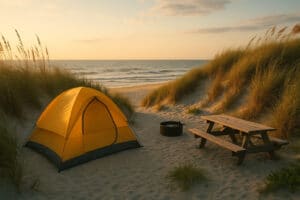
There are places where camping feels like an activity—and then there are places where camping becomes the whole experience. Ocracoke Island falls into the second category. Tucked away on North Carolina’s Outer Banks, reachable only by ferry, the island offers a sense of remoteness that few beach destinations can match.
When I first arrived with my tent packed in the trunk, the ferry ride itself already set the tone. Salt air whipped across the deck, gulls soared overhead, and the flat horizon stretched for miles. By the time the boat nudged into Silver Lake Harbor, I already knew this trip would feel different from any other.
Camping here isn’t just about saving money on lodging—it’s about waking up with the ocean at your doorstep, watching stars sparkle above the dunes, and hearing waves as your lullaby. This guide will take you through everything you need to know: the campgrounds, how to book them, what to bring, and the adventures waiting once you’re settled in.
Why Camp on Ocracoke Island?
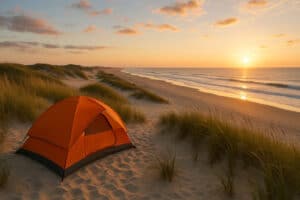
If you’ve ever craved the kind of trip that makes you slow down and reconnect with the basics, Ocracoke is the spot. Unlike the mainland’s beach towns, you won’t find rows of chain hotels or neon-lit boardwalks here. Instead, you’ll find wide beaches, maritime forests, and a campground that gives you the Atlantic Ocean as your backyard.
Seclusion and Simplicity: No bridge connects Ocracoke to the mainland—you arrive by ferry. That alone gives the island a remote, almost hidden feel. Camping extends that simplicity: you’re not in a hotel watching the waves from afar—you’re in the landscape itself.
Unspoiled Nature: The Cape Hatteras National Seashore keeps much of the island wild. Miles of undeveloped beach stretch beyond the campgrounds, making it easy to find your own private stretch of sand.
Affordability: Lodging on Ocracoke fills fast and can be pricey in high season. Camping gives you a budget-friendly way to stay longer while still being part of the island.
Adventure on Your Doorstep: Surf fishing, kayaking, biking, or stargazing—all can start right from your tent or RV.
Unplug and Recharge: Cell service is spotty, and Wi-Fi is limited. For many campers, that’s not a drawback but a gift. It forces you to put the phone down and actually watch the sunset.
Camping here feels different because Ocracoke itself feels different. The pace is slower, the sky is bigger, and life revolves around tides and sunsets rather than schedules.
Types of Camping in Ocracoke
Not all Ocracoke camping looks the same. The island offers choices that fit different travel styles—whether you want rustic, convenient, or a bit of both.
Beachfront Camping in the National Seashore
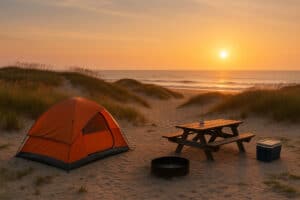
The Ocracoke Campground, run by the National Park Service, is the island’s classic spot. It’s set just beyond the dunes, so you can walk from your tent or RV directly onto the beach.
Lynn “ the host” was the best!!! Advised us to ride the campground and “find our happy place” which was very comforting knowing that trip adviser and google reviews were the only resource for suggestions.
Atmosphere: Quiet, natural, with little more than the sound of surf and seabirds.
Facilities: Restrooms, picnic tables, and cold showers. No hookups, so RVs must be self-sufficient.
Why Stay Here: For stargazing, ocean sunrises, and that raw “barrier island” experience. If you want to explore more of the shoreline, don’t miss our Ocracoke Beaches Guide covering the best spots for swimming, surfing, and shelling.
One windy night here taught me just how powerful the elements can be. The Atlantic isn’t gentle, and neither is the coastal wind. Bringing proper stakes for sandy ground is the difference between a solid tent and chasing your shelter down the beach.
Teeter’s Campground – Village Convenience
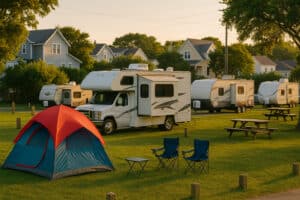
If you’d rather balance rustic with convenience, Teeter’s Campground sits right in Ocracoke Village.
We’ve camped in a tent at Teeters 3 times now and plan to go again in a week. The owner is super nice and the facilities are very clean.
Atmosphere: More social, with families grilling and neighbors chatting across sites.
Facilities: Electric hookups, hot showers, laundry, and easy access to restaurants and shops.
Why Stay Here: Comfort and community, while still being part of Ocracoke’s slower rhythm.
Teeter’s is where you can camp but still grab a morning latte at Ocracoke Coffee Company or head to a restaurant without driving. While you’re in the village, make time to explore local treasures — our Ocracoke Hidden Gems: Shops & Artisans guide highlights the best places to shop and browse.
RV Camping Options
RVers have two main choices: the NPS campground (dry camping, no hookups) or Teeter’s (full hookups).
Best for self-contained rigs: Ocracoke Campground, with dunes and the ocean just beyond.
Best for long stays: Teeter’s, where hookups make life easier.
Reserve early—spaces for RVs vanish fast in summer.
Tent Camping
Tent campers arguably get the best experience of all. With the dunes shielding the NPS campground, it’s possible to fall asleep to waves and wake up with the sunrise over the Atlantic. For those who want access to showers and village life, Teeter’s still makes a solid base.
Camping here isn’t glamorous—it’s sandy, windy, and sometimes buggy—but that’s the point. It’s wild in the best way.
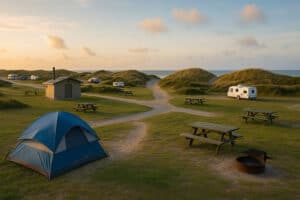
Ocracoke Island Campgrounds Overview
Ocracoke doesn’t have dozens of campgrounds to choose from, and that’s part of its charm. The options are limited, which keeps the island from being overrun and makes every stay feel special. Here are the main places where you can pitch a tent or park an RV.
Ocracoke Campground (National Park Service)
This is the island’s flagship campground, operated by the National Park Service (NPS) under the Cape Hatteras National Seashore.
Location: About three miles northeast of the village, set behind tall dunes.
Sites: Roughly 136, available for both tents and RVs.
Facilities:
Restrooms with running water
Outdoor cold showers
Picnic tables and grills at each site
No electric or water hookups (dry camping only)
Beach Access: A short sandy trail leads over the dunes directly to the Atlantic Ocean.
Reservations: Can be booked up to six months in advance on Recreation.gov.
This is the choice for purists. When you step out of your tent at dawn, you can watch the sun rising over the Atlantic, with the beach often nearly empty. It’s simple, raw, and unforgettable.
Explore campground on google maps
Teeter’s Campground
If the NPS site is rustic, Teeter’s Campground offers the opposite: convenience.
Location: In Ocracoke Village, a short walk to restaurants, shops, and Silver Lake Harbor.
Sites: Smaller than the NPS campground, with a mix of RV and tent spots.
Facilities:
Full hookups (electric, water, and sewer)
Hot showers and restrooms
Laundry facilities
Wi-Fi available
Community Vibe: You’ll often see families grilling dinner, kids riding bikes between campsites, and neighbors swapping stories.
Explore Teeter’s Campground on google maps
For campers who don’t want to give up hot showers or proximity to village life, Teeter’s is a perfect fit. It’s not beachfront, but the trade-off is comfort and convenience.
Other Options
While the NPS and Teeter’s are the main campgrounds, there are a few other ways to camp on Ocracoke if you’re flexible:
Private Rentals: Some locals rent out small camping spaces or RV hookups, though these aren’t always formally listed online.
Backyard Camping: Rare, but a few Airbnb hosts may allow campers to pitch a tent on their property.
Day Camping: While not official, some beachgoers bring shade tents or set up for long day trips. Just remember that overnight camping outside designated campgrounds isn’t allowed.
Insider Tip
If you’re visiting in July or August, book as early as possible—sites sell out fast, especially at Teeter’s. On the flip side, September and October often bring fewer crowds, cooler temperatures, and more available sites. Many locals quietly say this is the best time to camp on the island.
Reservations & Permits
One of the most important things to know about camping on Ocracoke is that you can’t always just show up and expect a spot. The island is small, the campgrounds are limited, and in summer, demand is intense. Planning ahead makes the difference between an oceanfront stay and scrambling for alternatives.
National Park Service Campground Reservations
The Ocracoke Campground (NPS) uses the Recreation.gov system.
How to Book: Reservations open six months in advance, and you can book online or by phone.
Peak Season: May through August, sites often sell out quickly, especially weekends.
Off-Season: September and October are easier to book, though weekends may still fill.
Walk-Ins: Sometimes available in spring or fall, but never guaranteed.
Fees (as of 2025):
Tent/RV site: ~$28 per night
No hookups, so RV campers must be self-contained
Teeter’s Campground Reservations
Teeter’s is privately owned and accepts reservations by phone or through their website.
Flexibility: Because it’s smaller, it feels more personal, but it also means fewer sites. Book early in summer.
Deposit: Often required to hold your spot.
Fees (2025 estimate):
Tent sites: $35–$45 per night
RV sites with full hookups: $55–$70 per night
Permits You Might Need
Campfires: Campfires on the beach are allowed with a free permit, which you can obtain from the NPS office in Ocracoke Village. Fires are only permitted below the high-tide line and must be fully extinguished.
Fishing: If you plan to surf fish, you’ll need a North Carolina Coastal Recreational Fishing License. These are easy to buy online or at local tackle shops.
Off-Road Driving: To drive on the beach with an ORV (off-road vehicle), you’ll need an NPS ORV permit. This allows access to designated beach driving ramps.
Timing Matters
One of the most overlooked details is when to camp:
Spring (April–May): Mild weather, fewer crowds, but the Atlantic can be chilly for swimming.
Summer (June–August): Warmest weather, ocean at its best, but expect high humidity, bugs, and crowds.
Fall (September–October): The sweet spot—warm water, comfortable temperatures, and fewer people. Hurricanes are the only wild card.
Winter (November–March): Campgrounds are technically open, but weather is cold, windy, and most island businesses close for the season.
Traveler’s Note
I once booked a September trip at the last minute and still found a site at the NPS campground. The bonus? The beach felt almost private, and evenings were cool enough for a campfire. If you have flexibility, fall camping gives you a version of Ocracoke that feels more like a secret than a vacation destination.
Packing Guide & Camping Essentials for Ocracoke
Camping on Ocracoke isn’t quite the same as pitching a tent in the woods or parking your RV at a mountain campground. The island’s coastal environment comes with special challenges—sand, salt, wind, bugs, and unpredictable weather. Packing smart ensures you’ll enjoy your stay instead of scrambling to solve problems you could have prevented.
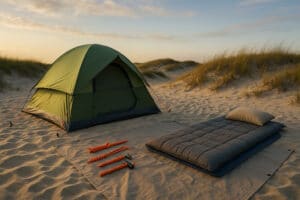
Shelter & Sleeping Gear
Sturdy Tent: Choose one with a low profile and strong poles. Coastal winds can be intense.
Sand Stakes or Deadman Anchors: Regular tent stakes don’t grip well in sand. Bring specialized stakes or use buried anchors.
Tarp or Ground Cloth: Protects your tent from moisture and sand abrasion.
Sleeping Bags & Pads: Nights can get cooler than expected, especially in spring and fall.
Pillows & Comfort Items: A little extra comfort goes a long way when sleeping outdoors.
What I Learned: On my first Ocracoke camping trip, I underestimated the wind. My lightweight tent nearly collapsed until I swapped flimsy stakes for proper sand anchors. That small upgrade turned the rest of the trip into smooth sailing.
Cooking & Food Supplies
Portable Stove or Grill: Fires aren’t allowed in campgrounds, so bring a camp stove.
Cooler with Ice Packs: There are no fridges, and the nearest grocery options are limited.
Reusable Utensils & Dishes: Easier on the environment than disposable options.
Water Jugs: Bring extra drinking water. The campground has spigots, but it’s always better to have backup.
Dry Food Storage: Keep food sealed to deter insects and curious raccoons.
Clothing & Personal Items
Layers: Weather swings between hot afternoons and cool evenings.
Rain Jacket: Sudden showers aren’t uncommon.
Swimwear & Beach Towels: You’ll use them daily.
Hats & Sunglasses: Essential for sun protection.
Bug Spray & Sunscreen: Mosquitoes can be relentless, and the sun is unforgiving.
Comfortable Shoes: Flip-flops for the beach, sturdy sandals or sneakers for biking and exploring.
Extras That Make a Difference
Dry Bags: Protect electronics, clothes, and gear from rain and salt spray.
Headlamp or Lantern: The campground is dark at night—great for stargazing, tricky for cooking without light.
Portable Battery Pack: Outlets are limited.
Camp Chairs: Perfect for sitting by the fire or watching sunsets from the dunes.
Shade Tent: Helpful for long beach days.
RV-Specific Needs
Generator or Solar Setup: If you stay at the NPS site, there are no hookups.
Extra Water Tanks: Fill before arriving—water access is limited once you’re set up.
Leveling Blocks: Sand and uneven ground can make parking tricky.
Leave No Trace Essentials
Trash Bags: Pack out all garbage—don’t leave it for the wind or gulls.
Eco-Friendly Soap: Protect the fragile dune and marsh ecosystems.
Respectful Gear Use: Keep noise low; part of Ocracoke’s magic is its quiet.
Insider Tip
Bring a mosquito head net if you’re camping in late spring or summer. It might look funny, but when the air gets thick with mosquitoes at dusk, you’ll be grateful.
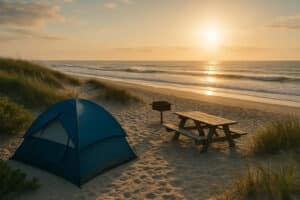
Activities & Adventures from the Campgrounds
Ocracoke may be small, but once you’re set up at camp, the island becomes a giant playground. From sunrise swims to starlit walks on the beach, the activities here feel effortless because they start right outside your tent flap or camper door.
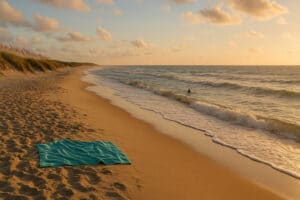
Swimming & Beach Time
The biggest perk of camping on Ocracoke? The Atlantic Ocean is your backyard.
Morning Dips: Few things compare to starting the day with a swim while the beach is still empty.
Afternoon Relaxation: Spread out a towel, read a book, or simply let the waves wash over your feet.
Evening Walks: The wide shoreline makes for perfect sunset strolls.
Because the NPS campground sits right behind the dunes, you can go from tent to water in under five minutes.
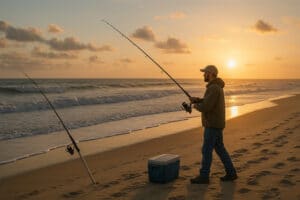
Surf Fishing
Fishing is a classic Ocracoke pastime, and campers are in the perfect position to try it.
Species You’ll Catch: Drum, flounder, bluefish, and Spanish mackerel depending on the season.
Best Spots: Near the inlets and along less-crowded stretches of beach.
Gear: A surf rod, sand spike, and patience. Local bait shops in the village can set you up.
There’s a simple joy in casting a line as the waves roll in, cooler by your side, and no agenda but waiting for the tug of a fish.
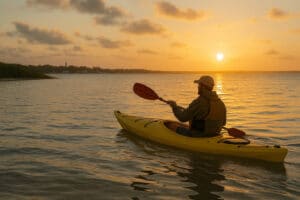
Kayaking & Paddleboarding
Silver Lake and the surrounding soundside waters offer calm spots for paddling.
Rental Options: Several outfitters in the village rent kayaks and paddleboards.
Scenic Routes: Explore the marshes, look for herons and egrets, or paddle along the shoreline at sunrise.
Difficulty: Calm waters make this activity beginner-friendly.
It’s common to spot dolphins just outside the harbor, and paddlers sometimes find themselves sharing the water with these playful locals.
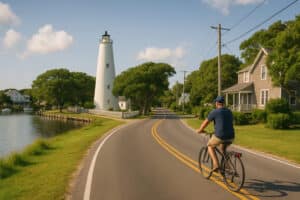
Biking Around the Island
Ocracoke is flat, compact, and perfect for biking.
Campground to Village: Just a few miles, with scenic views along the way.
Village Explorations: Ride to the Ocracoke Lighthouse, local shops, and Springer’s Point Preserve.
Beach Access: Some ramps allow bike access for a ride along hard-packed sand at low tide.
Many campers bring bikes, but rentals are available in the village if you don’t.
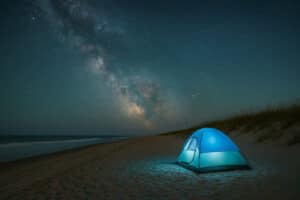
Stargazing
Because Ocracoke is remote, far from city lights, the night sky here is spectacular.
Best Spots: The beach by the NPS campground is ideal—no artificial light, just stars.
What You’ll See: The Milky Way arching overhead, constellations crisp and clear, and sometimes even shooting stars.
Gear: A blanket or reclining camp chair makes it even better.
One night I lay back on the sand and watched the stars for over an hour. The steady rhythm of the waves combined with the endless sky abovemade me realize how rare true darkness is back home. Nights on Ocracoke also come alive with folklore — discover the island’s eerie side in our Ocracoke Ghost Stories & Legends guide. It’s an experience you can only find in a place like this.

Birdwatching & Wildlife
The Cape Hatteras National Seashore is home to a variety of wildlife.
Birds: Ospreys, pelicans, sandpipers, and migrating shorebirds.
Wildlife: Rabbits in the dunes, ghost crabs on the sand, and occasional dolphins offshore.
Best Time: Early morning and late afternoon walks are prime for spotting animals.
Bring binoculars—you’ll be surprised at how much life you can see around the campground.
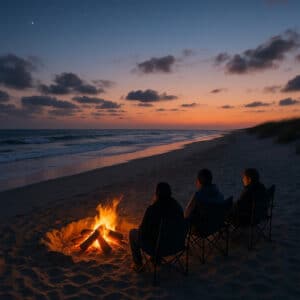
Relaxing by the Fire
While fires aren’t allowed at the NPS campground itself, beach campfires (with a permit) are one of Ocracoke’s best traditions.
Where: Below the high-tide line on the beach.
When: Evenings, especially in fall when the air is crisp.
Why It’s Special: The combination of waves, stars, and firelight is unforgettable.
It’s a simple pleasure—roasting marshmallows with the Atlantic as your soundtrack.
Family-Friendly Camping on Ocracoke
Camping on Ocracoke Island can be a wonderful family adventure. The beaches are wide and safe, the campgrounds are manageable, and the island itself is small enough to explore without long drives or complicated logistics. But there are a few details that make the difference between a smooth trip and a stressful one.
Camping with Kids
Children usually love Ocracoke camping because there’s so much freedom. The island feels safe and contained, and the beaches become one big playground.
Space to Explore: The dunes and shoreline give kids room to run, build sandcastles, and search for seashells.
Simple Joys: Flying kites, chasing ghost crabs at night, or roasting marshmallows by the fire are often more fun than screens.
Practical Tips:
Bring shade shelters for long days on the beach.
Pack plenty of snacks—stores are limited, and hungry kids can make things tricky.
Have an extra set of dry clothes handy; saltwater + sand + kids = constant wardrobe changes.
Many parents say their kids fall asleep faster on Ocracoke than anywhere else, lulled by the sound of waves.
Family Activities Nearby
Camping doesn’t mean you have to stay put. Families can easily branch out into the village for a change of pace.
Ocracoke Lighthouse: An easy walk or bike ride, and always a hit with kids.
Springer’s Point Preserve: A short trail with pirate lore that fascinates younger visitors.
Village Ice Cream Shops: Nothing beats stopping for a cone after a hot day at the beach.
Educational Opportunities: The NPS Visitor Center sometimes hosts ranger talks geared toward families.
Group Camping & Reunions
Ocracoke’s campgrounds can work well for group trips if planned carefully.
At the NPS Campground: Families can reserve multiple adjacent sites for a little community feel.
At Teeter’s Campground: The social atmosphere makes it easier for groups to stay connected.
Meal Planning: Coordinating shared meals is a good way to keep things simple—campfire breakfasts or cookouts bring everyone together.
Some groups even book a mix of accommodations—half camping at Teeter’s, half staying in village rentals—so grandparents or those less inclined to rough it can still join.
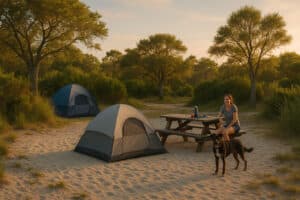
Camping with Pets
Ocracoke is dog-friendly, and many campers bring their four-legged companions.
Campground Rules: Pets must be leashed and under control at all times.
On the Beach: Dogs are allowed on the beach as long as they’re leashed. Most pups love splashing in the waves.
Practical Tips:
Bring extra water—dogs dehydrate quickly in the heat.
Pack waste bags to keep the campgrounds clean.
Provide shade and a cool resting spot, since sand can get hot on paws.
Watching a dog chase waves along Ocracoke’s empty beaches is a joy in itself.
Safety Considerations
Camping with families requires a little extra awareness.
Ocean Safety: The surf can be rough. Always keep an eye on children near the water.
Heat & Hydration: Summer sun is strong—bring hats, sunscreen, and plenty of fluids.
Wildlife: Teach kids not to disturb crabs, birds, or nesting turtles.
Bikes & Roads: The village has narrow roads; remind kids to stay alert when biking.
Handled right, these aren’t worries—they’re just part of helping kids learn to camp responsibly.
Moment to Remember
I watched a family set up camp at the NPS site one evening. The kids ran barefoot over the dunes, laughing as they spotted the ocean for the first time, while their parents set up chairs by the picnic table. Later that night, they built a small fire on the beach (with a permit, of course). The kids roasted marshmallows, the parents sipped coffee, and the waves provided the soundtrack. It struck me how camping strips away distractions and gives families something rare: unhurried time together.
Practical Tips & Challenges
Camping on Ocracoke is beautiful and memorable, but it comes with quirks that first-timers don’t always anticipate. Understanding the island’s unique challenges helps you plan smarter and enjoy more.
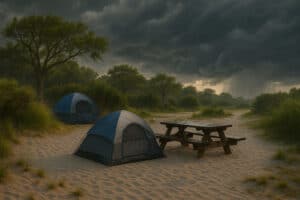
Dealing with Weather
The Atlantic coast is unpredictable, and Ocracoke is no exception.
Wind: Gusts can flatten tents not secured with proper stakes. Always anchor well.
Rain: Sudden showers are common. A rainfly and tarp setup will keep you dry.
Heat & Humidity: Summer days can feel sticky. Bring shade tents, stay hydrated, and plan beach swims to cool off.
Storms: Hurricanes are rare but possible, especially in late summer and fall. Always check forecasts before traveling.
If the weather looks severe, the safest option is to reschedule your trip. Ferry operators and the NPS provide storm updates.
Bug Management
Bugs are part of barrier island life. Mosquitoes, no-see-ums, and biting flies can test your patience.
Bug Spray: Pack a strong repellent and reapply often.
Head Nets: A lifesaver on buggy evenings.
Campfire Smoke: Helps keep insects at bay.
Timing: Mosquitoes are worst at dawn and dusk. Plan indoor or beach walks during those hours.
A light long-sleeve shirt and pants can also save you from bites without constant repellent.
Ferry Logistics
Getting to Ocracoke is half the adventure, but it requires planning.
Routes: Ferries depart from Hatteras, Cedar Island, and Swan Quarter.
Reservations: Cedar Island and Swan Quarter ferries require reservations—book well in advance. Hatteras is free and runs frequently, but lines can be long in summer.
Timing: Arrive early, especially on weekends. Missing your ferry can mean hours of waiting.
Loading: RVs and larger vehicles may need special arrangements.
For many campers, the ferry is a highlight—standing on deck, watching the horizon open, feels like the real start of the trip.
Supplies & Groceries
Ocracoke Village has a few small grocery stores and convenience shops, but selection is limited.
What to Buy on the Mainland: Specialty foods, bulk supplies, and non-perishables.
What to Buy on the Island: Fresh seafood, ice, and small essentials.
Restaurants as Backup: If you don’t feel like cooking, the village has several casual dining spots.
Planning meals ahead ensures you’re not scrambling for missing ingredients.
Leave No Trace Principles
Ocracoke’s beauty depends on visitors respecting the land and water.
Pack It In, Pack It Out: Never leave trash, even in fire pits.
Respect Wildlife: Don’t disturb nesting turtles, birds, or crabs.
Stay on Paths: Dunes protect the island—don’t trample vegetation.
Quiet Hours: Respect your neighbors at campgrounds.
The fewer marks you leave, the more Ocracoke retains its wild, untouched feel.
Common First-Time Mistakes
Underestimating Bugs: Campers who forget repellent usually don’t forget twice.
Not Reserving Early Enough: Sites fill quickly; don’t count on walk-ins.
Ignoring the Weather Forecast: Storms here can escalate fast.
Overpacking or Underpacking: Bring what you need, but remember space is limited on ferries and campsites.
Learning from others’ mistakes makes your trip smoother.
Insider Tip
Bring a lightweight hammock. Even if you don’t sleep in it, stringing it up between trees near the campground makes for the perfect afternoon nap spot. You’ll understand the meaning of island time when you’re swaying in the breeze, listening to the surf.
Alternatives to Camping on Ocracoke
Camping may be one of the best ways to immerse yourself in Ocracoke’s natural beauty, but it isn’t the only option. Some visitors prefer more comfort while still staying close to the island’s magic. Whether it’s a cozy B&B, a vacation rental, or even a traditional inn, Ocracoke has lodging choices that appeal to a range of travelers.
Bed & Breakfasts
Ocracoke is known for its charming B&Bs, often run by locals who’ve lived on the island for generations.
Atmosphere: Friendly, intimate, and full of character.
Examples: Oscar’s House Bed & Breakfast, The Cove Bed & Breakfast.
Why Choose This: Great for couples or solo travelers who enjoy home-style hospitality and a hearty breakfast.
Inns & Hotels
For those who want something more traditional, several inns and small hotels dot the village and harbor.
Castle on Silver Lake: One of Ocracoke’s most iconic waterfront properties, offering historic charm and modern amenities. For a bigger picture of the island’s history, hidden gems, and things to do, check out our Ultimate Guide to Ocracoke Island.
Anchorage Inn & Marina: Ideal for boaters, with slips right by the harbor. Learn more about staying here in our full guide.
Ocracoke Harbor Inn: Offers some of the best views of Silver Lake.
These inns provide comfort, air conditioning, and proximity to restaurants and shops—perfect for visitors who want the island experience without sandy sleeping bags.
Vacation Rentals
Vacation rentals have become increasingly popular, especially for families and groups.
Types of Rentals: From small cottages to multi-bedroom homes with full kitchens.
Best For: Longer stays, large groups, or those who prefer to cook meals.
Booking Platforms: Airbnb, VRBO, and local rental agencies.
Rentals often give you space and privacy, along with the ability to live more like a local.
Cabins & Hybrid Options
Some visitors look for middle-ground lodging that’s not quite camping but not a hotel either.
Cabin Rentals: Occasionally available through local hosts.
Glamping: Limited on Ocracoke, but nearby areas sometimes offer upscale camping with beds and bathrooms.
These options suit travelers who want a rustic feel without committing fully to tents or RVs.
Traveler’s Note
During one trip, I stayed at a small vacation cottage just outside the village after camping the year before. While it lacked the immediacy of waking up to the sound of waves, it offered air conditioning, a kitchen, and space to spread out. For families with young kids or travelers who prefer predictability, these alternatives can make the island more accessible.
Reviews, Experiences & What Travelers Say
One of the best ways to understand Ocracoke camping is through the voices of people who’ve actually done it. Their stories highlight the joys, quirks, and challenges in ways that pure logistics can’t.
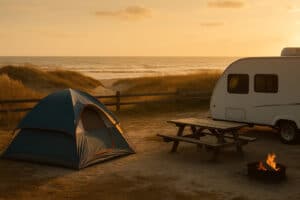
What Campers Love Most
Proximity to the Beach: “Waking up and walking over the dunes to see the sunrise was worth the trip alone.”
Night Skies: “I’ve never seen stars so bright. We laid on the sand for hours just looking up.”
Simplicity: “It forces you to slow down. No TV, no noise, just the ocean and time together.”
Community Feel: “At Teeter’s, we met another family from out of state. Our kids played together every evening, and we’ve kept in touch since.”
Common Complaints
Bugs: “Bring repellent. I can’t stress this enough. Mosquitoes are relentless in summer.”
Weather: “We had one night of pouring rain and learned the hard way about waterproofing our tent.”
Limited Facilities: “The NPS showers are cold. It’s part of the experience, but don’t expect luxury.”
Reservations: “We tried to book in July and everything was gone. Lesson learned—reserve early.”
Family Experiences
Many families report that Ocracoke is one of the best places to introduce kids to camping.
Safe Exploration: “Our kids ran free on the beach for hours, building forts out of driftwood.”
Memorable Moments: “My son caught his first fish in the surf. He still talks about it.”
Simple Pleasures: “Marshmallows by the fire became the highlight of the trip.”
RV Traveler Perspectives
RVers enjoy the choice between rugged and comfortable:
At the NPS Site: “It felt like boondocking by the ocean. No hookups, but incredible views.”
At Teeter’s: “Full hookups made life easier. It was nice being able to walk to the coffee shop in the morning.”
Why People Return
The most striking trend in reviews is how many campers return year after year.
“We’ve camped here for five summers in a row. It’s become a family tradition.”
“Even with the bugs and heat, I can’t imagine summer without Ocracoke.”
“Every trip feels different—the tides, the weather, the wildlife. It never gets old.”
Insider Tip
Read reviews before booking, but take them in context. A camper frustrated with mosquitoes may have visited during peak season without proper prep. Another may complain about weather, which is beyond anyone’s control. The majority of reviews emphasize that challenges fade compared to the island’s magic.
Conclusion – Why Ocracoke Camping Stands Apart
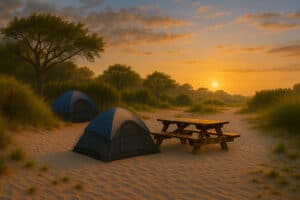
Camping on Ocracoke isn’t just about saving money or roughing it—it’s about immersing yourself in a barrier island that still feels wild and untouched. The NPS campground puts the Atlantic at your doorstep, while Teeter’s Campground offers comfort and community in the heart of the village.
Yes, you’ll face mosquitoes, sandy gear, and the occasional storm—but those challenges fade compared to the rewards: star-filled skies, quiet mornings by the dunes, and sunsets that feel like they belong only to you.
If you’re ready to trade convenience for experience, Ocracoke camping gives you something no hotel can: the chance to slow down, reconnect with nature, and carry home memories as timeless as the tides.