
The Hidden Historic Trails Midwest region holds a power that few travelers expect. Beneath quiet prairies, along winding rivers, and through forests alive with whispers of the past, you’ll find traces of courage, connection, and discovery that built America itself. These trails are more than dirt paths — they’re living timelines, linking ancient Indigenous cultures, determined pioneers, and freedom seekers who risked everything to change history.
When I first started walking these trails, I wasn’t searching for history — I was looking for space to think. But after my first hike along the old Underground Railroad route in Ripley, Ohio, I realized something deeper. These paths don’t just tell stories — they invite you into them. Every step feels like a conversation with the land and those who once walked it.
It’s a spiritual experience where nature and history merge into one presence. You sense the weight of time, the resilience of people, and the strength that built a nation. Whether following river routes, glacial ridges, or forgotten forest tracks, the Hidden Historic Trails Midwest are journeys through both landscape and legacy.
So, lace up your boots, bring an open heart, and step back into a world where America’s story still echoes under your feet.

Great River Road National Scenic Byway – The Lifeline of the Midwest
The Great River Road National Scenic Byway is one of the longest and most inspiring historic drives in the United States. Stretching more than 3,000 miles along the Mississippi River, this route is more than a roadway — it’s a thread connecting centuries of movement, trade, and transformation.

A River that Shaped a Nation
The Mississippi River wasn’t just a boundary — it was a meeting ground. Long before European settlers arrived, this waterway was the heartbeat of Native American life — a corridor of trade among the Choctaw, Ho-Chunk, and Dakota peoples. Later, it became the highway of pioneers, trappers, and dreamers heading west.
Driving or walking along this byway feels like flipping through America’s oldest photo album. You’ll see ancient mounds, steamboat towns, and small communities where time seems to linger a little longer.

My First Journey Down the River Road
I remember the first time I followed this trail during autumn. The trees burned gold and crimson along Illinois and Iowa, and the Mississippi shimmered under a soft blue sky. I pulled over near Dubuque just to watch the water flow — the same river that had carried canoes, flatboats, and paddle steamers for generations. It was one of those rare travel moments when you realize you’re not just seeing history — you’re part of its continuation.
Locals along the road share a deep respect for the river’s story. In a tiny diner in Guttenberg, Iowa, an older local told me about steamboat wrecks resting at the bottom of the river. No guidebook mentioned them. It was the kind of oral history that you only find in places where the past still lives in people’s memories.

Must-See Stops Along the Great River Road
Each stop along the Great River Road opens a new chapter of the Midwest’s story. Here are a few you shouldn’t miss:
Cahokia Mounds State Historic Site, Illinois
Once the largest pre-Columbian city north of Mexico, this UNESCO World Heritage Site preserves the remains of a civilization that flourished long before Columbus arrived. Standing atop Monk’s Mound, you can almost feel the presence of the ancient people who built it by hand, basket by basket.Effigy Mounds National Monument, Iowa
Serene and spiritual, these mounds shaped like animals were left by Indigenous cultures over a thousand years ago. Walking here feels sacred — a place of quiet reflection and wonder.Fort Snelling, Minnesota
A powerful site where the Mississippi and Minnesota rivers meet. Its history is complex — tied to early U.S. military expansion, Native resistance, and Dakota heritage. Every stone here seems to hold a story of conflict and endurance.
Each of these places offers more than sightseeing. They ask you to pause, to listen. When you stand there — surrounded by silence and history — it feels as if time folds in on itself.
Explore Great River Road on Google Maps

The Natchez Trace Parkway – Where Time Still Travels
Few routes in America carry such quiet dignity as the Natchez Trace Parkway. Stretching through Mississippi, Alabama, and into the southern edge of Illinois, this ancient path once connected Native American villages, pioneer settlements, and early postal routes. It’s more than just a scenic drive; it’s one of the most meaningful journeys along the Hidden Historic Trails Midwest.

Walking Through Layers of History
The Trace is a time capsule. Every bend in the trail whispers of footsteps from centuries past — Choctaw and Chickasaw hunters, European traders, enslaved people seeking freedom, and early explorers carving out the American frontier. When you walk through the deep shade of its forests, it’s hard not to feel the energy of those who walked before you.
My first walk on this trail wasn’t planned. I stumbled upon it one misty morning near the Sunken Trace — a section where travelers’ feet, wagon wheels, and weather carved the earth into deep, worn corridors. Standing there, surrounded by silence, I could almost hear the echoes of those ancient journeys. The air itself seemed to hum with memory.

A Trail That Teaches Stillness
There’s something profoundly grounding about walking the Natchez Trace. It’s not just about scenery — it’s about presence. You find yourself slowing down, noticing things modern life often hides: the rhythm of your steps, the shift of light through trees, the way your thoughts start to wander toward gratitude.
The land here feels old but alive, like it’s watching you back. And that’s the beauty of the Hidden Historic Trails Midwest — they turn travel into meditation. Every step becomes an act of remembering.
Highlights Along the Parkway
Sunken Trace Trail, Mississippi – A hauntingly beautiful section of the old path, where the ground dips several feet below modern level due to centuries of travel.
Meriwether Lewis Monument, Tennessee border – A memorial to one of America’s greatest explorers, standing where he took his final breath on this same road.
Rock Spring Nature Trail, Tennessee – A short but breathtaking side trail surrounded by ferns, water trickling through limestone, and rare songbirds.
People who’ve walked this trail often describe it as “peaceful,” “transformative,” or “like walking through a dream.” I understand that completely. There’s a strange comfort in knowing that thousands have come before — each carrying their own reasons for traveling this same earth.
Explore Natchez Trace Parkway on Google Maps

The Underground Railroad Trail, Ohio – Paths of Courage and Freedom
If the Natchez Trace represents connection, the Underground Railroad Trail in Ohio represents courage. Here, freedom wasn’t an idea — it was a risk people took with every heartbeat. These paths through southern Ohio and along the Ohio River carried enslaved people toward hope, guided by brave souls who refused to look away.

A Trail of Human Spirit
My journey began in Ripley, a quiet town overlooking the river. The morning fog hung thick over the hills, and the old brick houses seemed frozen in another time. This was where abolitionists John Rankin and John P. Parker risked their lives to help others escape slavery. Their homes still stand — simple, sturdy, and echoing with the weight of what happened there.
Walking between those houses, I could almost see it — lanterns flickering in the night, coded songs floating across the water, footsteps in the dark carrying everything they owned and more than most of us can imagine: hope.

Lessons the Trail Teaches
History books often summarize these routes as “escape networks.” But walking them changes everything. You don’t see numbers; you see people. The mothers clutching children. The men looking back one last time. The allies who opened their doors without question. Every mile is a lesson in bravery and compassion.
This is why I believe the Hidden Historic Trails Midwest are so important. They remind us that history isn’t far away — it’s beneath our feet, waiting for us to remember it properly.

What to See and Feel
In Ripley, the Rankin House sits high on a bluff overlooking the Ohio River. From there, you can imagine how it must have felt — watching, waiting for signals, praying everyone made it across safely. Down the hill, Parker’s workshop tells another side of the story: invention, industry, and quiet rebellion through intelligence and skill.
When you walk these trails, gratitude becomes instinctive. You don’t just admire the courage of others — you carry a little of it with you.
Do the North Creek Railroad down to Rapirus – it is a lot of fun in the good weather. Bring the kids and have a nice Ice Cream in Rapirus and then visit the mineral store a short walk away before heading back. er .
See more reviews on Tripadvisor
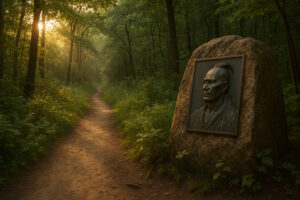
The Black Hawk Trail, Iowa – A Path of Resistance and Remembrance
Among all the Hidden Historic Trails Midwest, the Black Hawk Trail is one of the most emotional. This isn’t just a hiking path; it’s a reminder of conflict, resilience, and cultural survival. It follows the memory of Chief Black Hawk, the Sauk leader who fought to defend his people’s homeland during the Black Hawk War of 1832.

More Than a Battle
When I first learned about this trail, I expected a military site — markers, plaques, a few artifacts. But when I arrived, I found something else entirely. The landscape itself tells the story. Quiet rivers, prairies bending in the wind, and a stillness that feels like reverence.
This land holds sorrow, yes, but also pride. Chief Black Hawk’s legacy is about leadership, community, and resistance against impossible odds. As you walk, it’s impossible not to feel both the weight and the grace of that history.
What Makes This Trail Stand Out
Unlike other routes marked purely for tourism, this trail invites reflection. It doesn’t glorify battles — it honors balance, respect, and survival. Every step through Iowa’s fields feels like you’re walking between past and present, between pain and peace.
Highlights include:
Black Hawk State Historic Site, preserving land once home to the Sauk and Meskwaki people.
Maquoketa Caves State Park, a breathtaking natural site whose underground chambers echo with geological and cultural stories.
Scenic river overlooks that let you see the same horizon Black Hawk once defended.

A Trail for the Heart, Not Just the Eyes
Hikers often describe this path as meditative. And they’re right. It’s not just about the beauty — it’s about what the beauty asks of you: empathy. Understanding. Connection. That’s what defines the Hidden Historic Trails Midwest — they’re not just routes across land, but pathways through humanity’s shared story.
The Lewis and Clark Trail, Missouri – Retracing the Path of Discovery
The Lewis and Clark Trail is not just a journey westward — it’s the spark that ignited America’s age of exploration. When you follow this route across Missouri, you’re stepping directly into one of the most daring expeditions in history. For anyone passionate about travel and meaning, this is one of the crown jewels of the Hidden Historic Trails Midwest.
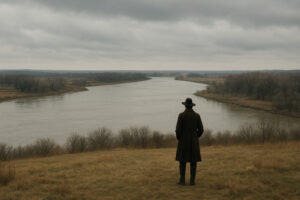
Following the Footsteps of the Explorers
In 1804, Meriwether Lewis and William Clark set out from the banks of the Mississippi River to map unknown territory. Their journey reshaped the nation, but what fascinates me most is how ordinary the beginning feels. Standing where they once stood — near the confluence of the Mississippi and Missouri Rivers — you realize they faced the same uncertainty any traveler does: excitement mixed with fear of the unknown.
I visited the Lewis and Clark State Historic Site on a gray morning. The air smelled faintly of the river, and a cold breeze swept through the open plains. It wasn’t hard to imagine wooden boats being loaded with supplies, men shouting commands, and the quiet tension before they pushed off into uncharted wilderness. That moment, two centuries later, still feels alive.

Why This Trail Still Matters
Each stop along this trail is a reminder that courage often begins with curiosity. You see it in the reconstructed camps, the interpretive museums, and the preserved landmarks that dot Missouri’s countryside. But you also feel it — in the humility of the landscape, the endless sky, and the realization that discovery isn’t about fame, but about seeing differently.
This is what defines the Hidden Historic Trails Midwest. They invite you to rediscover what you thought you already knew. On these trails, exploration turns inward.
Key Points Along the Route
Gateway Arch National Park, St. Louis – A symbol of America’s westward expansion and the perfect starting point to feel the enormity of what Lewis and Clark faced.
Lewis and Clark State Historic Site, Hartford – An immersive look at how the expedition began — complete with maps, journals, and reconstructions of their camp.
Katy Trail State Park – A 240-mile rail-trail that mirrors much of their route, winding through cliffs, farmland, and river valleys that look much the same as they did in 1804.
Walking this trail gives you a deeper sense of what exploration really means — not just pushing boundaries, but respecting the stories written into the land itself.
Explore Underground Railroad Trail on Google Maps

The Ice Age National Scenic Trail, Wisconsin – Hiking Through Earth’s Ancient Memory
While the Lewis and Clark Trail celebrates human exploration, the Ice Age National Scenic Trail celebrates nature’s timeless artistry. This 1,200-mile trail winds through Wisconsin, tracing the edge of the last continental glacier. It’s one of the most visually stunning and geologically rich parts of the Hidden Historic Trails Midwest.

A Landscape Shaped by Ice
Every ridge, kettle lake, and moraine tells a story older than civilization. When I hiked a section near Devil’s Lake, I felt like I was walking through Earth’s diary. Massive cliffs rose beside me, sculpted by ice that once reached thousands of feet thick. The quietness here is different — deeper, ancient, and humbling.
It’s fascinating to imagine how the first peoples of this region saw it. To them, these formations weren’t just geology — they were living spirits, landmarks for hunting, and guides through the changing world. Modern hikers can still feel that sense of reverence. Every rock and shadow seems alive.
Highlights Along the Trail
Devil’s Lake State Park – Dramatic quartzite cliffs and mirrored waters that reflect every passing cloud.
Kettle Moraine State Forest – Trails winding through glacial ridges, eskers, and hidden lakes.
Chippewa Moraine Recreation Area – A quieter section filled with untouched glacial landscapes and rare wildlife.
The Ice Age Trail is often called a “hiker’s dream,” but it’s more than that. It’s a bridge between science and spirit — a reminder that nature holds the oldest form of history we can still touch. When you pause on one of its ridges and look out over miles of untouched forest, you can almost feel the earth exhale.
Glacial Passage segment in Cross Plains offers a delightful sampling of the Ice Age Trail
See more reviews on Trripadvisor
Explore Ice Age Trail on Google Maps

The Santa Fe Trail, Kansas – A Pioneer’s Highway Through Time
The Santa Fe Trail carved a dusty but unforgettable path through America’s heartland. For decades, it served as the main route for traders, settlers, and dreamers traveling between Missouri and Santa Fe, New Mexico. Today, it remains one of the most evocative parts of the Hidden Historic Trails Midwest, connecting landscapes of trade, struggle, and endurance.

A Road Worn by Hope and Hardship
Driving through Kansas, I found it almost impossible to believe how many footsteps and wagon wheels had crossed these same plains. The prairie stretches endlessly, golden under the sun, and in certain places you can still see the faint ruts carved by wagon trains nearly two centuries ago.
Standing at Pawnee Rock, I felt an unexpected chill. The view stretched endlessly — quiet, wind-swept, and eternal. Both Native nations and pioneers once climbed this very spot to scan the horizon for danger or opportunity. It’s humbling to realize that what looks empty at first glance is actually full of memory.

Stories Buried in the Dust
The Santa Fe Trail isn’t about polished monuments; it’s about raw endurance. The travelers who used this road faced drought, storms, and raids — yet they kept moving west. Their resilience is written across the land itself.
To me, this trail represents the courage it takes to chase possibility, even when the outcome is uncertain. And that’s what unites every route in the Hidden Historic Trails Midwest — they’re all stories of motion, faith, and discovery.
Don’t Miss These Historic Points
Fort Larned National Historic Site – A remarkably preserved 1800s military fort offering insight into frontier life.
Pawnee Rock State Historic Site – A panoramic hilltop landmark with deep ties to both Native and pioneer history.
Santa Fe Trail Center Museum – A deep dive into the lives, tools, and tales of those who crossed the Great Plains.
As I walked the dusty paths near Larned, I couldn’t help imagining wagon wheels creaking and oxen trudging forward. The wind carries that same rhythm — it’s the song of persistence.
To see where the wagons rolled off the pioneers over the prairie was kinda cool. Boy they had it tough searching for a new life. We are so lucky.
See more reviews on Tripadvisor
Explore Santa Fe Trail on Google Maps

The Zane Shawnee Caverns Trail, Ohio – Echoes Beneath the Earth
Not all history lies above ground. Deep in central Ohio, the Zane Shawnee Caverns Trail opens the door to a world hidden beneath our feet — a realm of limestone caves that once sheltered Indigenous peoples and early settlers. Of all the Hidden Historic Trails Midwest, this one feels the most mysterious and sacred.

Descending Into Living History
When I joined the guided walk into these caverns, I expected geology — stalactites, formations, maybe a few bats. What I found was far more moving. The Shawnee people once used these caves for ceremonies, rest, and refuge. The air was cool, filled with a soft echo that made every sound linger. It was impossible not to feel awe.
The walls shimmered with minerals and faint traces of time, as if history had painted itself in stone. Down there, you realize how survival and spirituality once intertwined — the earth providing both shelter and symbolism.

A Place of Cultural Respect
This trail is less about adventure and more about reverence. The museum nearby showcases artifacts, stories, and traditions that highlight the resilience of Indigenous life. Outside the caves, reconstructed village structures and ceremonial grounds offer a glimpse into a way of life grounded in balance and respect.
Walking through the forest after leaving the caverns, I felt lighter — as if the land itself had shared a secret. It reminded me that the Hidden Historic Trails Midwest aren’t just about travel; they’re about remembering with gratitude.

Each time I set foot on one of the Hidden Historic Trails Midwest, I discover something different — not only about the land but about myself. These trails remind me that history isn’t trapped in textbooks or museums. It’s alive, scattered across forests, rivers, and quiet valleys, waiting for those willing to listen.
Sometimes that lesson comes softly — the rustle of leaves on the Natchez Trace, the hush of a cavern in Ohio, or the sound of your own breathing on a steep climb in Wisconsin. Other times, it strikes hard: standing on a battlefield where people fought to defend their homes, or walking along the Underground Railroad where freedom was whispered rather than spoken.

A Journey Beyond Scenery
When people ask why I spend so much time exploring these places, my answer is simple: the Hidden Historic Trails Midwest teach you to see differently. They remind you that every step connects to a story — not of heroes and monuments, but of human persistence.
You begin to notice small things: a forgotten stone wall half-swallowed by moss, a carved name on a wooden post, a river bend where ancient canoes once drifted. Those details build a bridge between then and now.
On these trails, you realize that beauty and struggle have always lived side by side. The land remembers joy and pain equally, holding them both without judgment.

The Emotional Pull of Walking Through History
Walking historic trails feels different from any other type of travel. You’re not just sightseeing — you’re time-traveling. Each mile makes you more aware of the countless footsteps that came before. There’s humility in that realization.
I’ve found myself stopping mid-trail just to breathe, to feel the ground and wonder whose path I’m following. Was it a Native hunter tracking game? A family heading west in search of a better life? An enslaved man risking everything for freedom? You may never know, but you feel them beside you all the same.
That’s why these trails aren’t merely attractions; they’re experiences. They ask for your patience and reward you with perspective.

Lessons from the Land
Each trail teaches something different.
The Great River Road shows that movement connects people — across centuries, cultures, and boundaries.
The Natchez Trace teaches that slowing down helps you hear what time tried to erase.
The Underground Railroad Trail reveals how courage can flourish even in the darkest conditions.
The Black Hawk Trail honors resistance and the cost of defending one’s home.
The Lewis and Clark Trail reminds us that curiosity is a form of bravery.
The Ice Age Trail shows that nature holds history longer than any book can.
The Santa Fe Trail reflects determination — the will to keep moving forward through uncertainty.
The Zane Shawnee Caverns Trail whispers that what’s hidden below us often holds the deepest truth.
Together, they form the soul of the Hidden Historic Trails Midwest — a network of stories that built America from the inside out.

Traveling the Right Way
Modern travelers have the privilege of walking these paths in comfort. But respect must come first. Pack lightly. Leave no trace. Read before you go, and listen while you’re there. These lands are not theme parks; they are chapters of human experience.
I always bring a small notebook when I hike. Not to record mileage or stats, but feelings. The sound of wind through tall grass. The smell of damp soil after rain. The sense that you’ve stepped into something sacred. When you return home, those notes mean more than photographs ever could.

Why I Keep Coming Back
Every time I return to the Hidden Historic Trails Midwest, I find another reason to be grateful. Maybe it’s the kindness of a small-town shopkeeper who shares a forgotten legend. Maybe it’s the way sunlight filters through the canopy at dusk. Or maybe it’s the simple realization that the land endures — no matter what changes around it.
I used to believe you had to travel west to find adventure, or to the coasts to find culture. But one day, standing on an Iowa bluff where Chief Black Hawk once stood, I felt the same awe people describe in the Rockies or at the Grand Canyon. That’s when I understood: the Midwest doesn’t lack grandeur; it hides it. You just have to walk slowly enough to see it.

A Call to Wander
If you’ve never explored these trails, now is the time. You don’t need expensive gear or a guidebook — just curiosity and respect. Start with one trail, one weekend, one stretch of quiet earth. Let the stories unfold naturally.
You’ll return home changed, because the Hidden Historic Trails Midwest don’t just show you where history happened — they remind you why it matters.
So the next time you drive past a roadside sign pointing toward a “historic trail,” don’t keep going. Turn off the highway. Follow it. Let the wind tell its stories, and the ground steady your steps.
You’ll find more than a hike out there.
You’ll find America — and maybe even a small piece of yourself.
🗺️ Planning Your Journey
The Hidden Historic Trails Midwest are historic routes across Illinois, Iowa, Missouri, Wisconsin, Kansas, and Ohio that follow the paths of Native peoples, pioneers, and freedom seekers. Each trail — from the Great River Road to the Ice Age Trail — tells a story of resilience, exploration, and discovery.
Spring and autumn offer ideal weather and scenery. Spring brings blooming forests and cooler hikes, while fall delivers crisp air and golden leaves across the prairies and river valleys. Summer can be hot but manageable if you start early. Winter is peaceful yet often snowy, perfect for solitude seekers.
Start with one major route, such as the Great River Road or the Lewis and Clark Trail. From there, connect smaller trails nearby. Plan lodging, gear, and weather checks in advance. Combining driving with short hikes helps you experience both scenic and cultural highlights of the Hidden Historic Trails Midwest.
👨👩👧 Trail Experience and Family Travel
Yes. Many sections have easy terrain, interpretive exhibits, and rest stops suitable for children. Trails like the Lewis and Clark and Ice Age routes include short loops with learning opportunities for young hikers. Bring snacks, water, and a small field journal for kids to record discoveries.
Most of the Hidden Historic Trails Midwest allow leashed dogs. Be sure to carry waste bags, water, and respect wildlife boundaries. Note that caves and museum interiors usually restrict pets.
Trail lengths vary widely. Some historic segments, like the Sunken Trace, can be covered in under an hour, while the Ice Age Trail spans more than a thousand miles. Choose sections that fit your schedule — the reward is in the journey, not the mileage.
🥾 Gear, Preparation, and Safety
No technical equipment is required. Wear sturdy footwear, bring layered clothing, water, trail snacks, sunscreen, and a small first-aid kit. For cave trails, pack a light jacket and headlamp.
Check trail conditions, carry a physical map or offline GPS, and let someone know your route. Always respect signage and stay on marked paths to preserve historical and ecological integrity.
🕰️ History and Meaning
Each trail preserves a piece of America’s living past — from Indigenous trade routes and the Underground Railroad to frontier exploration. Together, the Hidden Historic Trails Midwest form a powerful reminder that history isn’t confined to monuments; it’s written in the land itself.
Interpretive signs, local museums, and heritage centers offer valuable context. Talk to residents, read local histories, and listen to oral stories when possible. Bringing a notebook helps capture reflections that no guidebook can replace.
Because they’re authentic and uncrowded. The Hidden Historic Trails Midwest blend culture, emotion, and landscape — offering travelers a rare chance to walk where real stories unfolded. These aren’t tourist paths; they’re timeless journeys that connect heart, land, and history.
💡 Personal Insights and Tips
Slow down. Absorb the silence. Notice details — an old marker, a breeze through prairie grass, a quiet overlook. Travel light but with intention. Each of these trails has a voice; the key is to listen.